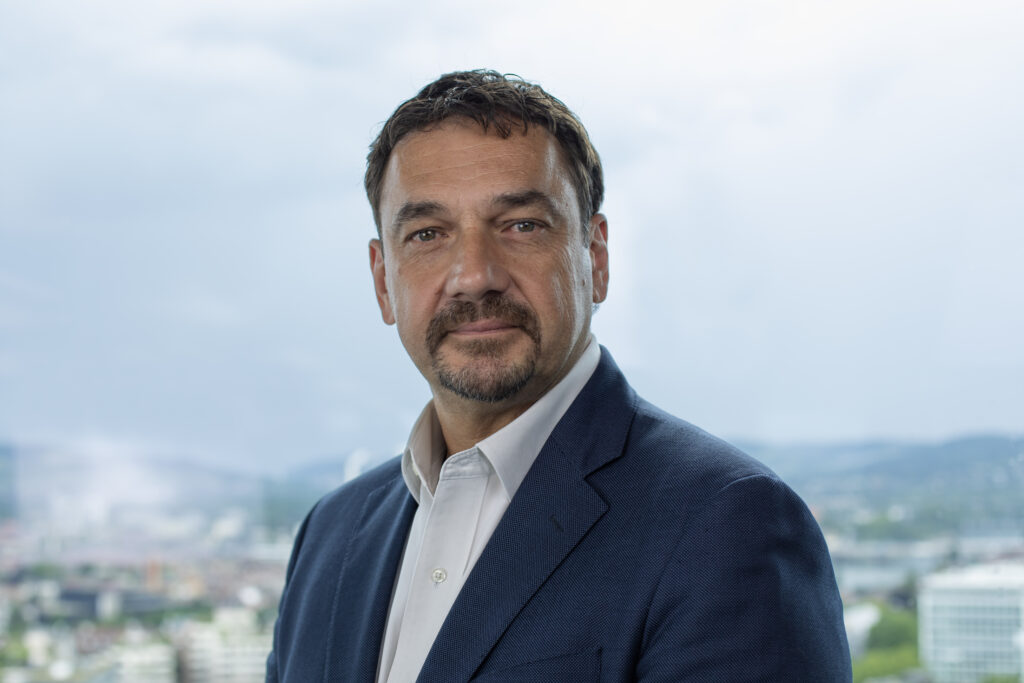
When it comes to cancer medicines, the EU should look beyond a purely ’Made in Europe’ approach and embrace ‘Made with Europe’, according to Giancarlo Benelli, Head of Europe at BeOne Medicines. “Cancer does not have borders,” he says, as many European patients still wait too long for innovative treatments. He argues that Europe’s rules have failed to keep pace with advances in cancer care.
In an exclusive interview with EU Perspectives, Mr Benelli warned that European patients continue to face slower access to cancer medicines because reimbursement systems still demand evidence standards that were designed for an earlier era of oncology. As cancer increasingly becomes a chronic disease with longer survival and crossover trial designs, he argued that some traditional endpoints no longer reflect clinical reality.
The Senior Vice-President at the global oncology company, which is rapidly expanding its European footprint, also discussed Europe’s role in cancer innovation, the need for regulatory reform, global research collaboration, and why the industry is increasingly moving on a path toward curing certain cancers.
Why do cancer medicines often reach American patients before Europeans?
In Europe, we need reimbursement negotiations country by country, and these can require months or even years. The evidence package required in Europe is often much larger than what other regions request. At a stage where cancer is becoming chronic, overall survival has become a difficult endpoint.
Clinical trials often use surrogate endpoints like progression-free survival. But some authorities in Europe still require overall survival. When one treatment arm is clearly superior, ethically patients cross over to the better treatment. Once that happens, overall survival differences become difficult to demonstrate. So Europe is still asking for evidence that is not always aligned anymore with modern cancer treatment realities.
You might be interested

What reforms would help close the access gap with the United States?
Harmonisation of criteria is critical. The European Medicines Agency (EMA) is now accepting surrogate endpoints. But approval by the EMA is not like approval by the United States Food and Drug Administration (FDA). In Europe, reimbursement negotiations still happen country by country. We need to close the gap between what is required from a regulatory perspective and what is required from a reimbursement perspective.
Europe is going to be the biggest contributor to our clinical development worldwide.
Germany allows drugs to enter the market with a temporary free price after approval by the EMA. That is a very good thing. Companies launch the product, start collecting real-world evidence, and then come to the assessment process with additional data.
If Europe expanded that approach, it could help close the gap with the United States and make medicines available immediately after approval by the EMA.
Recent data showed Europe’s access delays are worsening. What concerns you most?
When I saw the result that is deteriorating, I thought there is ‘something wrong’ here. We have positive initiatives in Europe, such as Joint Clinical Assessments and efforts to accelerate clinical trial approvals. We also have new legislation coming from Europe that could speed up processes. Yet when access timelines continue to worsen, it is clear that the system is not delivering the outcomes we intended.
Europe will become your largest contributor to clinical trial enrolment this year. Why is that significant?
Europe this year will enroll more than 1,000 patients in our clinical programmes. Europe is going to be the biggest contributor to our clinical development worldwide. It is a strong signal that we are willing to invest and strengthen research and development to Europe.
We want support from authorities to simplify bureaucracy, accelerate approvals, standardise methodologies and encouragae more open dialogue. In the end, authorities and industry may have different perspectives, but we share one common goal: improving outcomes for patients.
What is your assessment of the European Union Biotech Act?
We were very interested because it focuses on clinical trial acceleration. Regulatory flexibility is another important piece. The ability to scale up investment and incentivise research in Europe is also important.
The Act should not focus solely on ‘Made in Europe’ but also on ‘Made with Europe’. Research should be conducted internationally. Only by working together can we accelerate innovation and improve outcomes for patients with cancer.
Overall, the purpose and scope are positive. However, we believe patients should be placed even more firmly at the centre of the proposal. The scope should be broadened as much as possible to benefit the greatest number of patients, while reducing fragmentation across member states.
How important is global collaboration in cancer research?
BeOne’s ambition is to be a leading global oncology company. Cancer does not have borders. It is not a European, an American or a Chinese challenge; it is a global one. Addressing it requires global collaboration and partnerships.
The Act should not focus solely on ‘Made in Europe’ but also on ‘Made with Europe’. Research should be conducted between Europe, the United States, China and other centers of excellence around the world. Only by working together can we accelerate innovation and improve outcomes for patients with cancer.
BeOne is developing multiple oncology modalities simultaneously. Why pursue such a broad strategy?
If the purpose is to cure cancer one day, we do not yet know which technology will ultimately make that possible. This is why we continuously explore and invest in technologies that have the greatest potential.
We always thrive to develop first in class or best in class medicines whenever possible. We are pursuing multiple scientific approaches, and I am very proud of the pipeline. We probably have one of the largest oncology pipelines in the pharmaceutical industry.
Can you tell us more about the late-stage pipeline?
In haematology, we have two important assets coming in the next three years. One is a B-cell lymphoma 2 asset and the other is a Bruton’s tyrosine kinase degrader, which is a new mechanism of action.
In solid tumours, we also have a strong pipeline, including a B7 homolog 4 asset and a cyclin-dependent kinase 4 programme for breast cancer.
Our commitment is to move as fast as possible, while maintaining the highest standards of quality and pursuing a truly global development.
How do you see cancer treatment evolving?
One of the diseases that we treat is chronic lymphocytic leukaemia (CLL). We have presented data showing that 74 per cent of patients treated with one of our therapies remained in remission after six years of treatment.
This is an example of how advances in treatment are helping transform certain cancers into chronic diseases. Of course, we are not curing it yet, but that remains our ultimate ambition.
Can anyone say we will cure all cancers in ten years? No one knows. But are we on a path to cure? Absolutely.
Our vision is to help make cancer curable one day. In the meantime, transforming some certain cancers from an acute, life-threatening disease into a chronic disease that can be managed over the long term offers a lot of hope to patients, particularly when treatments are well tolerated and allow people to maintain a good quality of life.
Are we genuinely moving toward curing cancer?
For some kinds of cancers, we are very close to the possibility of a cure. Can anyone say we will cure all cancers in ten years? No one knows. But are we on a path to cure? Absolutely. Innovation rarely comes from one single breakthrough. More often, it comes through incremental steps.
In chronic lymphocytic leukaemia, if you look back to 2014 or 2015, chemotherapy was the only option and progression-free survival was only a few months.
Then Bruton’s tyrosine kinase inhibitors transformed the treatment landscape. Our published data demonstrated 74 per cent progression-free survival after six years of treatment, and the next generation of assets has the potential to improve this even more.
So yes, we are on a path to cure.
BeOne has rapidly expanded in Europe. Why is the region so important?
BeOne is a leading global oncology company with more than 12,000 employees worldwide, of which around 40 per cent work in research and development. We took a strategic decision to internalise all clinical operations in-house, which is different from many pharmaceutical companies.
Our growth in Europe reflects that commitment. We now have more than 1,000 people in Europe, compared to around 42 in 2018.
We no longer think in terms of a single headquarters. Instead, we operate through major hubs across the United States, Europe and China, with presence in more than 45 countries worldwide.
Basel became our European hub because it is one of the strongest biotechnology ecosystems in Europe, with more than 32,000 people working in biotech and more than 400 companies in the region.
Europe remains a center of excellence for life sciences, especially in oncology, orphan and rare diseases. It continues to be a major source of innovation, accounting for more than 18 per cent of the patents registered worldwide.