Europe has an action plan for the drone age. The harder question is whether it can move fast enough to matter. The Commission acknowledged the issue on Wednesday; the answer is anybody’s guess.
Is our preparation for tomorrow’s war led by obsolete thinking? We do not know for sure. But we do know the gap between the speed of modern warfare and the pace of European institutions. It amounts to a structural tension at the heart of European defence policy.
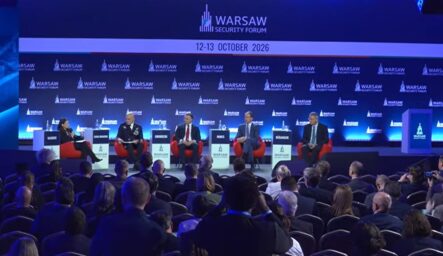
It has become as clear as ever on 3 June as the European Parliament’s defence committee (SEDE) met with two European Commission officials to review the Commission’s Action Plan on Drone and Counter-Drone Security. The session was more than a routine accountability exercise about the February file.
Drones rule
The two officials were Dinka Dinkova, deputy head of the innovation and new space unit at the Commission’s Directorate-General for Defence Industry and Space (DG DEFIS), and Fabrice Comptour of the Directorate-General for Communications Networks, Content and Technology (DG CNECT). Together, they outlined a plan covering the full spectrum of drone threats, from consumer negligence to hybrid warfare, organised around four pillars: preparedness, detection, collaborative response and defence readiness.
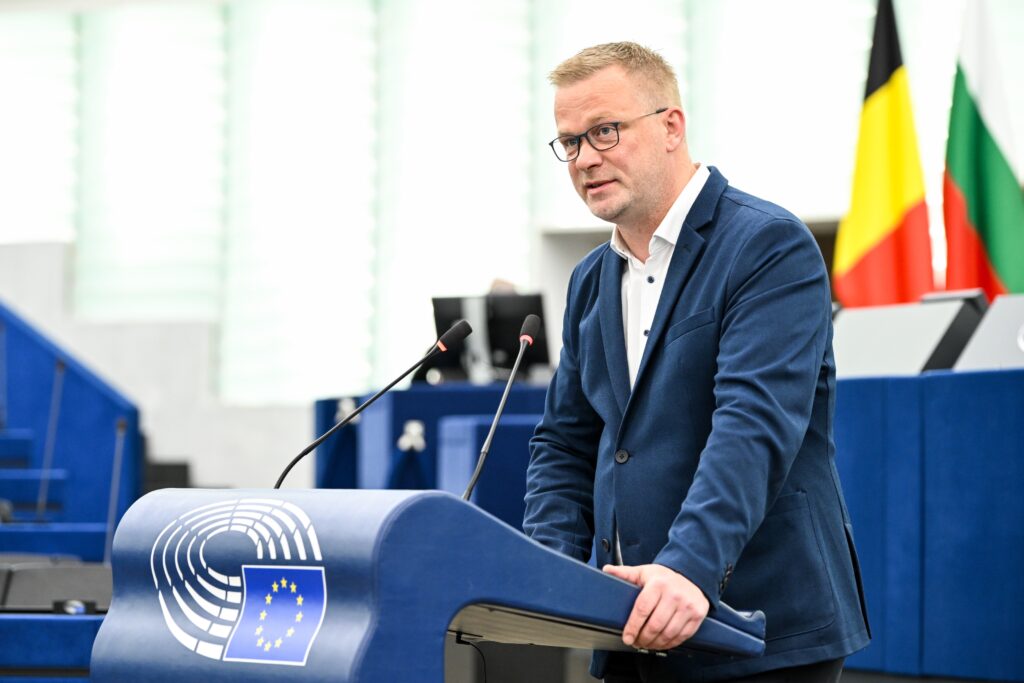
The session had been triggered by the European Parliament’s own-initiative resolution on drones, adopted in January 2026 and led by MEP Reinis Pozņaks (ECR/LAT) as rapporteur. MEP Marie-Agnes Strack-Zimmermann (Renew/DEU) set the tone at the outset.
“As illustrated by the battlefield in Ukraine, drones have become central to modern warfare,” the chair of the SEDE committee said. “This exchange is very important to ensure transparency, strengthen democratic scrutiny and translate Parliament’s priorities into concrete results.”
Ms Dinkova opened by stressing the urgency of the context. “We must learn from the experience of Ukraine and we must learn fast,” she told the committee. She described innovation cycles in drone technology as “incredibly condensed”, with operational advantage depending on the ability to iterate quickly, scale production rapidly and adapt continuously.
Three tracks
The defence dimension of the action plan rests on three tracks. The first is supporting member states’ capability development. Through the Defence Readiness 2030 framework, the EU has enabled up to €800bn in defence-related investments, through loans, incentives and national fiscal flexibility.
The Security Action for Europe (SAFE) instrument provides loans of up to €150bn for joint procurement. Nearly €7bn in submitted projects are already targeting drone and counter-drone systems.
Drone warfare is no longer a future threat. It’s already part of our daily reality. — MEP Reinis Pozņaks (ECR/LAT)
The second track covers innovation. Around €1bn has already been invested in drone and counter-drone research and development through the European Defence Fund. The EU Defence Innovation Scheme supports startups and scale-ups. A new rapid innovation instrument—the AGILE regulation, discussed by the same committees earlier that morning—aims to accelerate cost-efficient defence innovation, focusing on non-traditional players.
The civilian dimension
“We are deepening cooperation with Ukraine through initiatives such as BraveTech EU,” Ms Dinkova said, “connecting with Ukraine’s Brave1 platform to help bring battlefield-tested technologies and innovation rapidly into European innovation ecosystems”. The third track covers industrial reinforcement, including an EU-Ukraine Drone Alliance to connect operational needs with industrial solutions.
Mr Comptour covered the civilian and internal security dimensions. He described a legislative gap that the action plan aims to close. Drone regulations date back to 2019. “We want to make sure—which is not the case today—that any drone that is flying can be registered, identified and tracked,” he said. A drone security package, a coordinated risk assessment on ICT supply chains and an EU trusted drone label are all in preparation.
On detection, Mr Comptour highlighted a technology with significant potential: cellular sensing, which uses telecom networks to detect both connected and unconnected drones. “I believe this can be quite a step change when it comes to the capacity to detect what is flying over our critical infrastructure or over a broader region,” he said. The Commission plans to launch a call for expressions of interest from member states to test and deploy the technology.
Fighting yesterday’s war?
Mr Pozņaks welcomed the complementarity between Parliament’s resolution and the action plan. He praised the planned upgrading of a Joint Research Centre facility in Belgium into a counter-drone Centre of Excellence, the proposed EU–Ukraine Drone Alliance and the stockpiling of critical drone components.
But the rapporteur raised a pointed concern. Most of the Commission’s initiatives, he noted, frame their ambitions within a 2030 horizon. “Drone warfare is no longer a future threat,” Mr Pozņaks said. “It’s already part of our daily reality.” He cited drone incidents around critical infrastructure in the Baltic states, Finland and Poland, and Russian drone attacks that had already crossed into Romanian territory.
I believe (cellular sensing) can be quite a step change when it comes to the capacity to detect what is flying over our critical infrastructure or over a broader region. — Fabrice Comptour, DG CNECT
The sharpest question of the session came from MEP Christophe Gomart (EPP/FRA). “Are we not preparing for tomorrow’s wars with procurement procedures designed for yesterday’s world?” the retired French general asked. “In the drone sector, how can we drastically shorten decision-making and acquisition timelines so that innovation can keep pace with the realities of the battlefield?”
“Things are changing”
Mr Comptour did not deflect. “It will be too black and white to say that our procurement procedures are outdated,” he replied. “It is a fact. But we also see that things are changing.” He pointed to defence innovation agencies being established in several member states, faster acquisition pathways for off-the-shelf solutions and a growing willingness to integrate civilian technologies. He noted that defence startups were already teaming up with the automotive industry to access spare production capacity. “This kind of collaboration is particularly important for creating a vibrant industrial ecosystem,” he said.
MEP Sven Mikser (S&D/EST) pressed the point further. Russia, he noted, produces roughly five million drones annually, a large proportion of them strike drones. He asked bluntly where Europe stands in its ability to defend against threats of that magnitude. Ms Dinkova acknowledged the gap between political frameworks and operational reality. “The policy framework is what we have,” she said. “It doesn’t mean that we are waiting for 2030 to start working and be active.”
MEP Ville Niinistö (Greens-EFA/FIN) raised the question of private investment. He cited figures suggesting that 70 per cent of outside investment in European defence technology comes from the United States, against 20 per cent from Europe. Ms Dinkova confirmed the imbalance and said the Commission is working with the European Investment Bank on a fund-of-funds for defence, focused on growth-stage companies. “We need to mobilise the whole financial firepower of the private financial ecosystem,” she said, “because public money alone will not be enough to take us where we have to be, defence-ready by 2030”.
Momentum vs. limits
The military mobility dimension also surfaced. MEP Michał Szczerba (EPP/POL), rapporteur for the military mobility regulation currently in co-decision negotiations, asked whether the EU should treat counter-drone capability as a core element of military mobility along strategic corridors. Ms Dinkova confirmed that the Commission’s military mobility package addresses the regulatory gaps between civilian and military uses, and expressed hope that co-decision negotiations would conclude shortly.
We must learn from the experience of Ukraine and we must learn fast. — Dinka Dinkova, DG DEFIS
The broader picture is one of genuine momentum constrained by structural limits. The action plan is real, the instruments are multiplying and member states are, by the Commission’s account, actively engaged.
Mr Comptour said he had spent two to three months presenting the action plan to member states and found “a willingness to commit, a willingness to implement”. Whether the sum of these parts adds up to the speed the battlefield demands remains a question painfully open.