Expand, scrap, or keep it as it is? It depends on who you ask. A proposed extension of market protection for selected biotech medicines is dividing Brussels: industry is pushing for a wider scope, some MEPs want it removed entirely, while the European Commission is defending its current design.
The research-based pharmaceutical industry chose its moment carefully. On June 10, 2026, the European Federation of Pharmaceutical Industries and Associations (EFPIA) shared its view on the Biotech Act. They also released a cost-benefit study.
EFPIA warned that the EU’s plan to extend the supplementary protection certificate (SPC) is too limited. As a result, it may end up being ineffective. “While the Biotech Act offers great potential, the benefits risk being derailed if Europe takes an overly narrow approach to the SPC extension,” said EFPIA Director General Nathalie Moll in a press release.
Days earlier, Parliament had pulled the other way. The European Parliament’s Committee on the Environment, Climate and Food Safety (ENVI) proposed dropping the incentive. ENVI Rapporteur Nicolás González Casares (S&D/ESP) noted that “the proposed extension of supplementary protection mechanisms lacks a proper econometric impact assessment”.
The European Commission is in the middle. It published the assessment that MEPs had been asking for for months. The dispute isn’t about whether the evidence exists anymore. It’s now about whose evidence matters and how much one extra year of market protection is worth.
Depending on who uses the calculator, the same provision yields three very different numbers. A cost of about €615 million a year (the Commission), over €45 billion in inward investment if the scope is broadened (industry), or nothing at all (ENVI).
The measure
Article 27 of the Commission’s proposal would give a 12-month SPC extension to “best-in-class biotechnology medicines developed in the Union”. To qualify, a medicine must meet four cumulative conditions:
- a new active substance,
- a mechanism of action distinctly different with safety and efficacy at least equivalent to existing treatments
- clinical trials in more than two member states,
- at least one manufacturing step performed in the Union.
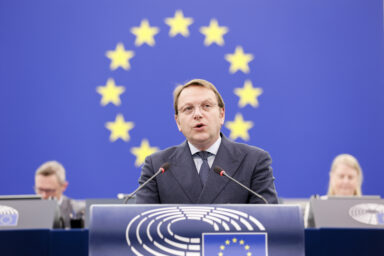
Health Commissioner Olivér Várhelyi called it “a major economic incentive”. “If you want to create economic value (…) this is the way to go,” he added.
Modest by design
Parliament had asked for the numbers months earlier. Committee on Public Health (SANT) rapporteur Vytenis Andriukaitis (S&D/LTU), speaking for MEP Tiemo Wölken (S&D/DEU), said, “the Commission has failed to provide a comprehensive cost-benefit analysis of the proposed 12-month supplementary protection certificate (SPC) extension”.
That assessment has now arrived, a Staff Working Document dated 26 May 2026. The Commission found “the SPC extension would have an economic impact on 2–3 products per year,” at “approximately €70 million per medicine, corresponding to approximately €210 million annually at aggregate level.”
If the EU expands its scope and eligibility, it could attract over €45 billion in investment. — EFPIA
Adding the monetised cost of delayed access, the measure “corresponds to a cost of approximately €615 million every year at aggregate level”. Várhelyi had told MEPs in spring that the cost was “roughly €160 million per product per year”. The Commission states the measure works “at the margin.” “The cumulative benefits of the package are expected to significantly outweigh the associated costs.”
Too narrow to matter
EFPIA’s answer is that “modest” is the problem. A study by Copenhagen Economics claims to be the first to analyze both costs and benefits. If the EU expands its scope and eligibility, it could attract over €45 billion in investment. This change might also create 24,500 new clinical trial places in 15 years. Up to 27 new medicines a year could qualify. That’s a big jump from two under current plans.
Its central finding is a design argument: “scope and eligibility are the largest drivers of benefits, whereas longer duration is the primary driver of costs”, pointing to a broad-but-short certificate, with a “ten-fold increase in R&D investment under the broadest scenarios compared to the narrowest”. The budget hit, it argues, stays marginal: a narrow extension lifts healthcare spending “by 0.003 per cent”, and only “the most expansive scenario (…) does the increase reach 1 per cent”.
Unlike the Commission, EFPIA never attaches a euro figure to that cost, expressing it only as a fraction of spending while quantifying the upside in billions. Ms Moll warned that “every research project that happens elsewhere represents a lost opportunity for European patients, investment, skilled jobs, and future growth”.
The wrong tool entirely
González Casares’s draft opinion deletes the SPC extension outright. He argues against the veterinary version by saying, “demand for zoonotic vaccines is often episodic, outbreak-driven, and highly dependent on public health circumstances. This limits the incentive value of a fixed exclusivity extension.”
I am not very convinced that extending intellectual property protection is the most effective tool. — Nicolás González Casares
He then removes the human-medicine certificate for the same reason, without offering a separate justification. As an alternative, he prefers “push incentives such as research grants, public-private partnerships (…) as well as pull incentives such as advance purchase commitments (…) and strategic procurement”. On LinkedIn, he was blunt: “I am not very convinced that extending intellectual property protection is the most effective tool,” calling the opinion only “the start of the debate”.
A reading, not a ruling
The ENVI text is a draft opinion. They haven’t adopted it yet. The Committee on Public Health and the Committee on Industry, Research and Energy (ITRE), which are the responsible committees, received the submission. ENVI advises; SANT and ITRE hold the pen.
Industry treated the cut as a serious blow. EuropaBio Director General Claire Skentelbery called the report “a mixed bag”, adding that “the decision to remove Article 27 on the supplementary protection certificate is really concerning for Europe’s health biotech sector (…) especially for smaller innovators who are the ones breaking barriers for medicine”.
The fault line does not run along party lines. ITRE rapporteur Wouter Beke (EPP/BEL) warned that “if we do nothing, we could lose an entire sector”, while the S&D group is itself split, Mr Wölken and Mr Andriukaitis demanding better evidence, Mr González Casares scrapping the tool.
By the Commission’s own numbers, the extension would have an economic impact on two or three products per year. The Act pairs it with a €10 billion financing instrument developed with the European Investment Bank, which Mr Várhelyi has presented alongside the incentive: “We are not only providing you with a regulatory proposal, we are also providing an economic one.” He summed up his case to MEPs: “We are in the last minute to save our still existing competitive edge.”