The question is no longer whether Europe needs more autonomy. How and how fast is what four recent papers try to answer. But while sharing a common alarm, they diverge sharply on the cure.
Four of Europe’s intellectual heavyweights—the German Kiel Institute, Italy’s Istituto Affari Internazionali, the Berlin-based European Council on Foreign Relations, and the European Journal of International Security—each offer a distinct diagnosis of what European strategic autonomy needs (as well as what it actually is). The starting point is clear: the post-Cold-War order is fraying. Russia’s war in Ukraine, US retrenchment under President Donald Trump, and China’s growing assertiveness have exposed Europe’s dependence on external actors.
The papers approach this from different angles. The Kiel Institute focuses on military hardware. Elio Calcagno of the Istituto Affari Internazionali examines industrial politics. Mark Leonard and Jeremy Shapiro of the European Council on Foreign Relations propose a sweeping governance overhaul. A scholarly article in the European Journal of International Security traces the power of ideas. Together, they form a comprehensive—and sobering—picture.
The hardware gap
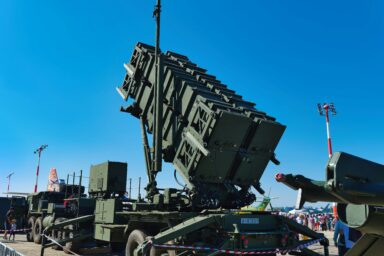
The Kiel Institute’s Achieving European Defence Autonomy: A Roadmap for Overcoming Critical Dependencies sets the most urgent tone. Europe’s forces remain “structurally fragmented” and reliant on US systems across the whole “military effect chain”, the report argues. The authors identify ten capability gaps that Europe must close end-to-end, free of US International Traffic in Arms Regulations constraints. These range from hardened command-and-control networks and mass-produced autonomous drones to sovereign satellite constellations and electronic-warfare mastery.
The cost is substantial but manageable. Closing the gap would require roughly €500bn over ten years, about €50bn per year, or 0.25 per cent of combined EU, UK, and Norwegian gross domestic product. European states already plan major defence-spending increases. Diverting just 10 per cent of those increases to a sovereignty agenda would suffice.
The Kiel authors liken the political challenge to a Manhattan Project. Success depends on sustained top-level backing that overrides parochial work-share fights and retires legacy systems that drain budgets without adding strategic value. The obstacle, they insist, is political resolve, not technology or money.
The Istituto Affari Internazionali’s European Strategic Autonomy and Defence Cooperation: Not an Inevitable Outcome is less sanguine. Elio Calcagno, a researcher with the institution, distinguishes two dimensions of autonomy. One of them is industrial; domestic know-how and production capacity—and operational—high-end capabilities to run large-scale missions. His brief focuses on the industrial side, and his conclusion is blunt. Defence industrial cooperation is “not an inevitable outcome”.
Industry’s reluctance
The R&D gap illustrates the problem in sharp relief. EU member states collectively spent €13bn on defence research and development in 2024. The United States spent over $130bn. The European Defence Fund’s €7.3bn budget for 2021–2027 is helpful but insufficient to shift the trajectory.
Strategic autonomy has proved a powerful discursive catalyst—raising political salience, linking civilian and military agendas, and justifying new instruments—especially on the civilian-resilience side. — European Journal of International Security
National interests consistently override collective logic. Mr Calcagno points to two competing sixth-generation fighter programmes—the Future Combat Air System involving France, Germany, and Spain, and the Global Combat Air Programme involving Italy, the United Kingdom, and Japan—as emblematic of the problem. Both struggle with cost-sharing and work-share disputes. Meanwhile, Spain and Italy have abandoned long-standing submarine partnerships to pursue national designs, and the Franco-German main battle tank programme has stalled.
Mark Leonard and Jeremy Shapiro of the European Council on Foreign Relations take the broadest view in their Empowering EU member states with strategic sovereignty. They argue that the EU must stop being the chessboard on which stronger powers play and become a chess player in its own right. Their preferred term ‘strategic sovereignty’ deliberately avoids the anti-American connotations of ‘strategic autonomy’ and the federalist implications of ‘European sovereignty’.
Sovereignty, not autarky
The concept is about bargaining power, not autarky. External powers increasingly weaponise interdependence: Russia uses energy, cyber tools, and disinformation; China leverages state-capitalist investment and technology standards; a transactional United States wields NATO commitments and the dollar to force policy concessions. Europe must develop the capacity to resist such pressure without severing ties.
Mr Leonard and Mr Shapiro propose 56 specific recommendations spanning economics, technology, security, resilience, and diplomacy. Three systemic enablers underpin them all: a European Strategic Sovereignty Strategy led by the High Representative; a work-plan of capabilities; and new institutions to break policy silos, including a Strategic Sovereignty Committee within the Commission and a Financial Sanctions Enforcement Office.
The EU must stop being the chessboard on which stronger powers play and become the chess player in its own right. — European Council on Foreign Relations
The European Journal of International Security article Strategic autonomy: A quantum leap forward on European total defence? takes a longer and more theoretical view. Using an ideational-power framework, Jana Wrange traces how the strategic-autonomy discourse has shaped EU security policy from 2010 to 2024. The central question is whether this rhetoric has opened a genuine window for building a full-spectrum European Total Defence system—a whole-of-society posture fusing military and civilian resilience rooted in Nordic and Baltic practice.
Ideas as instruments
The answer is cautiously affirmative, but with important caveats. Strategic autonomy has not yet delivered a unified European Total Defence strategy or a Defence Union. But it has proved a powerful discursive catalyst—raising political salience, linking civilian and military agendas, and justifying new instruments, especially on the civilian-resilience side.
The Strategic Compass of 2022 pledges a ‘quantum leap’ via an all-hazards, whole-of-society approach. The word ‘autonomy’ appears only once in the document, but the logic permeates it. The planned Preparedness Union could be the next milestone, the author argues, if framed as the civilian backbone of a broader EU total-defence ecosystem.
Defence industrial cooperation is not an inevitable outcome. — Istituto Affari Internazionali
All four papers share three core diagnoses. First, Europe’s dependence on the United States—for military systems, financial infrastructure, and diplomatic cover—has become a strategic liability. Second, the status quo is unsustainable. Third, the obstacle is not resources but political will and institutional design.
Where the papers agree…
All four works stress the importance of resilience beyond the purely military. The ECFR piece calls for EU standards for information platforms and centralised cyber-response capacity. Mr Calcagno urges Brussels to prioritise funding for technologies where no EU champion yet exists, including cheap drones, long-range strike systems, semiconductors, and high-performance computing.
The Kiel Institute calls for a military cloud and AI-ready data fabric. The European Journal article highlights the civilian backbone—critical-infrastructure protection, societal resilience, and psychological defence—as the domain where EU-level progress has been most tangible.
The disagreements are significant. The Kiel Institute is the most militarily focused and the most optimistic. It believes sovereign defence is financially and technologically attainable within five to ten years, provided political leaders concentrate resources on ten clearly defined capability gaps through modern, capacity-oriented procurement. Its ‘Team Europe’ model—coalitions of willing states pooling funds around each gap, paying industry for surge-production ability rather than fixed unit numbers—represents a direct challenge to Europe’s slow, fragmented, legacy-contractor-dominated procurement culture.
… and where they diverge
Mr Calcagno is more sceptical. He warns that new regulations such as the European Defence Industrial Strategy and the European Defence Industry Programme, which together offer €1.5bn for 2025–2027, provide legal scaffolding for common procurement but lack scale relative to a €70bn market. Smaller European Defence Fund grants attract smaller states and SMEs but cannot override the pull of larger national budgets, especially after the post-2022 spending surges that have given governments alternatives to cooperation.
Europe’s forces remain structurally fragmented and reliant on US systems across the whole military effect chain. — Kiel Institute
Mr Leonard and Mr Shapiro occupy a middle ground on defence but are more ambitious on the economic and diplomatic dimensions. They argue that genuine defence autonomy is a decades-long project, but that urgent steps are needed now to hedge against US retrenchment. Their two-pillar approach—strengthening NATO’s European level of ambition while developing a division of labour that frees the United States for the Indo-Pacific—is more transatlantic in spirit than the Kiel paper, which focuses on removing US dependencies entirely.
The European Journal article offers the most structural explanation for why progress is slow. NATO primacy and divergent member-state threat perceptions still block a truly collective armed-forces pillar. Intergovernmental unanimity in defence dilutes EU leverage. Autonomy language must remain deliberately ambiguous to keep all capitals on board. Yet the EU’s identity as a unique civilian-military crisis manager allows progress precisely where NATO is less active — hybrid threats, resilience, and civilian logistics.
The Commission question
A tension runs through all four papers: how much power should the European Commission hold over defence? Mr Calcagno notes that power is shifting from the intergovernmental European Defence Agency to the Commission’s DG DEFIS and the new Defence and Space Commissioner. The forthcoming European Security Strategy, due by end of 2026, is being drafted under Commission lead. That is a significant act of centralisation that risks legitimacy problems without full member-state buy-in.
The ECFR paper wants to accelerate this shift, proposing a Strategic Sovereignty Committee that would integrate geo-economic and security policy across Commission directorates and link directly to national capitals. The European Journal article is more cautious, noting that intergovernmental unanimity requirements in defence dilute EU leverage and that autonomy language must stay ambiguous to hold the coalition together.
The Kiel paper sidesteps the institutional question almost entirely. Its focus is on capability outcomes, not governance structures. This is both its strength and its limitation: a technically rigorous roadmap that assumes political will into existence rather than explaining how to generate it.
The window is narrow
All four authors agree that the window for action is narrow. External shocks—Russia’s war, the pandemic, and the prospect of a less engaged Washington—have created a rare moment of political urgency. The question is whether European leaders will convert that urgency into durable institutional change or allow it to dissipate into declarations and underfunded programmes.
The Kiel Institute provides the technical roadmap. Mr Calcagno provides the industrial reality check. Mr Leonard and Mr Shapiro provide the institutional blueprint. The European Journal article provides the historical and discursive context. None of them is sufficient alone. Europe needs all four perspectives simultaneously, along with the political courage to act on them before the window closes.
Which is, in and of itself, quite telling. If many a prominent mind is solving a problem, and provides an answer you have heard countless times before, you know you are walking in circles.