Europe has approved a trade deal designed to protect itself from Trump’s tariffs. The catch? The safeguards built into the agreement can only be activated by the European Commission — an institution many critics no longer trust to confront Washington.
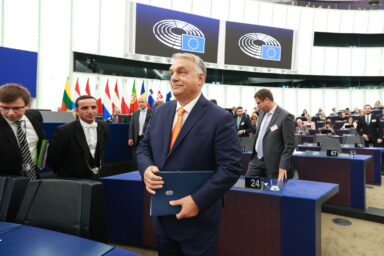
On Tuesday, the European Parliament ratified the long-contested Turnberry trade deal, voting 440 to 151 to scrap EU tariffs on American industrial goods in exchange for a 15 percent US ceiling on most European exports. The deal now leaves the Parliament’s hands, moving to the Council for final sign-off on 26 June. With ratification all but a formality, the question is who actually controls the safeguards MEPs fought to insert — and whether Brussels has the will to use them.
The EP solidified the negotiated agreement to scrap its tariffs on US industrial goods outright and to open its market to a range of American agricultural and seafood products in exchange for Washington to cap its tariffs on most European exports at 15 percent.
In short, American goods enter Europe largely duty-free, while European exporters still face a 15 percent wall going the other way. Defenders counter that exports are only half the ledger: European factories also run on American inputs, and cheaper access to those materials offsets some of the cost of the tariff wall.
“A deal is a deal — and the EU is delivering its part,” European Commission President Ursula von der Leyen wrote on social media.
The initial pledges also stayed in. The EU “intends” to buy $750 billion in American energy by 2028, European firms are “expected” to invest a further $600 billion in the US, and the bloc will purchase at least $40 billion in American AI chips.
The safeguards
The European parliament did however work in significant safeguards. Under the agreed text, the United States has six months to bring its tariffs on steel and aluminium down from 50 percent to 15 percent, a deadline that falls on 31 December 2026. Should Washington keep hitting European steel and aluminium derivatives with tariffs above that ceiling, the EU has the power to suspend its own concessions.
But this power lies not with the EP who baked it in, but with the Commission, whose original draft had left these safeguards out.
We are sticking to our deal, but we are also clear that if the other side is breaching this deal, we have a lot of possibilities. — MEP Bernd Lange (S&D/DEU)
Under the agreed text, the EP or any single member state can request that the suspension mechanism be triggered, but the decision to actually pull the lever rests solely with the Commission. The question is not then can these safeguards protect the EU, but will the institution holding the power be inclined to act.
Alongside the steel trigger sits a broader suspension mechanism for other breaches, a sunset clause that expires the whole arrangement on 31 December 2029 unless it is renewed. A responsibility that also sits with the Commission to deliver a full assessment of the deal’s effects on European industry, agriculture and small business by mid-2029.
“We are sticking to our deal, but we are also clear that if the other side is breaching this deal, we have a lot of possibilities,” said MEP Bernd Lange (S&D/DEU) ahead of the vote. Possibilities, however, do not read like pulling the rug from under the deal should push come to shove.
A predictable Trump
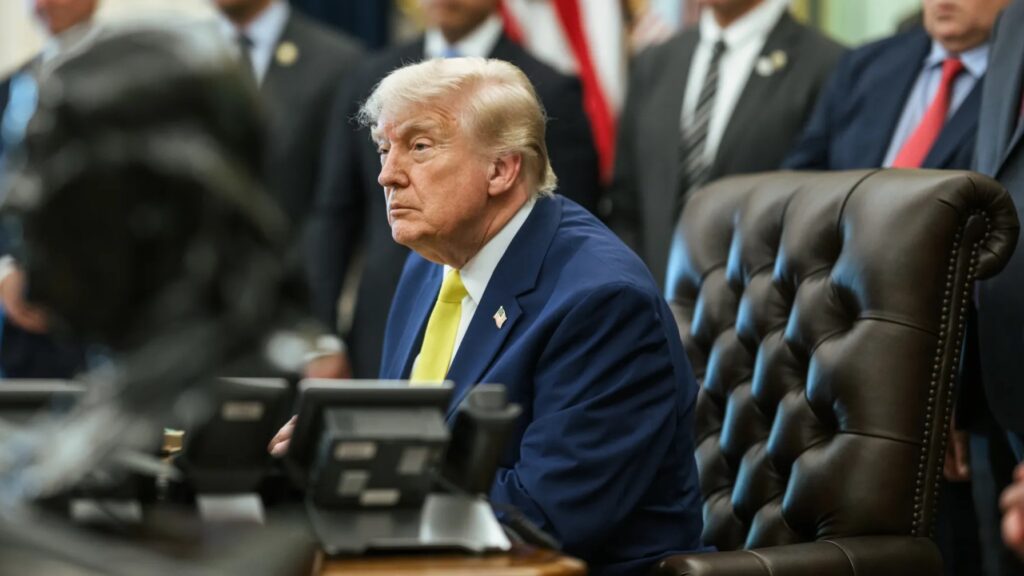
The administration of US President Donald Trump has already proven to offer real predictability in his first year. Predictably, it will surely break its guarantees with Europe. In August 2025, the US added 407 product categories to its list of derivative steel and aluminium goods subject to tariffs, a move MEPs read as precisely the kind of creeping escalation the safeguards were meant to deter.
A few days before the final EP vote, Trump had threatened tariffs on French wine and champagne unless Paris dropped its digital tax on US tech giants. Prior to that is a laundry list of American overreach: a demand that the EU implement the deal by 4 July or face 25 percent tariffs on European cars, threats to take Greenland, and, according to plans reported by the New York Times, an active US effort to pull a swathe of military assets out of Europe in what would be one of the largest shifts in US posture since the Cold War.
The political split
This explains much of the bloc of MEPs who abstained or voted against. For many of them, the Commission has spent a year accommodating Trump rather than confronting him: appeasement has become the default, and that safeguards entrusted to it are safeguards unlikely ever to be used.
The European People’s Party, the centre-right group that shepherded the deal through, makes the case that their pragmatism has prevented a catastrophe. “Despite its shortcomings, this remains the most viable outcome for European businesses… It is about securing steadiness for companies and workers, not prolonging uncertainty through delay,” said MEP Jörgen Warborn (EPP/SWE).
Road ahead
The Council is expected to give its final sign-off on 26 June. With the text already agreed between member states and Parliament in trilogue, approval is widely treated as a formality rather than a fight. The deal will then become EU law.
The real test comes at the end of 2026, when the clock on the steel and aluminium concession runs out. If Washington has cut those tariffs to 15 per cent by then, the safeguards will have served their purpose simply by existing. If it has not, the question becomes: Will the Commission actually reach for the lever the EP built for it, against a US administration it has spent a year working not to antagonise?