The coalition of frugal EU countries is holding firm against the European Commission’s proposed €2 trillion long-term budget, complicating efforts to reach a deal before the end of the year.
Germany, Sweden, Austria and the Netherlands used this week’s European Council summit to reiterate demands for a smaller budget and a shift away from traditional spending programmes such as agriculture and cohesion.
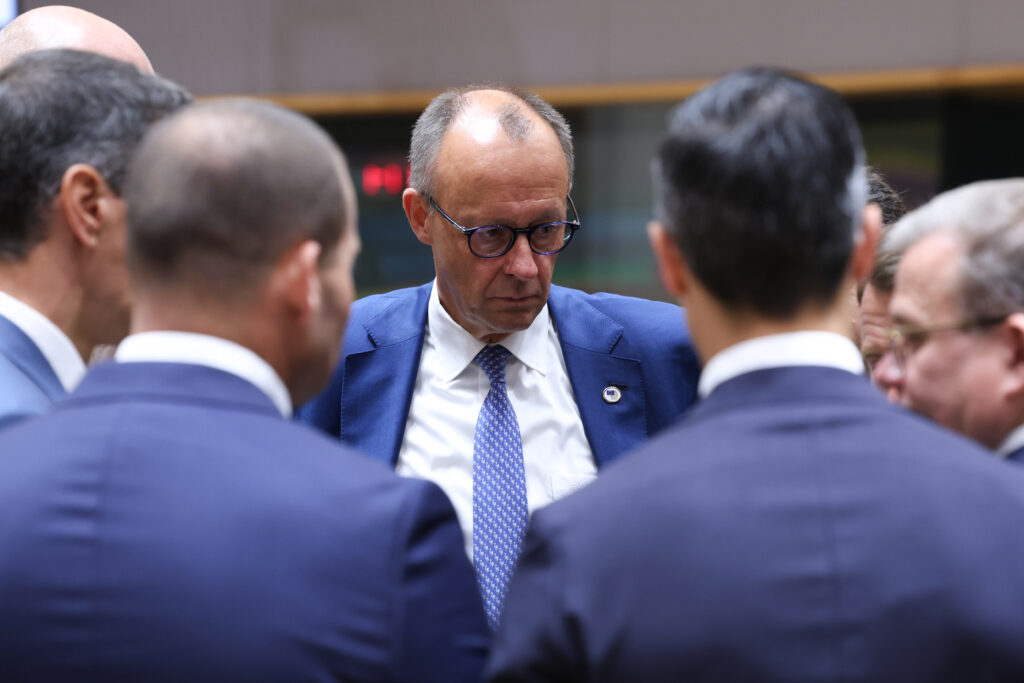
“The figures need to come down,” German Chancellor Friedrich Merz told reporters ahead of the summit. “We can only spend as much money as we actually have.”
“More money does not automatically mean a stronger Europe.”
— Austrian Chancellor Christian Stocker
Merz also rejected further EU borrowing and acknowledged that countries favouring a smaller budget currently lack a majority among member states. But as every government holds a veto over the final agreement, the opposition of a relatively small group of net contributors is enough to block a deal.
Deal on governance rules, no deal on the rest
The intervention comes only days after member states reached preliminary agreements on several key elements of the EU’s next budget cycle, including the architecture of regional funding, competitiveness spending and external action.
While governments are slowly converging on how the future budget should be structured — decisions where no one country holds a veto — they remain deeply divided over how much money the EU should spend and where it should go.
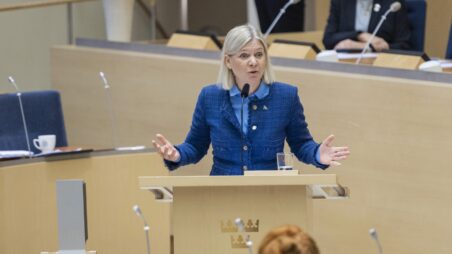
Swedish Prime Minister Ulf Kristersson struck a similarly uncompromising tone as Merz, describing the Commission’s proposal as “simply unacceptable.”
“We need a better, not bigger budget,” he said. “The result is more important than making a deal by the end of 2026.”
Austria also aligned itself with the northern camp. Chancellor Christian Stocker argued that “more money does not automatically mean a stronger Europe”.
North vs. South
The dispute is increasingly about priorities as much as money.
The so-called modernisers, led by Germany, the Netherlands, Sweden, Austria, Denmark and Finland, want more spending on defence, innovation, security and competitiveness. They argue that the EU cannot respond to growing geopolitical and economic challenges while continuing to devote large shares of its budget to agriculture and regional development.
That argument collided last week with the first compromise proposal presented by Cyprus, which currently holds the rotating Council presidency. The proposal reduced the Commission’s draft budget by only 2 per cent and largely protected agricultural and cohesion spending.
Meanwhile, a broad coalition of southern and eastern member states continues to view regional funding and farm subsidies as core pillars of the European project and remains reluctant to accept deeper cuts.
The result is a familiar north-south divide that has shaped every major EU budget negotiation in recent decades.
Who pays?
The debate is becoming even more complicated because negotiators are also being forced to confront the revenue side of the budget.
The European Commission argues that additional funding is needed not only for new priorities such as defence and competitiveness, but also to repay debt incurred through the post-pandemic recovery fund. To help close the gap, Brussels has proposed a series of new EU-level revenue streams that it estimates could raise around €400 billion over the next seven years.
Those plans have generated resistance among both governments and businesses.
The European Parliament, meanwhile, has other plans. Its lawmakers recently backed a budget exceeding €2 trillion while rejecting higher national contributions, thus increasing pressure to find alternative sources of revenue. Among the ideas being discussed are levies on large corporations, digital companies, cryptocurrencies and online gambling.
“Something will have to give”
European Council President António Costa has asked Ireland, which takes over the rotating Council presidency on 1 July, to prepare a new package of potential EU revenue sources ahead of the next leaders’ summit in October.
That task now falls to Irish Prime Minister Micheál Martin, who has already warned that negotiating the next budget will be “very, very tough” because of the contradictory demands coming from different capitals.
Dublin hopes to present a new compromise proposal by October as pressure mounts to secure a political agreement before the end of the year. Failure to do so would leave less time to prepare the new funding programmes before the current budget expires at the end of 2027.
“We will be an honest broker now,” Martin said in Brussels. “Something will have to give.”