Crickets on the menu, steaks grown in Petri dishes and proteins produced by bacteria still sound like a sci-fi for an average European. In reality, they are all attempts to solve a very real problem: the continent depends heavily on imported protein. And the consequences stretch much further than environmental concerns alone.
Protein security is already emerging as a major issue in European food policy, according to a new report from the European Environment Agency (EEA). The reason is straightforward. Europe produces huge quantities of food, yet remains heavily reliant on imported protein feed.
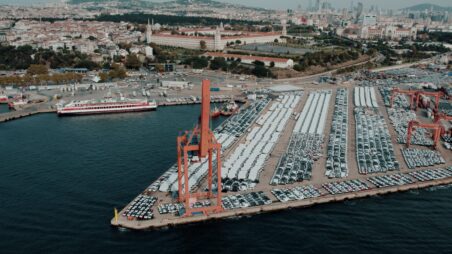
Much of the soy arriving in Europe never makes it onto anyone’s plate. Instead, it ends up in feeding trough, having travelled thousands of miles from South America or the United States.
Not unlike Europe’s dependence on fossil fuels, this creates an uncomfortable reliance on suppliers beyond the continent. It also leaves agriculture exposed to swings in global markets. European food security is therefore more fragile than it might appear, and increasingly vulnerable to geopolitical shocks.
We consume more than we need
There is, however, a striking paradox at the heart of the debate. Europeans are not suffering from a shortage of protein. Quite the opposite. According to the agency, most people consume more protein than their bodies actually need, averaging between 80 and 85 grams a day. Around 60 per cent comes from animal sources.
Protein is indispensable to human health. It forms the basic building blocks of every cell, supports tissue repair, regulates countless bodily processes and plays a crucial role in the immune system. Yet the body cannot stockpile protein for a rainy day. What it does not use immediately is broken down and either used for energy or excreted.
In other words, the problem is not a lack of protein on our plates. The real question is where that protein comes from and what it costs the environment.
The environmental price tag
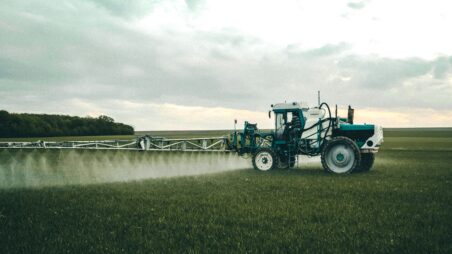
This is where the second dimension of the issue comes into focus. Livestock farming accounts for more than 65 per cent of greenhouse-gas emissions from EU agriculture. At the same time, grazing land and feed production occupy more than half of Europe’s agricultural area.
Nitrogen from animal farming and fertilisers contributes to water pollution, while agriculture generates roughly 94 per cent of ammonia emissions across the EU, making it a major source of fine-particle air pollution.
European livestock production also requires vast quantities of imported feed, effectively exporting part of its environmental burden to other regions. In some parts of the world, soy cultivation is associated with deforestation, land-use change and growing pressure on local ecosystems.
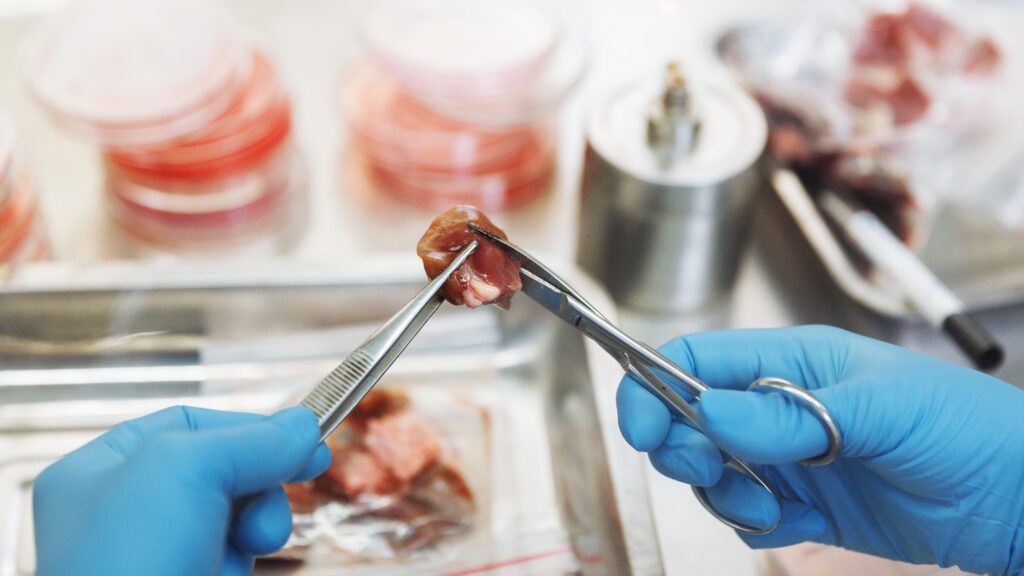
For that reason, the EEA argues that Europe should broaden its protein base. Alongside traditional sources, a larger role could be played by legumes, modern fermentation technologies, insect proteins and, eventually, cultivated meat grown from animal cells.
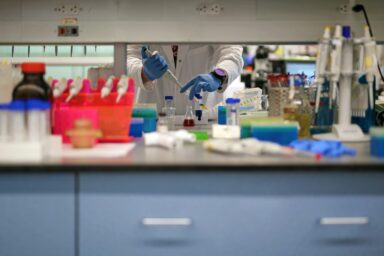
Among these options, fermentation remains one of the least familiar but most promising. Microorganisms like bacteria, yeast can be used to produce protein with relatively modest demands on land, water and other resources.
Researchers therefore expect fermentation-based proteins to gain ground in the years ahead. According to the report, global consumption of alternative proteins could increase more than sevenfold by 2035.
Models developed by the European Commission’s Joint Research Centre suggest that a coordinated shift towards more diverse protein sources could reduce dependence on imported feed while cutting greenhouse-gas emissions from EU agriculture by around 5 per cent by 2035.
A ban on steaks? No way
For many people, talk of alternative proteins immediately conjures up a future without steaks, schnitzels or dairy products. That is not the conclusion of the report.
On the contrary, the agency notes that some forms of livestock farming, particularly extensive grazing systems, can play an important role in maintaining landscapes, supporting biodiversity and preserving the patchwork character of agricultural land. The aim is not to eliminate meat from the menu, but to ease pressure on natural resources and build a more diverse food system.
Nor is change likely to arrive in the form of a dramatic revolution. A gradual evolution seems far more plausible: more legumes in European fields, new generations of animal feed, foods enriched with alternative proteins and technologies that most consumers have yet to encounter.
So the question facing Europe may not be whether we will all end up eating crickets. A more intriguing question is how to secure enough protein to meet growing demand without placing ever greater strain on landscapes, both in Europe and beyond. That is the challenge European environmental institutions are now trying to solve.