Almost a half of attractive EU-supported defence loans fail to boost joint procurement. What can Brussels do to fix this?
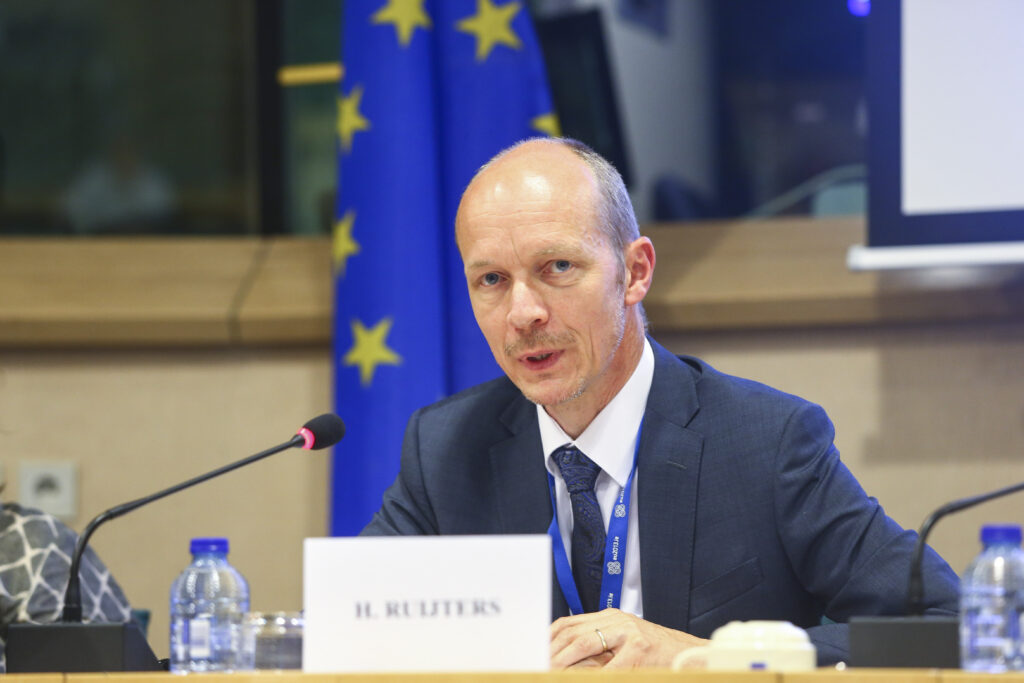
Herald Ruijters, deputy head of DG DEFIS, faced a tricky task on Tuesday. He had to explain to the Security and Defence (SEDE) committee of the European Parliament why the SAFE (Security Action for Europe) programme is proceeding slowly. The programme aims to enhance the European defence industrial base and promote common procurement across member states. However, the initial rollout has been sluggish.
Mr Ruijters attributed the slow progress to a combination of factors. He noted, “We had 19 member states that applied and got a loan out of the SAFE instrument… there was a large oversubscription of the €1.5bn available, somewhere around €190bn in requests.” Such overwhelming demand necessitated scaling back requests, which added to the complexity of the rollout. The process required member states to submit national plans that aligned with SAFE regulations, which were then to undergo screening for compliance.
The state of play
As of the report, only nine out of the 19 member states had signed loan agreements. These included Poland, Lithuania, Croatia, Romania, Belgium, Cyprus, Greece, France, and Latvia. Mr Ruijters expected three additional countries—Czech Republic, Finland, and Slovakia—to sign in the coming days, with Bulgaria and Estonia anticipated by the end of June. Discussions with Italy and Hungary were ongoing, but Hungary’s new government had withdrawn its initial plan, widely seen as blown out of all proportion.
The slow pace raised questions among lawmakers. MEP Hélder Sousa Silva (EPP/PRT) highlighted concerns about fragmentation and the risk of national procurements dominating the landscape. He asked Mr Ruijters about the specific percentages of contracts that are truly multinational rather than national purchases at competitive interest rates. This concern about fragmentation is particularly salient considering the context of the ongoing war in Ukraine. It has underscored the need for a cohesive European defence strategy.
In response, Mr Ruijters asserted, “The figures as it stands today show that 60 per cent is common procurement, 40 per cent national, with a volume that will go upwards for common procurement.” If the principal goals of SAFE were to ensure joint defence procurement, it is not terribly efficient.
The DG DEFIS deputy boss said he was hopeful that the ratio would shift towards 70–30 or even 80–20. National procurements must be “open” to other member states after the first year of the programme, he said.
Compliance and operational arrangements
The operational aspects of SAFE are also complex. Each member state must sign not only loan agreements but also operational arrangements that detail contracts, timelines, deliverables, and milestones. Mr Ruijters explained, “Once the loan agreement is signed, we are not yet there, because we also have for each member state operational arrangements.”
So far, three operational arrangements have been signed (Poland, Lithuania, Cyprus), with one more expected (Croatia) soon. The Commission has made pre-financing payments to Poland and Cyprus, while Lithuania is slated to receive funds shortly.
Mr Ruijters confirmed that the overall volume of current loans is likely to settle around €1.4bn. The slow pace, again, raises concerns about the overall effectiveness of the SAFE programme.
Fragmentation and cooperation
MEP Sven Mikser (S&D/EST) expressed concerns about the fragmentation of the European defence industry. National specifications often hinder interoperability, he noted: “The European industry is still quite fragmented.” Mr Ruijters acknowledged this issue, stating that the SAFE instrument has had a positive effect on fostering cooperation, as 60 per cent of contracts are common procurements. He noted, “We see many contracts where member states are working together with the industry of the member states.”
While the initial phase has been slow, there are signs of improvement. The Commission has rejected numerous projects that did not align with the common procurement goals of SAFE. Mr Ruijters said, “We have been rejecting many, many projects,” particularly those lacking a common dimension.
The figures as it stands today show that 60 per cent is common procurement, 40 per cent national.
— Herald Ruijters
The SAFE programme is also entwined with ongoing efforts to support Ukraine amidst the ongoing conflict. Approximately €5bn under SAFE is dedicated to actions involving Ukraine, such as donating production or setting up joint ventures. Mr Ruijters stated, “The large majority of [national plans] had also foreseen actions with Ukraine under SAFE.”
The integration of Ukraine into the European defence framework is essential, and the SAFE instrument aims to facilitate this. MEP Villy Søvndal (Greens/EFA/DNK) asked about investments in the entire chain of drone capabilities, from drones to radar detection. Mr Ruijters confirmed that SAFE can address a comprehensive spectrum of needs, stating, “We can tackle with SAFE the entirety of the whole spectrum, not only drones, counter drones, but all types of them.”
Uncertain future
Looking ahead, the programme’s future remains unclear. The next steps involve finalising loan agreements and operational arrangements with all participating member states. Mr Ruijters assured MEPs that detailed reporting on the capabilities covered and the overall balance between common and national procurements would follow in September.
Despite the delays, Mr Ruijters expressed confidence in the direction of the SAFE programme. He concluded, “We can speak of a very positive travel direction in comparison to where we come from with the member states.” The urgency for a cohesive European defence strategy, especially in light of the ongoing geopolitical challenges, makes the successful implementation of SAFE imperative.
In summary, while the SAFE programme’s slow pace raises questions about its effectiveness and the extent of common procurement, it also highlights the complexities of achieving meaningful cooperation among European member states. The programme’s future will depend on the resolution of lingering issues, particularly in Hungary and Italy, as well as the broader context of European defence needs.