Cardiovascular disease kills around 1.7 million Europeans every year, yet the EU has never had a dedicated strategy to tackle it. That is now changing with the Safe Hearts Plan. But as lawmakers backed the initiative on Wednesday, its parliamentary rapporteur warned that the final compromise fell short of her ambitions on tobacco and alcohol.
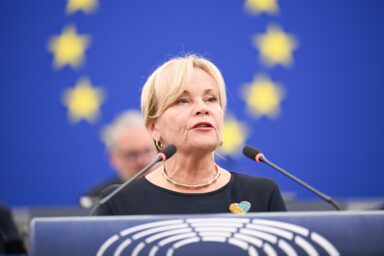
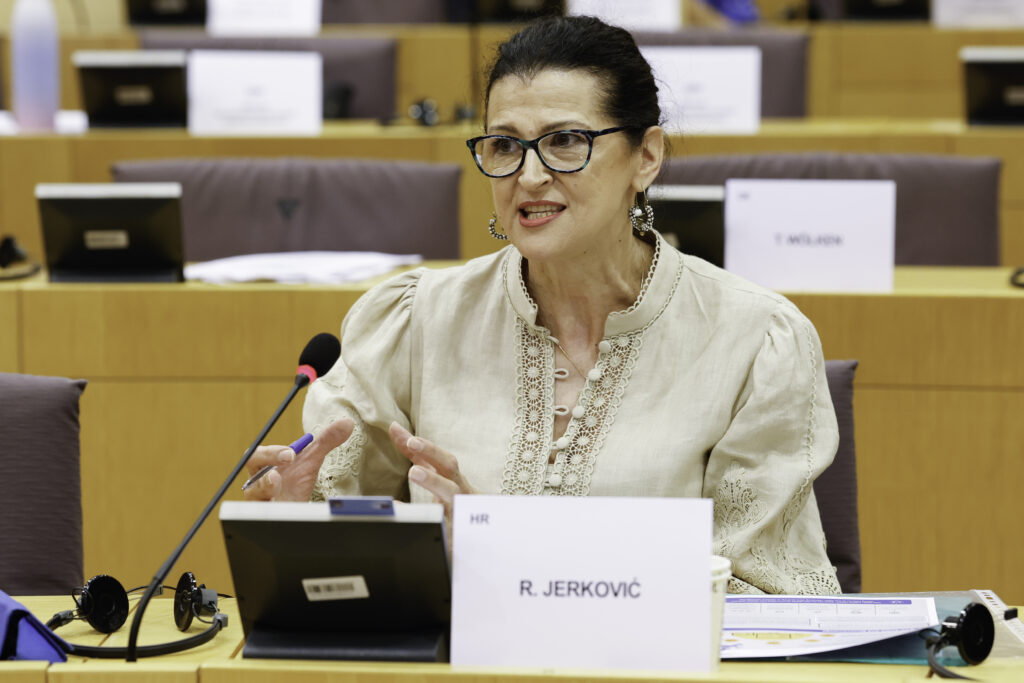
Romana Jerković (S&D, Croatia) got her report through, but she did not hide her reservations. The European Parliament’s public health committee (SANT) was voting on its response to the EU’s first proposed cardiovascular strategy. That response tells the Commission to bring new nicotine products such as vapes and pouches under the EU Tobacco Products Directive, to extend tobacco advertising rules to social media, and to improve front-of-pack food labelling.
Before the vote, the rapporteur told colleagues she had wanted a bolder approach, especially on tobacco and alcohol. The result, she said, was a compromise.
The committee adopted the own-initiative report on Wednesday by 38 votes to 2, with one abstention. It now goes to a full plenary vote, expected in September 2026.
As a rapporteur, frankly, I would have personally wished for a more ambitious approach in certain areas, particularly when it comes to tobacco and alcohol.
— MEP Romana Jerković (S&D, Croatia)
The report reacts to the Commission’s “Safe Hearts Plan,” presented in December 2025 under health commissioner Olivér Várhelyi. It calls for a coordinated approach to preventing cardiovascular diseases and the risk factors and comorbidities linked to them. These include diabetes, hypertension, cancer, chronic kidney disease and obesity.
‘This is a compromise’
Jerković framed the vote as a shift towards prevention. She also told colleagues the text fell short of her ambitions. “From the very beginning, we knew it’s not going to be easy,” she said in a statement before the vote. “As a rapporteur, frankly, I would have personally wished for a more ambitious approach in certain areas, particularly when it comes to tobacco and alcohol.”
She described the result as a compromise. “The spirit of the compromise is that all of us have had to give something, and all of us have gained something,” she said. The file drew intense interest. Members tabled more than 1,100 amendments.
A tougher line on tobacco and nicotine
On tobacco, the committee wants strong regulatory measures to cut the affordability, access, consumption and appeal of tobacco and nicotine products. The scope covers novel and emerging products, including e-cigarettes. Members want these products brought under the EU Tobacco Products Directive. They also call for social media advertising to fall explicitly under the Tobacco Advertising and Sponsorship Directive.
The push tracks a recent shift in Commission language. In May, Várhelyi reframed the EU’s goal from a tobacco-free to a “tobacco and nicotine-free generation” by 2040.
Don’t drink, excercise and eat plant-based
On alcohol, the report asks member states to run education and communication campaigns. These should cover the cardiovascular and other health risks of harmful drinking, particularly above scientifically established recommendations.
On diet, members promote balanced eating patterns such as the Mediterranean and Nordic diets, plant-based diets and certain organic-based diets. They back physical activity. They call for better front-of-pack nutrition labelling. They also want stronger health impact assessments of ultra-processed foods and energy drinks.
Early detection and equal access
The committee strongly supports cardiovascular health checks. It wants priority for people with at least one risk factor, and for those with a family history of premature disease. Members also call for timely and affordable access to high-quality care. They want stronger action to reduce inequalities tied to income, employment, housing, gender, age, healthcare access and environmental exposure. The report backs wider access to cardiopulmonary resuscitation awareness programmes, and mandatory CPR training in schools and workplaces.
The report calls for tougher and more progressive action on the commercial drivers of poor health, from the marketing of novel nicotine products to children to the lack of transparency around alcohol and unhealthy foods.
Commercial interests as drivers of poor health
In a statement after the vote, Jerković returned to the theme of commercial influence. “For too long, Europe has focused on paying for the consequences of cardiovascular disease instead of addressing its causes,” she said.
The report, she added, “calls for tougher and more progressive action on the commercial drivers of poor health, from the marketing of novel nicotine products to children to the lack of transparency around alcohol and unhealthy foods.” Public health policy should be driven by evidence, she said, “not by commercial interests.”
The S&D group made the same case after the vote. It stated that reducing cardiovascular disease needs better prevention and more action on the social and commercial causes of poor health.
Real test lies in implementation
Cardiovascular disease remains the EU’s leading cause of death. It accounts for around 1.7 million deaths each year. Some 62 million people live with the condition, and close to 13 million new cases occur annually. The disease also carries a heavy economic cost, estimated at 282 billion euros a year in healthcare spending, lost productivity and wider social costs. The committee notes that an estimated 80 percent of cardiovascular disease is preventable.
The Safe Hearts Plan asks member states to develop national cardiovascular plans by 2027. Several have such plans in place or in development, though coverage across the EU remains uneven. Czechia and Romania have already launched national plans. Belgium has committed to one in its federal coalition agreement but has not yet adopted it.
Implementation now looks set to dominate the debate. A recent commentary in the International Journal of Public Health, drawing on the JACARDI joint action and its more than 140 pilot projects, argued that the main challenge lies in implementation rather than a lack of strategies.
Advocates are also looking to national governments to carry the plan forward. The EU Structural Heart Disease Coalition has pointed to the incoming Irish presidency of the Council of the EU, which begins on 1 July, as a chance to drive implementation. At an event in Leinster House on 17 June, hosted by Senator Maria Byrne, policymakers, clinicians and patient groups discussed how Ireland could lead on the plan during its presidency.
The Committee of the Regions is due to adopt its own opinion on the plan on 13 October. The full plenary vote in September will set Parliament’s final position. The report is non-binding. It signals the Parliament’s priorities — but ultimately, the end result depends on the European Commission as well as the member states.