Eighty-five per cent of Europe’s criminal networks operate through legal businesses. Europol’s new blueprint of organised crime maps over 700 networks across 118 countries and finds law enforcement consistently one step behind. The Commission has promised new legislation, but the report makes clear the system has a structural problem.
Europol presented the report today in Brussels, alongside the European Commission and the Cypriot Presidency of the Council. Criminal networks, it finds, no longer operate in the shadows. They run logistics firms, buy real estate, and exploit legal business structures to launder money and avoid detection. “This report provides us with precisely that, and our response is already underway, from the anti-drug strategy to the fight against migrant smuggling and digital fraud,” said Commissioner for Home Affairs and Migration Magnus Brunner.
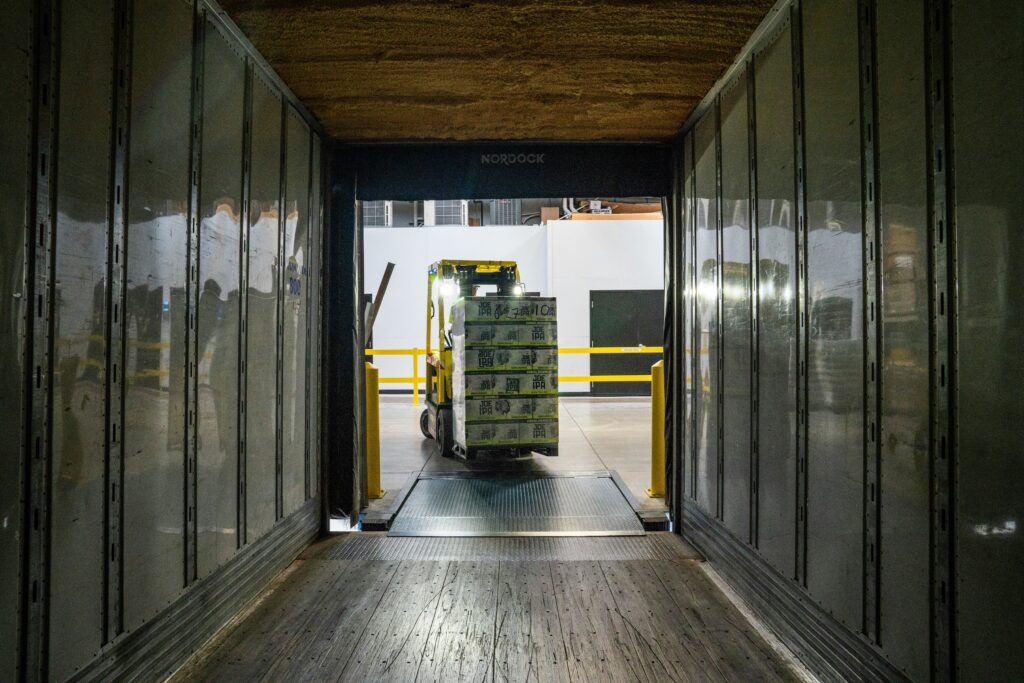
The report examines criminal networks spanning a wide range of serious crimes, from drug trafficking and cybercrime to migrant smuggling, human trafficking, fraud, and money laundering. Logistics and real estate emerge as the sectors most heavily exploited for cover.
Crime’s favourite hiding places
The two sectors most heavily infiltrated by criminal networks are logistics and real estate, according to Jürgen Ebener, Acting Executive Director of Europol. “These networks operate across a wide range of serious crimes, including drug trafficking, cybercrime, migrant smuggling, human trafficking, fraud, money laundering, and, more generally, contract criminal services,” the report states.
Digital technology is also increasingly present among EU criminal networks. “They are increasingly exploiting digital technologies, global trade flows, and legal business structures to sustain and expand their illicit activities. They no longer operate in isolation, but as part of a fluid criminal ecosystem, capable of rapidly adapting to law enforcement efforts, filling operational gaps, and seizing new criminal opportunities,” it reads.
Our economy remains deeply exposed to organised crime infiltration. — Magnus Brunner, Commissioner for Home Affairs and Migration
Europol’s findings point to a systemic problem. Targeting individuals is no longer enough. The systems and vulnerabilities that organised crime exploits must also be addressed. “Criminal groups are highly flexible: they constantly change and reinvent themselves, making them difficult to track and dismantle. Our economy remains deeply exposed to organised crime infiltration,” said Brunner.
To respond to these evolving challenges, the Commission already presented, earlier this week, a proposal to strengthen Europol’s mandate and “ensure that European solutions reach every member state more quickly and more effectively.”
The ‘Ndrangheta’s rise to the top
The Calabrian ‘Ndrangheta has established a dominant position in drug trafficking from Latin America to the EU. It exploits Albanian criminal networks on the ground to maintain control of the entire supply chain. Seventy-five drug trafficking networks operating across both regions have no Latin American members at all. Networks from Italy and the Western Balkans have set up operations in Latin America to source cocaine directly from local cartels.
“Some Albanian networks have established themselves in Latin America and continue to benefit from their business relationships with the cartels. Other networks in the Western Balkans have also expanded their involvement in cocaine trafficking,” the report concluded.
The European Commission will present new legislation to combat organised crime next year, Brunner announced. “We must do better at combating infiltration of the economy and sharing information,” he said.