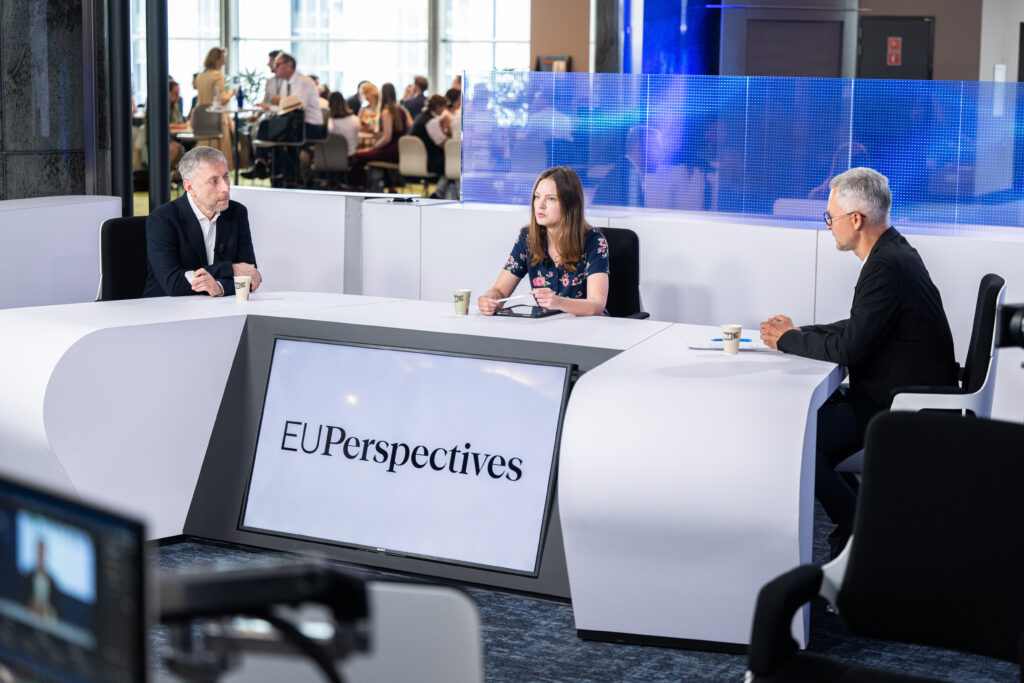
The EU is worried about its competitiveness. Brussels debates chips, energy prices, defence spending and productivity gaps, while one of the biggest drains on all of them sits unaddressed in plain sight. Czech addiction policy expert Jindřich Vobořil and MEP Ondřej Krutílek (ECR/CZE) argue in an EU Perspectives podcast that smoking, alcohol, drugs and digital addiction are steadily eroding the human capital Europe’s economy runs on and that the EU, trapped in institutional silos and ideological reflexes, has no effective strategy to stop it.
Mr Krutílek set the frame. “We need to have a healthy society,” he told the EU Perspectives podcast. “If the society is healthy, then of course competitiveness can have the solid basis for growth.” Mr Vobořil broadens the argument immediately. Addiction, he says, is not merely a health issue. It reduces labour-market participation, weighs on productivity, and places mounting pressure on public finances. The scale is routinely underestimated.
“If you look at the money flowing inside of the addiction products, it’s bigger than energy or oil,” Mr Vobořil says, counting alcohol, tobacco, pharmaceuticals, illicit drugs, gambling, and digital addiction together. That scale, he argues, demands a commensurate institutional response. So far, the EU has failed to provide one.
No one is in charge
Mr Vobořil’s central criticism is structural. Addiction policy spans health, justice, taxation, digital policy, and social affairs. Yet in Brussels, responsibility for it is scattered across multiple Directorates-General, each with its own mandate, budget, and institutional outlook. Drug policy sits with the justice directorate. Tobacco falls under health. Gambling barely registers anywhere. “It cannot fall under one DG,” Mr Vobořil says, “because any one DG is very limited and also influenced by one particular view.”
He has spent fifteen years navigating this fragmentation firsthand, attending monthly meetings in Brussels and working across institutional boundaries that rarely yielded coherent results. His conclusion is that tinkering at the margins will not suffice. The issue, he argues, should be lifted entirely out of the DG structure and coordinated at the highest political level—directly under the Commission president or Parliament leadership—”to have it as independent as possible.”
Mr Krutílek agrees the current arrangement is inadequate. “We definitely need coordination at the very beginning,” he says. But he is candid about the obstacles. “I don’t think that this is possible in this term because when we can see how European Commission works now, it’s the principle of divide et impera coming from the 13th floor and Ursula von der Leyen.”
The conservative MEP suggests the pressure for change may need to build from member states upward. “If there will be a grassroots activity coming from member states, then I’m pretty sure that the European Commission will be under pressure and will mirror these moves also in its own internal procedures,” he said.
Familiar blind spots
The EU has not ignored public health entirely. Europe’s Beating Cancer Plan and the European Cardiovascular Health Plan both address some of the relevant risk factors. But do the EU’s flagship public-health initiatives actually target the real drivers of preventable disease?
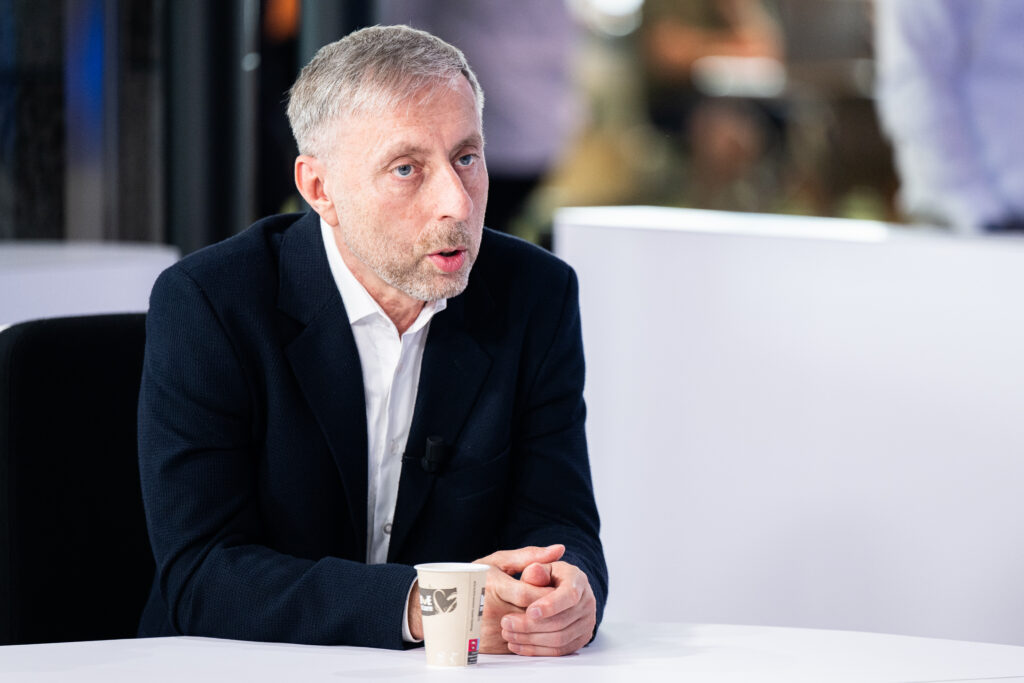
Mr Krutílek recalls the debates around those documents as revealing. Negotiators spent considerable time arguing over whether to refer to “consumption of alcohol” or “harmful consumption of alcohol”. The semantic dispute illustrated how far the EU still is from a coherent, evidence-based framework. “This shows how we need to balance the approaches among the members of the European Parliament and how restrictive some of us can be,” he says.
If you look at the money flowing inside of the addiction products, it’s bigger than energy or oil.
— Jindřich Vobořil, ex-Czech national drug coordinator
Mr Vobořil is more pointed. He argues that the EU’s instinct—across almost every area of addiction policy—is to reach for a ban or a regulation rather than invest in prevention. “I think what we are doing really wrong is thinking that regulations and bans and strict laws are more important than prevention and help,” he says. “It’s a fog, a political fog (enabling us to) pretend we’re doing something.”
The Swedish evidence Brussels refuses to see
The forthcoming revision of the EU’s Tobacco Products Directive—the main piece of legislation governing tobacco and nicotine products—offers a concrete illustration of the broader debate. Both guests see it as an opportunity. Neither is optimistic about the direction of travel.
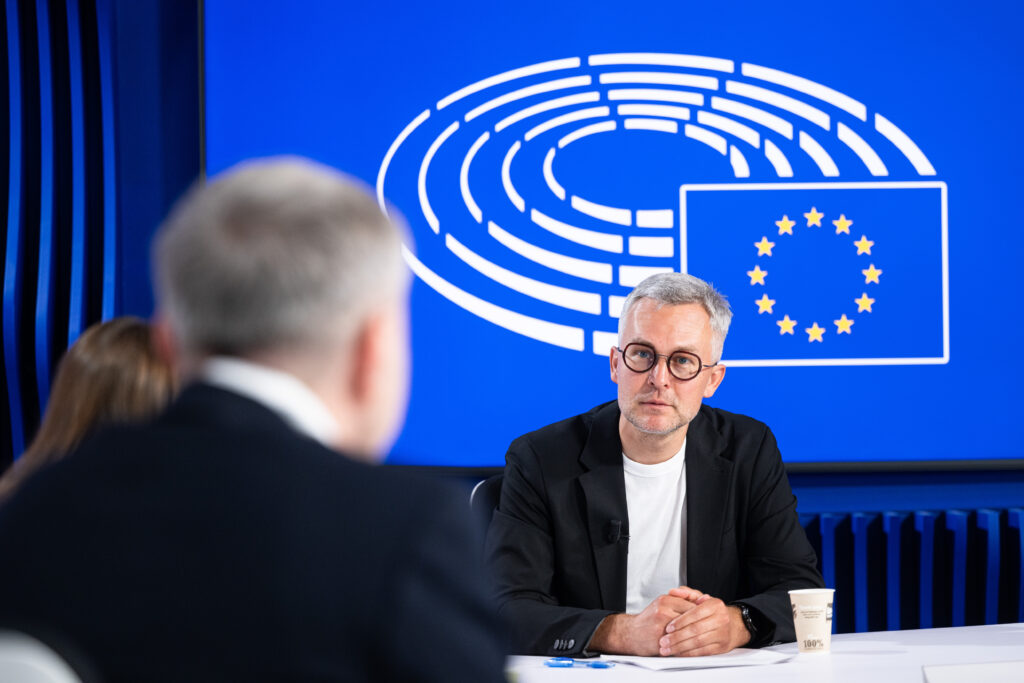
The question the revision forces into the open is whether EU legislation can move beyond uniform regulation—treating all products as equally harmful regardless of the evidence—towards a more evidence-based and risk-proportionate approach. Mr Vobořil points to Sweden, where a shift away from combustible cigarettes towards lower-risk nicotine products has reduced the smoking rate to around five per cent, with lung-cancer and cardiovascular-disease rates falling by roughly 70 per cent. “The people didn’t stop using nicotine,” he observes. “They stopped using nicotine in the worst form, that of smoking.”
The lesson, he argues, is that regulating by risk—distinguishing between products by the harm they cause rather than treating all nicotine as equivalent—can achieve public-health goals that prohibition cannot. Mr Krutílek agrees. “What we need is an evidence-based policy. We need figures, we need data, and we need to think about tobacco in a broader context.” He warns that the one-size-fits-all approach will produce unintended consequences that “many of my colleagues will clap their hands” at, without seeing them coming.
Prevention as a competitiveness strategy
Europe’s competitiveness strategy rests on innovation, technology, and investment. But both Mr Vobořil and Mr Krutílek argue that those ambitions depend on something more fundamental: the health and resilience of Europe’s citizens. Addiction erodes both. It reduces productivity, raises healthcare costs, shrinks labour-market participation, and—at its most extreme—feeds the shadow economies that undermine the rule of law.
Mr Vobořil is direct about where the balance of effort should lie. “Politics need money and we need to put money in prevention. That’s 80 per cent of the instruments that governments or the EU have—not repression.”
What we need is an evidence-based policy. We need figures, we need data, and we need to think about tobacco in a broader context.
— MEP Ondřej Krutílek (ECR/CZE)
Whether the European Commission is prepared to rethink its approach to addiction policy—to lift it out of its institutional silos, invest seriously in prevention, and regulate by risk rather than by reflex—may therefore become a broader test of how seriously the EU treats human capital as a pillar of long-term competitiveness.