Mark Rutte’s NATO job, in three steps: Turn promises into plans, plans into hardware, hardware into action. Mission (just about) impossible.
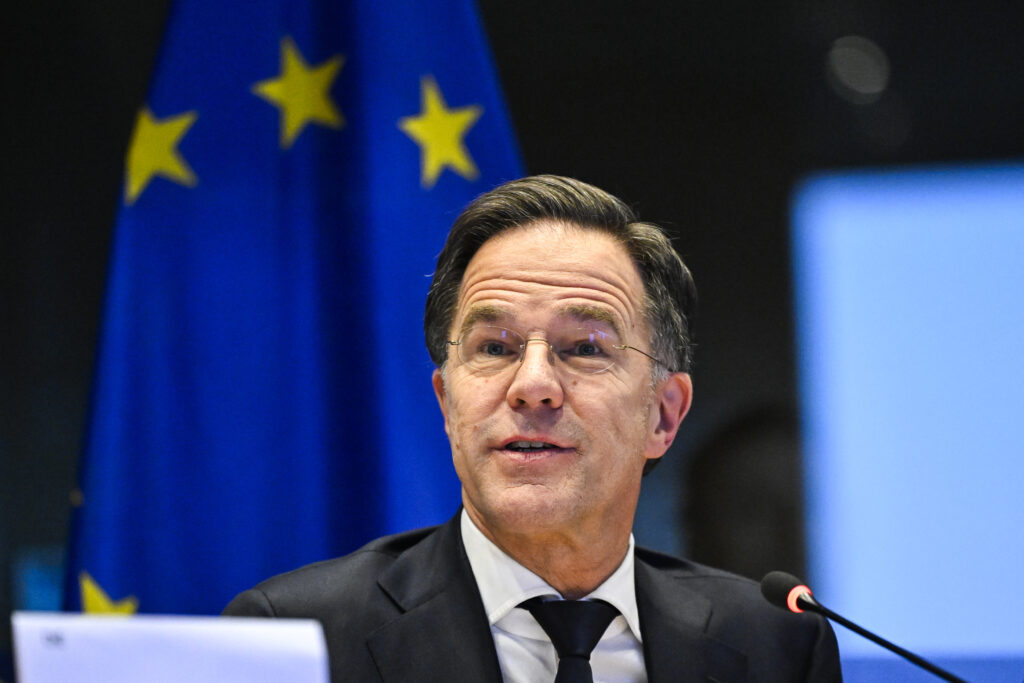
NATO’s 32 leaders gather in Ankara today for a summit that carries more weight than most. The meeting comes one year after The Hague, where NATO Secretary General Mark Rutte extracted a historic pledge from allies to spend five per cent of GDP on defence. That deal was hard enough. What follows is harder. Mr Rutte, 59, a former Dutch prime minister, has built his tenure around a single strategy: placate Mr Trump in public and private, then use his threats to push European countries to rebuild their atrophied militaries. Ankara is his next test.
The backdrop is unsettling. Russia’s war in Ukraine grinds on. US President Donald Trump has again raised the prospect of leaving the alliance. European defence budgets are rising fast; Germany, for one, announced an unprecedented €800bn defence loan. Yet European industrial cooperation remains fractious. And on Monday morning, Russia launched its second major air assault on Kyiv in less than a week, killing at least 11 people, while extreme voices close to the Kremlin egg Vladimir Putin on nuking Russia’s NATO neighbours.
The American question
The most consequential watch point at Ankara is how the summit communiqué handles US force posture. Allies want concrete timelines and a list of capabilities Washington intends to keep or withdraw. The text may include a US–Allies Capability Gap Roadmap—language that would formally acknowledge the burden shift already under way.
In June, US Secretary of War Pete Hegseth launched a six-month review of all US forces in Europe. Withdrawals of one brigade combat team and several air assets have already begun. Trump administration officials have made clear that future US presence will be conditional on allies meeting spending and capability targets.
Mr Trump’s frustration is not new, but it has sharpened. After some European countries temporarily denied American forces access to their bases during the Iran war, and many declined his plea to help reopen the Strait of Hormuz, Mr Trump threatened to leave NATO for good.
In response, Mr Rutte flew to Washington. During an April 8 meeting in the Oval Office, he persuaded Mr Trump that leaving the alliance would undercut his own victory at The Hague. Mr Trump then shifted from threatening withdrawal to curtailing troop deployments in Germany and Poland.
Pledges meet reality
Expect the summit to reaffirm collective defence under Article 5—but paired with language urging European delivery of credible combat power, reflecting Washington’s burden-shift narrative. That pairing matters. It signals that the US commitment is becoming explicitly conditional in a way it never formally was before.
All 31 European allies now spend above two per cent of GDP on defence (with some on the fence, e.g., Czechia with its new government featuring a strong pro-Russian streak). Many—Poland, the Baltic states, Finland—are on track for 3.5 to five per cent by 2029. Germany, long the alliance’s most conspicuous under-spender, is now on course to hit five per cent before the 2035 deadline. The EU’s €800bn ReArm Europe/Readiness 2030 programme and the 2026 European Defence Industry Programme aim to close gaps in intelligence, surveillance, strategic airlift, and munitions.
But spending more is not the same as spending wisely or together. “If you imagine a potluck dinner where everybody gets to choose what they bring,” Julie Smith, a former US ambassador to NATO told The New York Times, “everybody will bring the paper plates and a bag of chips, while the Americans still end up bringing the steak.”
Efforts to build a joint European fighter jet collapsed in June amid French and German squabbling over industrial spoils. France has not joined the largest European air-defence collaboration, preferring its own technology. Mr Rutte keeps running into the same shortcomings: industrial protectionism, nationalist distrust, and a reflex to blame America.
What Ankara should deliver
Three European deliverables look likely. First, national five per cent roadmaps with interim benchmarks for 2029 and 2032. Second, a NATO–EU Defence Industrial Acceleration Mechanism to let non-EU allies access some EU funds. Third, an expanded Ukrainian Air-Defence Coalition pledging additional Patriot and SAMP/T batteries.
A Defence Industry Forum opens the summit, anchoring the industrial agenda. Washington is expected to announce new co-production deals—including the recently agreed US–Turkey F110 engine package—while pressing allies to open their procurement markets. To offset its own pull-backs, the US needs European industrial capacity to scale. That logic gives the forum more than ceremonial significance.
If you imagine a potluck dinner where everybody gets to choose what they bring, everybody will bring the paper plates and a bag of chips, while the Americans still end up bringing the steak.
— Julie Smith, former US ambassador to NATO
Turkey will push its own agenda. Ankara wants a strengthened Istanbul Cooperation Initiative with Gulf states, steering alliance attention southward. The White House, for its part, wants NATO maritime contributions in the Strait of Hormuz. Turkey and Italy are supportive; northern allies are sceptical. Whether that tension surfaces in the communiqué text or stays in the corridors will be worth watching.
Ukraine: path to peace?
Ukraine will dominate much of the agenda. A new multi-year Comprehensive Assistance Package is expected, potentially worth around €55bn. But the more striking development heading into Ankara is Ukraine’s battlefield position—and what it means for diplomacy.
Finnish President Alexander Stubb told the Financial Times on the eve of the summit that NATO leaders broadly support Ukraine’s intensified long-range drone strikes inside Russia. “I think that all NATO leaders understand why Ukraine is doing this,” Mr Stubb said. “Everyone believes that we need to continue to increase the pressure.”
Mr Stubb was unambiguous about Kyiv’s current standing. “We are in a fairly good place when it comes to Ukraine because everyone, including our American friends, sees that Ukraine is right now on top on the battlefield,” he said. “That has changed the strategic thinking also of those who are trying to mediate peace.” He added: “Ukraine is in a better position, militarily, politically and financially, than they have been at any time in this war. That is why we are seeing a lot of uneasy activity in Russia right now.”
Mr Trump will meet Ukrainian President Volodymyr Zelenskyy on the summit’s sidelines. On 4 July, Mr Trump phoned Russian President Vladimir Putin and offered to mediate an end to the war. Mr Zelenskyy said afterwards there was a “real prospect” to end the conflict, and that he would continue the conversation with Mr Trump in Ankara.
Europe’s long game
Russia’s rhetoric has darkened ahead of the summit. Kremlin spokesman Dmitry Peskov told state television that western support for Ukraine had turned what Moscow calls its “special military operation” into “a real war.” Western countries “are helping Ukraine strike our targets with their satellites and aim western armaments at them through all their infrastructure,” Mr Peskov said.
Mr Putin last Friday ordered his top military commander to assess Ukraine’s western allies’ engagement in hostilities, saying Russia “needed this analysis for possible responsible decision-making in the future.” Latvian intelligence and Polish leaders have said Russia is preparing military provocations against NATO countries. As one European ambassador in Brussels put it to FT, “Putin’s window to destroy NATO is closing.”
Ukraine is in a better position, militarily, politically and financially, than they have been at any time in this war. That is why we are seeing a lot of uneasy activity in Russia right now.
— Alexander Stubb, Finland’s president
Mr Stubb urged realism about what follows, even if a ceasefire comes. “I think we have to be realistic and say that in the short term there will be hybrid attacks on Europe. We see these almost on a daily basis,” he said. “In the long term, what we are doing is preparing for a scenario where Russia might want to attack Europe. After the war, Russia will reconstitute troops, especially up in the north of Europe. We know that and we see that.”
Europe’s strategic horizon
The deeper question at Ankara is not what the leaders will sign, but whether Europe can credibly fill any future gap in US combat enablers and high-end deterrence. France and Germany cannot yet agree on jets or air defences. How they will coordinate on drones and seabed systems is less clear still.
Mr Stubb offered one concrete answer on Ukraine’s role. “My main point is that NATO needs Ukraine as much as Ukraine needs NATO,” he said. “Their capabilities in drones and missiles are superior to those of most members in the alliance. And I actually think that the closer we bring Ukraine to the alliance, the stronger the defence and the deterrence of the alliance is.” He argued Ukraine should follow Finland’s pre-membership model: adopting NATO standards before formal accession. “In terms of modern warfare capabilities, Ukraine is number one,” he added.
The summit Mr Rutte has designed is deliberately compact: short meetings, short statements, limited opportunity for Mr Trump or others to ignite a crisis. Asked in mid-June how the effort to save NATO was going, Mr Rutte said: “I was never worried about NATO. It’s there, so strong, the alliance.” Few in Ankara will share that serenity. The alliance is intact. Whether it is fit for what comes next is the question Ankara will not fully answer. It cannot avoid it, either.