What happens when satellite systems which Europe depends on come under pressure, parliamentarians asked. Rodrigo da Costa, Europe’s space boss had some answers.
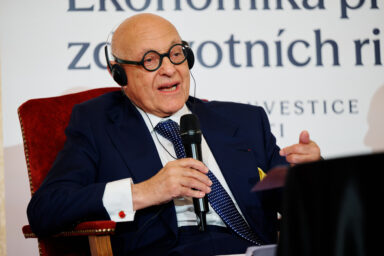
Space is no longer a neutral domain. Satellites that guide aircraft, secure government communications, and track borders are now targets. Europe’s response to that shift—and how far it has gone—was the subject of an exchange in the European Parliament’s SEDE committee on 16 July. Rodrigo da Costa, head of the European Union Agency for the Space Programme (EUSPA), faced questions from MEPs on security, resilience, and institutional ambition.
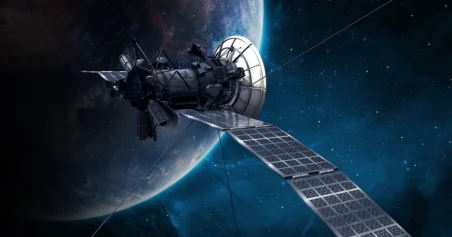
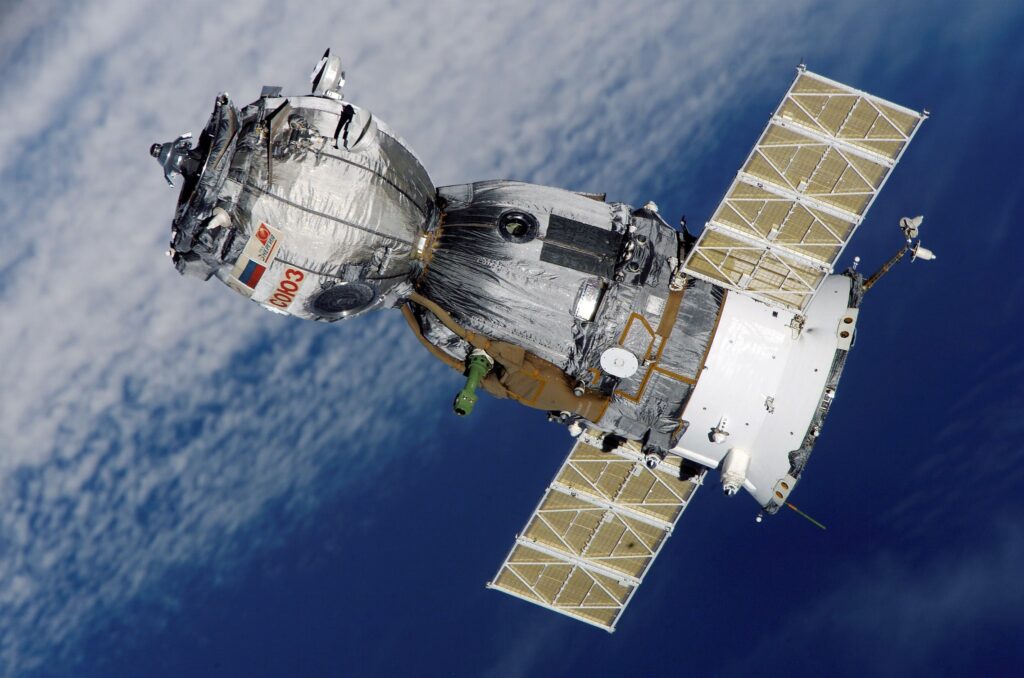
Mr da Costa opened with scale. Galileo serves more than 4.5 billion users. Copernicus is the world’s leading provider of Earth observation data. GovSatCom became operational earlier this year. Iris², a new secure-connectivity constellation, is under development.
A contested environment
Together, the space chief said, these form a programme that is no longer peripheral. He told the committee: “Space is not only a very important resource; it is also a place from which we provide critical services and capabilities to our society, to our economy and to our security.”
MEP Pekka Toveri (EPP/FIN) pressed Mr da Costa on Russia’s anti-satellite capabilities and on what EUSPA is doing to make its constellations more resilient. The answer was methodical. Mr da Costa said the agency’s security approach has to be holistic, covering physical protection of ground stations, cyber monitoring, and continuous system updates. EUSPA has operated a security monitoring capability for Galileo around the clock for more than ten years.
MEP Sven Mikser (S&D/EST) pushed further, asking about the state of Russian anti-satellite programmes and whether the EU and the US share enough intelligence to protect their respective systems. Mr da Costa confirmed the threat: “There has been demonstration of anti-satellite capabilities with the destruction of a satellite from the ground, so this capability exists.” He added that other capabilities may be under development, but the point was that Europe is no longer dealing with speculation.
He also described a more immediate and persistent threat. “We are seeing very high radio frequency interferences all across the eastern border of the EU,” he said, “and it is affecting Galileo, it is equally affecting GPS, and for example it is creating, on civil aviation, frequent news on how this type of interference impacts civil aviation.” EUSPA has developed a prototype monitoring capability in response, currently operating in demonstration mode.
Anti-spoofing in orbit
The most striking technical detail Mr da Costa offered was a new anti-spoofing signal for Galileo. Spoofing tricks a receiver into believing it is somewhere it is not. He explained: “This signal functions a little bit like a watermark in a euro coin or in a euro paper bill — it assures the user that the signal that the user is receiving is a Galileo one and that it has not been faked.”
The signal is already in use in trucks across Europe. EUSPA also ran a demonstration with Frontex and the Romanian border patrol on a boat convoy from the port of Constanța in the Black Sea to Italy. Mr da Costa said the results were excellent and that talks are under way to extend the deployment.
On co-operation with the US, he was careful but clear. The EU space programme is built on strategic autonomy, he said, but autonomy includes collaboration. “There is a fluid technical dialogue on the things that matter to both of us, between my team that is working on Galileo and the US Space Force team that is working on GPS,” he said, “and the reason is exactly that there are times where the threats and the risks are similar for one and the other.”
Bridging the gap
MEP Villy Søvndal (Greens-EFA/DNK) raised the question that has hung over European space policy since early 2022: could the EU replace Starlink-level connectivity if it had to? Mr da Costa did not claim it could do so today. But he argued that Europe had not stood still.
GovSatCom was built precisely to bridge the gap while Iris² is developed, by pooling spare satellite-communication capacity from willing member states and making it available to all 27. He said: “We are talking about a relatively complex system which, within a couple of years, is now already providing services, and the use largely surpasses the expectations that we had.”
There has been demonstration of anti-satellite capabilities with the destruction of a satellite from the ground, so this capability exists. — Rodrigo da Costa, Executive Director of the European Union Agency for the Space Programme
Cyprus was the first user, in February. Several other member states have since joined. Mr da Costa said the long-term goal remains Iris², which he expects to offer capabilities at least equal to, if not better than, other private constellations. GovSatCom, in his framing, is the responsible interim answer, not a permanent substitute.
An agency growing up
MEP Pierre-Romain Thionnet (PfE/FRA) asked about the Commission’s proposed new regulation for EUSPA, which could rename it the EU Space Services Agency and expand its mandate. Mr da Costa welcomed it on three grounds: long-term stability, an increased operational dimension suited to crisis conditions, and expanded tasks built on existing competencies. “To have a long-term regulation for us is of utmost importance,” he said, “and it also shows ambition for more tasks, which is reflected in the European Competitiveness Fund for new activities of the Union in space.”
MEP Alexandr Vondra (ECR/CZE) raised a more immediate institutional problem: EUSPA has outgrown its Prague headquarters. What is the solution, he asked. Mr da Costa used 386 words to deliver the message of “I don’t know”. He confirmed that the agency has been in dialogue with the Czech government since 2021. Growth in staff and the need to handle classified information have made the current building inadequate. He said the two sides are now discussing concrete requirements and expressed hope that the Czech government would soon announce a formal solution.
The session ended where it began: with the argument that space has become too important to treat as a background function. Mr da Costa’s closing message was about utilisation. “The real value of space is created when its data, when its signals are used and are used for very different purposes,” he said, “and here the work with entrepreneurs, with start-ups, with SMEs from all across the European Union plays a fundamental role.”