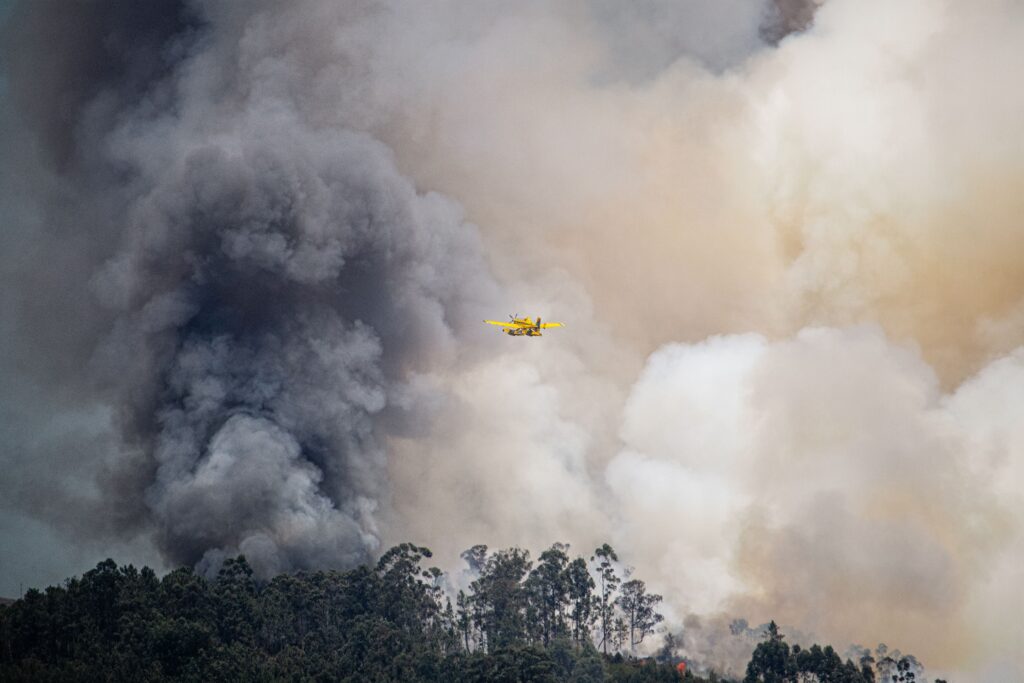
A wall of fire is closing in on Bordeaux. More than 300,000 people in France and Spain have already run for their lives.
Nowhere has the crisis felt more acute than in Gironde, in southwestern France, where a blaze has triggered the country’s largest peacetime evacuation since the Second World War. Some 220,000 residents remain displaced, and the local prefect said on Monday that none of them will go home until the fire is fully under control, even as the blaze’s spread finally stalled overnight after flames came within 15 kilometres of Bordeaux over the weekend.
Jérôme Steffe, mayor of Cestas, a Bordeaux suburb on the fire’s front line, said residents had never seen a blaze of this scale. Emergency crews nationwide remain stretched across dozens of fires at once, with a fresh heatwave forecast to complicate the fight later this week.
Spain is facing a similar strain, though there were signs of relief there too. Authorities said some evacuees near Madrid, including 4,500 people from the El Escorial campsite and residents of a retirement home in San Martín de Valdeiglesias, would be allowed home on Monday, even as gusting winds of up to 30 kilometres an hour kept complicating the firefighting effort.
A fresh blaze near Valencia has forced thousands more to flee. “Difficult hours lie ahead,” Prime Minister Pedro Sánchez warned on Sunday after visiting one of the worst hit areas himself. In Italy, coastguard and police vessels rescued hundreds of stranded tourists and beachgoers from a stretch of Adriatic coastline, while Tunisia, Morocco and Algeria have reported wildfires of their own.
Brussels answers the call
Both France and Spain turned to the EU Civil Protection Mechanism (UCPM) once their own resources ran too thin. France activated it first, in early July, prompting the Commission to send rescEU aircraft from Sweden and Cyprus. Portugal had already done the same days earlier.
As the fires spread, other member states stepped in directly. Greece and Italy sent Canadair firefighting planes to Spain. Portugal deployed military personnel and equipment, and Turkey, a UCPM participating state outside the EU, is sending aircraft of its own. National crews from across the bloc have also worked alongside French and Spanish teams on the ground.
That response draws on a reserve the EU has quietly built up over recent years. The bloc keeps 22 aeroplanes and five helicopters on permanent standby. It also pre-positions 777 firefighters across 14 countries for the peak summer season. The system exists for exactly this moment, when several countries need help at once.
Commission spokeswoman Anna-Kaisa Itkonen was careful to draw the line, however. Brussels only acts on request. Member states carry primary responsibility for fighting forest fires on their own soil. The EU’s role, she said, is to move fast once that request lands on its desk.
A summer already ablaze
At its most intense, the Gironde fire generated a pyrocumulonimbus cloud, a phenomenon fire officials say France had never recorded before. Such clouds form when a blaze’s own heat drives air violently upward. The result is a self sustaining system that can whip up its own winds and make the fire even harder to contain. Beyond the scale of the destruction, the fires have already proved deadly, though sources still disagree on exact tolls, and officials have yet to confirm final figures.
The wider pattern is one climate scientists have warned about for years. A record heat wave scorched the continent in June. Forecasters now expect the heat to return later this week, threatening fronts that firefighters have only just begun to contain.
In the face of these devastating fires, Europe stands together.
— Hadja Lahbib, Commissioner for Preparedness, Crisis Management and Equality
“In the face of these devastating fires, Europe stands together,” Commissioner Hadja Lahbib said, adding that the EU remains determined to protect lives, communities and the natural environment. Mr Macron struck a similar note over the weekend, pledging that “we will rebuild, we will repair and we will be present for as long as necessary.” Whether this week’s heat undoes what has been won so far, both governments will find out soon enough.