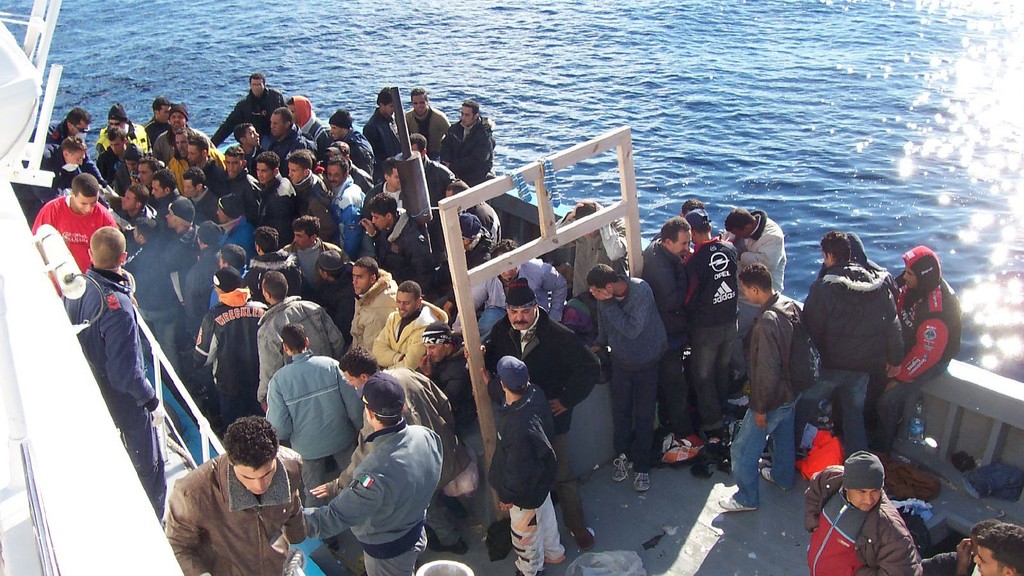
A new EU-backed rescue centre in Benghazi aims to curb irregular migration in the Mediterranean. But it also deepens cooperation with Libya’s disputed eastern authorities, drawing sharp criticism from human rights groups.
The European Union wants to strengthen its ability to respond to migration in the Mediterranean by opening a new Maritime Rescue Coordination Centre (MRCC) in Libya’s Benghazi. According to the EU, the project will help save lives at sea, improve the coordination of rescue operations and strengthen efforts to disrupt smuggling networks.
But the move also expands the bloc’s cooperation with eastern Libyan structures linked to military commander Khalifa Haftar. That has drawn criticism from human rights groups, which have long warned about the risks of working with Libyan actors accused of serious abuses against migrants and refugees.
A new centre funded by Italy and Malta
The agreement to establish the Benghazi centre was announced by EU ambassador to Libya Nicola Orlando after talks at the headquarters of the EU’s naval operation Irini in Rome. The meeting was also attended by Irini commander Rear Admiral Marco Casapieri, Malta’s ambassador to Italy Daniel Azzopardi, and General Khairy Tamimi, secretary-general of the Libyan Arab Armed Forces (LAAF) command.
“The meeting marks an important milestone in the EU–Libya partnership to save lives at sea and advance rights-based migration and integrated border management,” Orlando said.
The centre will be set up as part of Irini, with funding provided by Italy and Malta. Orlando said the project will also include training from Irini and the EU Border Assistance Mission (EUBAM), aimed at helping Libya carry out search and rescue operations at sea in line with international standards and human rights principles.
The EU argues that better coordination is increasingly necessary as more people attempt the dangerous Mediterranean crossing.
Libya in the centre of migration debate
Libya has long been one of the main transit countries for migrants heading towards Europe. According to the UN Refugee Agency (UNHCR), 13,247 people arrived in Italy by sea in the first seven months of 2026, with more than 83 per cent of them departing from Libya.
But since the fall of Muammar Gaddafi’s regime in 2011, the country has been split between rival centres of power. While the EU officially recognises the Government of National Unity based in Tripoli, the east remains under the control of forces linked to the LAAF and Khalifa Haftar.
European officials say departures towards European shores have recently increased from areas under their control. That has pushed the EU to expand its contacts beyond western Libyan authorities, with whom it has long worked on issues such as training and supporting the Libyan coast guard.
Human rights groups warn of “complicity”
The EU’s cooperation with Libya has been under sustained criticism from human rights organisations. They argue that supporting Libyan maritime interception capacities can result in migrants being returned to a country that the UN and others do not consider a safe place for disembarkation.
In July, a group of 31 NGOs called on the EU to end cooperation with Libyan authorities on migration control. The organisations pointed to years of documented cases of arbitrary detention, torture, violence and forced labour targeting migrants and refugees in Libya.
“EU support has enabled patterns of violations and abuse and rendered the EU complicit in such violations,” they wrote in a statement.
They also highlighted several incidents in which members of the Libyan coast guard opened fire on rescue vessels. The groups further noted that the UN Fact-Finding Mission on Libya called on third countries in 2023 to stop supporting Libyan actors involved in what it said could amount to “crimes against humanity”.
Strategy beyond EU’s borders
The EU rejects claims that its main aim is simply to prevent migrants from reaching European territory. European officials say improved coordination of rescue operations is primarily about preventing loss of life and ensuring that missions follow international rules.
The Benghazi case reflects a broader shift in Europe’s migration policy: the bloc is increasingly trying to manage migration beyond its own borders by working with countries of origin and transit.
Brussels presents this approach as a necessary tool to fight smugglers and reduce dangerous journeys. Critics, however, warn that it risks making the EU dependent on partners who face serious allegations of human rights violations.