The EU’s entry/exit system is logging millions of crossings and catching security threats. Airports, airlines, and nearly a third of member states remain sceptical.
Europe’s borders went digital while the queues, in some places, went longer. That tension sits at the heart of a quietly intensifying argument between Brussels and parts of the aviation industry over the Entry/Exit System (EES), the EU’s electronic border-monitoring programme for non-EU nationals crossing into the Schengen area. The Commission is pleased but the mood is not shared universally.
The numbers Brussels is brandishing are, on their face, impressive. Speaking in Zagreb on Thursday, Magnus Brunner, the EU’s commissioner responsible for the system, cited 160m registrations across 29 participating countries since the system went live, more than 3m a week. Some 50,000 travellers have been refused entry; 1,500 of those were flagged as security threats.
Brussels says it is just fine
“We actually see that it works,” Mr Brunner said, “and how important that is for the security of the European Union.” Croatia, his host for the day, earned particular praise: a frontrunner, he called it, that began operating a full month ahead of schedule, equipped all 77 of its external border crossing points on time, and has already turned away more than 7,700 people deemed to pose a security risk.
The commissioner was in an expansive mood. The EES, he argued, is not merely functional but exemplary, “the most modern border management system in the world”. It is superior to American and Canadian equivalents, a “role model for other regions”, he claimed. The United States, he noted with some satisfaction, has an entry system but no exit system. Canada has both, but they are not linked. Europe, by implication, has got this right.
At the Commission’s midday briefing in Brussels the same day, spokesperson Markus Lammert was more measured, if no less confident. “The entry/exit system rules do already include inbuilt flexibilities and fallback procedures to address extraordinary situations,” he said, “including the possibility to temporarily suspend the registration of biometrics in case of outstanding circumstances during the summer.” The Commission, he added, was in “close and constructive contact” with member states facing difficulty, and talks would continue after the summer.
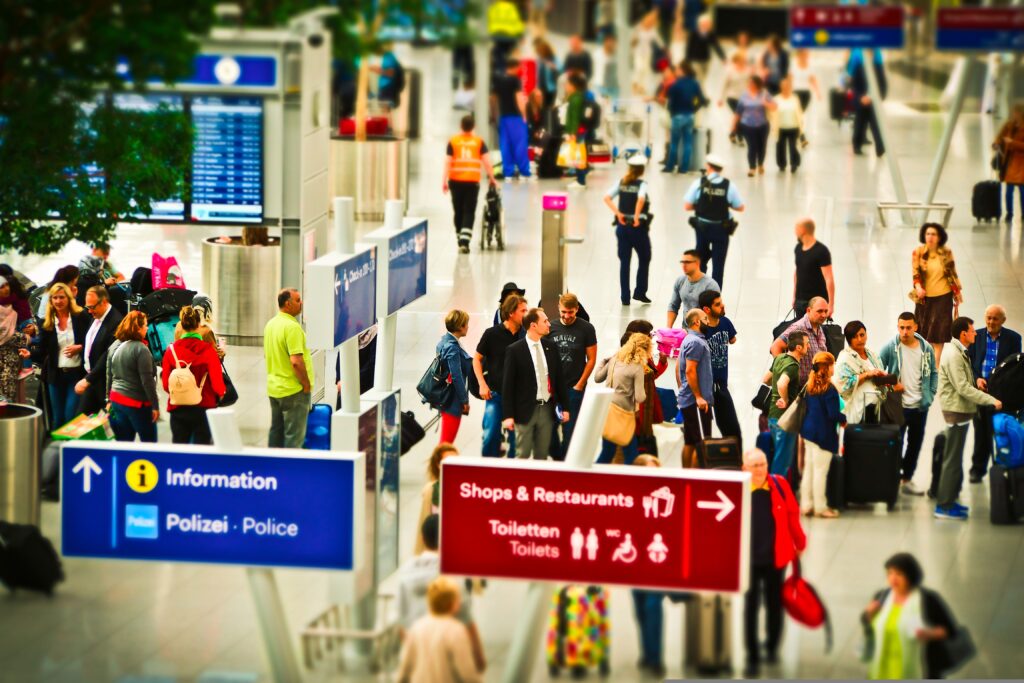
That careful phrasing matters, because the system’s built-in flexibility has become the central political fault line. Since EES went live, border authorities at the busiest crossing points have been permitted, under certain conditions, to suspend biometric data collection when queues threaten to become unmanageable. At several major aviation hubs—Frankfurt, Amsterdam and others—passengers faced waits of up to two hours at peak summer periods. That flexibility expires on 6 September.
Carefully chosen words
Eight member states and Switzerland want it extended. Aviation lobbies have been pressing Brussels for weeks. The Commission has not committed either way, though Mr Lammert’s language suggested it is in no hurry to offer a formal extension, let alone acknowledge that the system has struggled. The spokesman stressed that existing rules already accommodate extraordinary circumstances.
The dispute lays bare a structural tension in the EES project. For the Commission, the system is fundamentally a security instrument: it replaces analogue passport stamps with a digital record that can detect overstays, flag refusals and identify threats in real time. For airports and airlines, the operational question is simpler and more immediate: does biometric registration slow passengers through the terminal at peak times, and if so, what happens to connections, baggage flows and schedules when the safety valve is removed?
We actually see that it works, and how important that is for the security of the European Union. — Magnus Brunner, EU migration commissioner
Mr Brunner offered a partial answer in Zagreb. Frankfurt Airport, he said, now processes a full biometric file in an average of 30 seconds. Sweden has deployed a pre-registration app, Travel to Europe, that has cut processing times further. These are genuine achievements.
Security versus flow
They are also, notably, achievements at well-resourced hubs in wealthy member states with the administrative capacity to adapt quickly. The picture across all 1,500-plus border crossing points in the Schengen area is, by the Commission’s own admission, more uneven.
The coming weeks will force a decision. If Brussels extends the flexibility beyond 6 September, it risks the perception that its flagship border system cannot yet operate at full capacity under real travel conditions — an uncomfortable signal to send about a programme it is actively marketing to the rest of the world.
If it holds the line, airports and airlines will argue that the Commission is prioritising digital control over operational reality, even after weeks of warnings from the industry. The EES was designed to make Europe’s borders smarter. Whether it can also make them smoother is the question the autumn will answer. The first step would be to acknowledge the two are not always the same thing.