One Dutch company makes a machine essential to almost every advanced microchip in the world. Belgian and Danish drugmakers ship medicines worth hundreds of billions of euros beyond EU borders. Amid endless talk of European decline, these are the industries the bloc still quietly dominates.
That strength shows up in what Europe exports. Harvard’s Economic Complexity Index, which ranks countries by how sophisticated and diverse their goods are, places Germany, Switzerland, Austria and Sweden among the world’s highest performers.
Europe’s industrial strength
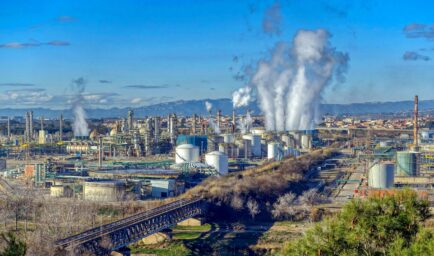
Europe’s clearest strength is making complex things well. Industry makes up more than 20 per cent of the EU’s value added and supports around 35m jobs, the European Commission says. Manufacturing, machinery and industrial equipment remain particular strongholds.
“A lot of European countries are ranking very highly in these sorts of indices,” says Dr. Andreas Eisl, Senior Research Fellow in European economic policy at the Jacques Delors Institute, pointing to an underlying strength in Europe’s ability to produce complex, specialised goods that are difficult for competitors to replicate.
Asked whether those strengths are sustainable, Dr. Eisl is cautious: “there’s nothing that can always be sustainable. There is always a need then also to defend these advantages,” he says.
Complex networks
At the same time, those advantages are not simply about individual products or companies. Behind them are specialised suppliers, skilled workers, research institutions and industrial clusters. These have developed over decades and are not easily replicated elsewhere.
“It’s a comparative advantage that we have because we have the networks here, we have the clusters here, we have skilled labour here, we have the research here also for a lot of these things,” Dr. Eisl says.
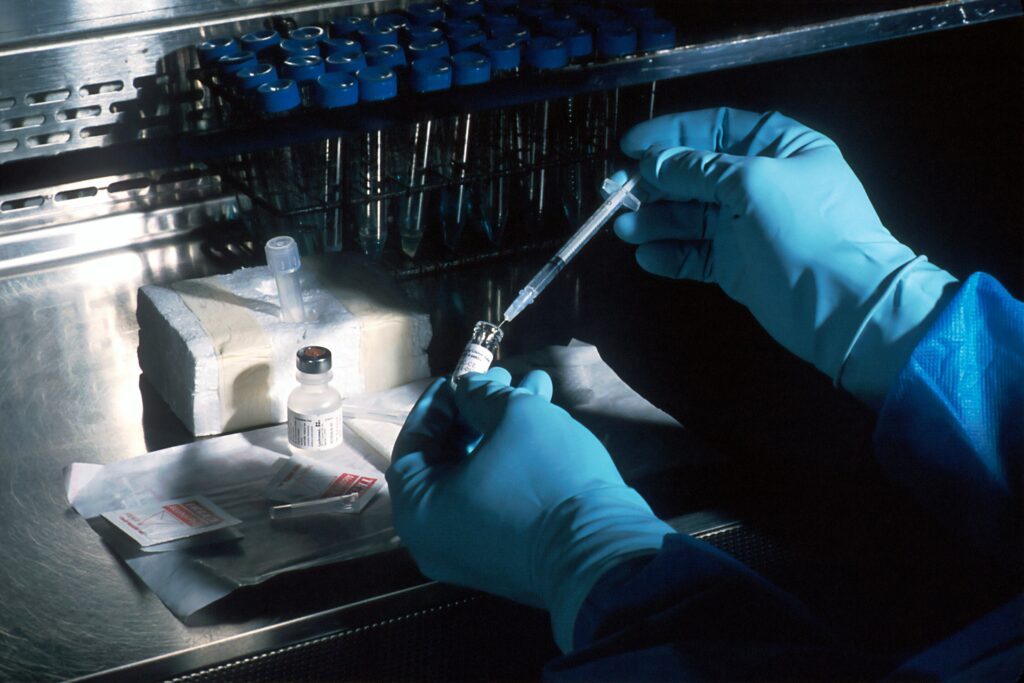
The pharmaceutical industry is one example. In 2025, the EU exported €366bn worth of medicinal and pharmaceutical products outside the bloc. Imports came to €146bn, according to Eurostat. Ireland alone accounted for almost €94bn of extra-EU pharmaceutical exports. Germany followed with €68bn and Belgium with €39bn. But the sector also rests on research and specialised suppliers.
Belgium has developed a major pharmaceutical and life-sciences cluster around companies including UCB, Janssen and GSK. Denmark is home to companies such as Novo Nordisk and a large biotechnology sector. Germany combines pharmaceutical and chemical production with a broad research base. The Netherlands has strengths in pharmaceutical research and specialised production.
“We have a very strong ecosystem around pharmaceuticals,” Dr. Eisl says, “from the production also of very specialised chemicals that are needed for pharmaceuticals to all of the work that we’re doing on biotechnology.”
Airbus offers a similar tangible example. The company’s aircraft production is spread across France, Germany, Spain and the UK. Toulouse is home to final assembly and engineering. Hamburg produces A320-family aircraft. Spanish sites in Getafe, Illescas and Cádiz make major structural and composite components. Broughton in Wales produces wings. In these industries, Anke Hassel, Professor of Public Policy at the Hertie School, says, innovation depends on “skilled labour and dense supplier networks rather than digital scale alone.”
The strength of the niche
In some cases, Europe’s strength lies not in dominating an entire sector but in controlling a particularly valuable part of it. Take, for example, ASML, the Dutch semiconductor equipment maker. The company does not manufacture an entire semiconductor, but its lithography machines are essential to producing some of the world’s most advanced chips. A similarly specialised position can be found in areas of aerospace, industrial equipment and medical technology.
“One doesn’t have necessarily comparative advantages in everything,” Dr. Eisl says. “It also doesn’t make sense to produce everything yourself.” The caveat, however, is when specialisation almost means dependency on another country for something that is critical to the functioning of an industry.
The recent Nexperia dispute offers an example. The Dutch-owned semiconductor company is strategically important because it produces chips used in cars and consumer electronics. But much of its assembly and packaging takes place in China. In 2025, the Dutch government intervened in the company. China responded by restricting exports from Nexperia’s Chinese operations. That disrupted the supply of chips back to Europe. The company struggled to fulfil orders, despite having production facilities in Europe.
From research to scale
Europe’s research base is another continued source of strength. The bloc has major research institutions and expertise in areas including advanced manufacturing, robotics, quantum technologies, photonics and advanced materials. The challenge is turning those capabilities into companies that can grow.
Europe has “universities, scientists and engineers”, Ms Hassel says. “What it lacks is often the capital, market integration and entrepreneurial ecosystem needed to turn those assets into globally dominant businesses.”
Quantum technologies illustrate the opportunity. Europe is not at the forefront of AI development, but Dr. Eisl sees potential in areas where its research base is stronger.
We’re not really good at AI, we know that, but I think we’re quite good in quantum technologies if we make use of what is there in Europe in terms of research. — Dr. Andreas Eisl, Senior Research Fellow in European Economic Policy, Jacques Delors Institute
“We’re not really good [at AI], we know that, but I think we’re quite good in quantum technologies if we make use of what is there in Europe in terms of research.”
That puts the focus on the links between universities, investors and companies. Research alone does not create an industrial advantage if the businesses built around it cannot grow. For Ms Hassel, scale-up finance and market integration are particularly important to ensuring that technologies developed in Europe can also be commercialised in Europe.
The single market advantage
The EU’s internal market is itself one of Europe’s major competitive assets. Around 450m consumers are part of the single-market framework. Common European rules can also give companies based in the bloc an advantage when European standards become benchmarks elsewhere.
“Even companies from abroad have to adapt to European standards,” Dr. Eisl says. That can give European companies “some sort of first mover advantage” because they are already accustomed to operating under those rules.
The potential is considerable. A company that succeeds in one EU country should, in principle, have access to a market many times larger than its domestic one. In practice, national differences in regulation, taxation, procurement, capital markets and infrastructure can still make that expansion more complicated.
Ms Hassel describes the single market as “a continental home base” for European firms, with national systems that continue to divide it. “There’s too much fragmentation, there’s too much different interpretation of the same rules in different countries,” Dr. Eisl says. “Integrating more would help competitive advantages to be ensured but also to develop actually more and allow companies to grow. Sometimes you need the economies of scale to be competitive.”
US and Chinese vulnerabilities
The US and China remain the reference points for much of Europe’s competitiveness debate, with general analyses often treating either economy as if it has found an uncomplicated model for sustained growth.
Dr. Eisl points to Germany as a historic example. The country spent years benefiting from a powerful combination of industrial exports, relatively cheap energy and access to large foreign markets. But those conditions changed. Parts of the German economy have had to adjust to a different competitive environment.
It is not like sometimes it’s shown as the US and China, everything would go great and everything’s going bad in Europe. — Dr. Andreas Eisl, Senior Research Fellow in European Economic Policy, Jacques Delors Institute
Dr. Eisl therefore cautions against looking at the US and Chinese economic models as some kind of holy grail: “It is not like sometimes it’s shown as the US and China, everything would go great and everything’s going bad in Europe,” he says. “But these countries also have their own problems.”
China faces an ageing population and an economic model that is heavily exposed to changes in the global environment, he argues. The US has benefited from deep capital markets, a huge domestic market and a concentration of technology companies that Europe has struggled to match. But it also faces high public debt. And there are questions over how much of the enormous investment currently flowing into artificial intelligence will ultimately translate into productive growth.