For men from Ukraine’s Hungarian-speaking borderlands, safety in Europe now depends on which capital they turn to. Kyiv wants them fighting. Brussels just agreed. Budapest does not.
Most Ukrainian men over 23 cannot leave the country at all under martial law. Those who do get out, and reach an EU state, have generally been able to count on temporary protection, the fast-track status that spares refugees the ordinary asylum process. Since the end of July, that safety net no longer applies to new arrivals who cannot prove they left legally or are exempt from military service.
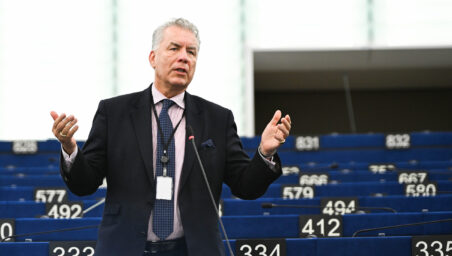
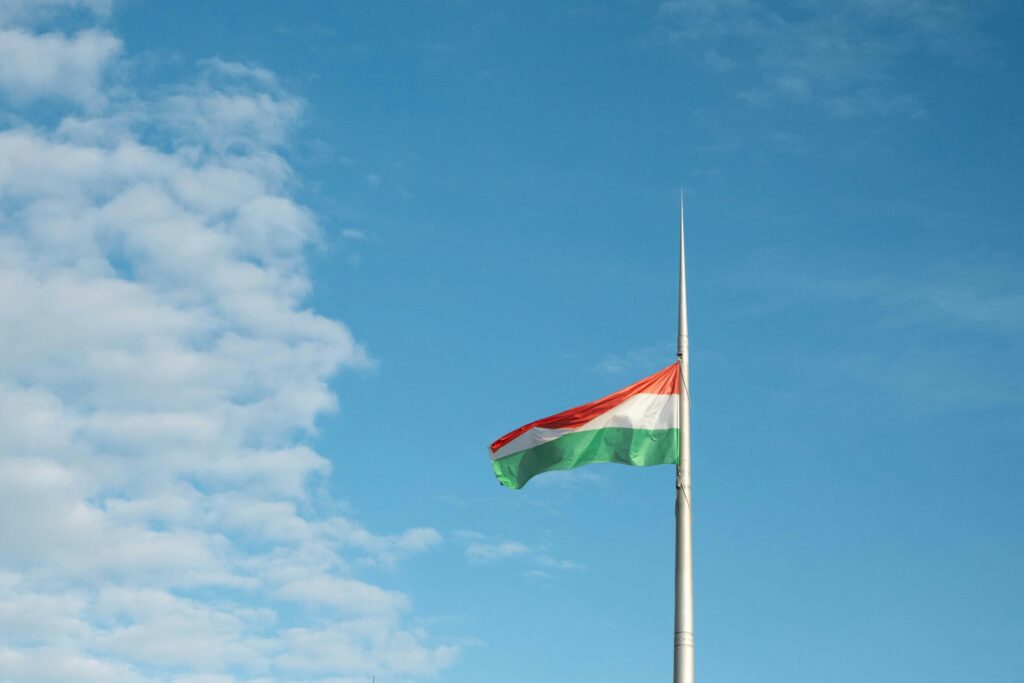
Hungary says it does not care. Prime Minister Péter Magyar told parliament this week that his government will keep granting asylum to men who fall through the new rules, most of them ethnic Hungarians from Ukraine’s Transcarpathia region, home to some 100,000 people from the community.
New rules, old objection
The Council formally adopted the change in late July, extending temporary protection for people fleeing Ukraine until March 2028 while, for the first time, attaching a condition to it. New arrivals must now prove they left Ukraine legally or are exempt from military service before they qualify. Those already covered keep their status regardless.
The change followed a request from Kyiv. Unveiling the plan in June, European Commissioner for Migration Magnus Brunner said it reflected precisely what Ukraine had asked the EU to do.
Hungary voted against the measure. Mr Magyar told parliament that six or seven other member states shared Budapest’s objection, without naming them.
The rule matters most in Transcarpathia, where hundreds of ethnic Hungarians have already served in Ukraine’s armed forces; some have been killed or taken prisoner. Protecting the community from conscription has been a consistent Hungarian goal for years, spanning both the previous Fidesz government and Mr Magyar’s Tisza administration.
A government caught between Kyiv and Brussels
Mr Magyar’s government is a very different actor to its predecessor. His Tisza party won a landslide victory over Viktor Orbán’s Fidesz in April, ending 16 years of Fidesz rule and pledging to mend Hungary’s relationship with the EU. European Commission President Ursula von der Leyen welcomed the result, saying “Hungary has chosen Europe.”
That thaw is visible elsewhere. Mr Magyar met European Council President António Costa in Budapest this week to discuss unwinding a daily fine imposed on Hungary under Mr Orbán over an unrelated migration dispute. A Commission spokesperson said Brussels was engaging “closely” with the new Hungarian authorities on that question.
Temporary protection for Ukrainians is a different matter. Asked at the Commission’s midday briefing on Thursday whether Hungary’s stance breached EU law, spokesperson Markus Lammert said he had nothing in writing to comment on. He noted the Council decision leaves member states a degree of discretion, though he declined to say whether Hungary’s approach fell within it.
Hungary will act differently and provide assistance to those who need it. — Péter Magyar, Prime Minister of Hungary
“Hungary will act differently and provide assistance to those who need it,” Mr Magyar told parliament, describing the EU’s new rules as “disgraceful and incomprehensible” and arguing they left vulnerable men to fend for themselves under a regime that, until recently, worked quite differently.
The Commission has said it is preparing more detailed guidance for member states on interpreting the new rules, though it has not given a firm date for publication. Until that guidance appears, it remains unclear whether Hungary’s parallel national route will be treated as compliant, or as a workaround.
For Transcarpathia’s Hungarian minority, the practical answer may matter more than the legal one. Whether the EU calls it discretion or defiance, draft-age men from the region can, for now, still find shelter across the border.