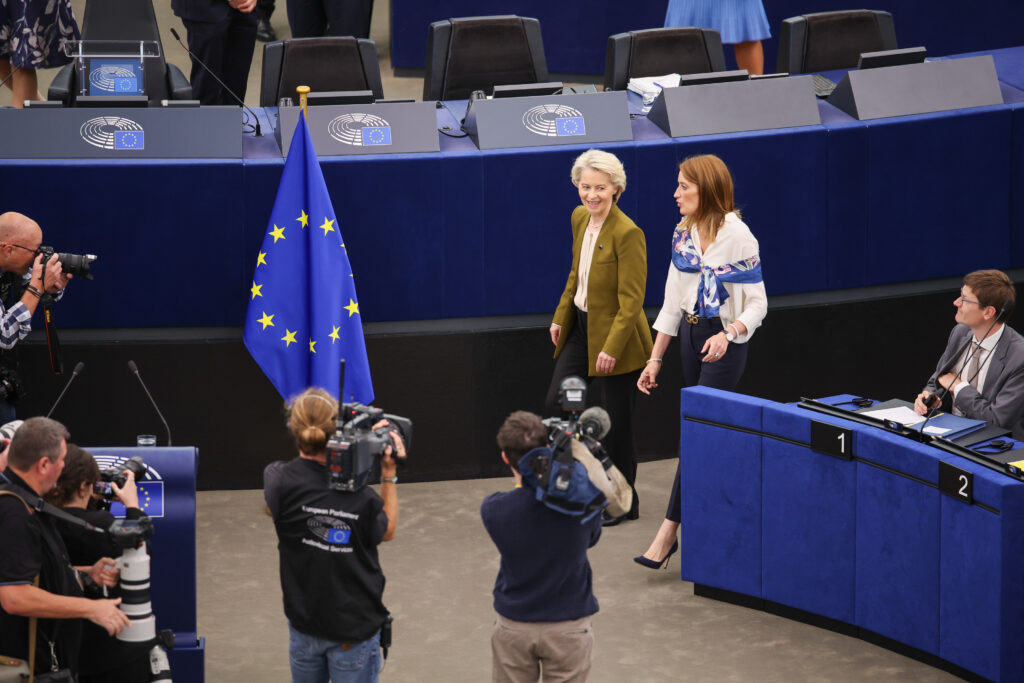
European lawmakers have returned from their summer recess with security at the top of their agenda. Ursula von der Leyen will face questions about defence, energy prices and the economy on Wednesday, when Canadian Prime Minister Mark Carney becomes the first foreign leader to attend the so-called State of the Union debate.
“It is an opportunity to evaluate the work of the European Commission,” a Parliament spokesperson said at Monday’s briefing. Lawmakers will review its performance and exercise “parliamentary scrutiny of the European executive” after Commission President Ursula von der Leyen delivers her speech, setting out priorities for the next year.
Defence, competitiveness, energy, migration, artificial intelligence and support for Ukraine are expected to dominate the debate. Europe’s summer heatwaves and children’s online safety will also feature. Political group leaders have already set out their expectations for the speech, with lower living costs and competitiveness among their shared priorities but sharp divisions over climate policy, taxation and the EU’s role.
Mr Carney’s visit was confirmed by his office on Saturday, but Monday’s briefing highlighted the unprecedented nature of his participation. “It allows us to have, for the first time, a leader of a country present for the State of the Union debate,” the spokesperson said. He will attend the debate as a guest of honour before addressing Parliament separately on Thursday.
New rules give Commission more room to respond
Ms von der Leyen can respond after the political group leaders speak. However, she can decide how extensively she participates. A journalist said she had previously given limited replies to other lawmakers or left before the debate ended. Asked whether that would change this year, Parliament’s spokesperson said it would be “seen on Wednesday”.
MEPs will be taking stock of the work that has been done and exercising parliamentary scrutiny on the European executive.
— European Parliament spokesperson
Separately, Parliament has finalised new arrangements intended to make its plenary debates more interactive. The move coes after years of criticism regarding the limited attendance by lawmakers, with many of them only showing up for their pre-scheduled speaking times or for voting sessions.
Now, Commissioners and Council representatives will have more opportunities to respond during discussions. Previously, they generally spoke only at the beginning or end.
Security will remain prominent throughout the week. Lawmakers will vote on stronger action against Russian hybrid warfare and measures intended to accelerate defence investment. They will also debate Ukraine’s shortage of air defences. Separate proposals call for Europe to move from reacting to foreign interference towards “an active deterrence strategy”.