This summer, Europe burned. Nearly 700k hectares of land turned to ash, and farmers now face €28.3bn in yearly climate losses. In Strasbourg, politicians demanded Brussels finally act before disasters strike, not scramble once they do.
“A very difficult summer across Europe,” is how Hadja Lahbib, Commissioner for Equality, Preparedness and Crisis Management, described 2026, as the growing footprint of climate change amplifies risks from heat, drought, and wildfire. The Commission warns that climate shocks are already hitting health, agriculture, homes, businesses, and vital infrastructure across the bloc.
Sixteen member states recorded burned areas above their national average this year. Agriculture across the EU is now facing losses well beyond that average too, Lahbib said.
Prevention on centre stage
Debate revealed broad agreement on one key matter: Europe cannot solely depend on emergency responses. Ms Lahbib explained that the Commission aims to boost prevention, readiness, response, and recovery across the whole wildfire cycle, pointing to tools such as Copernicus satellite surveillance, early-warning systems for drought, and the Union Civil Protection Mechanism.
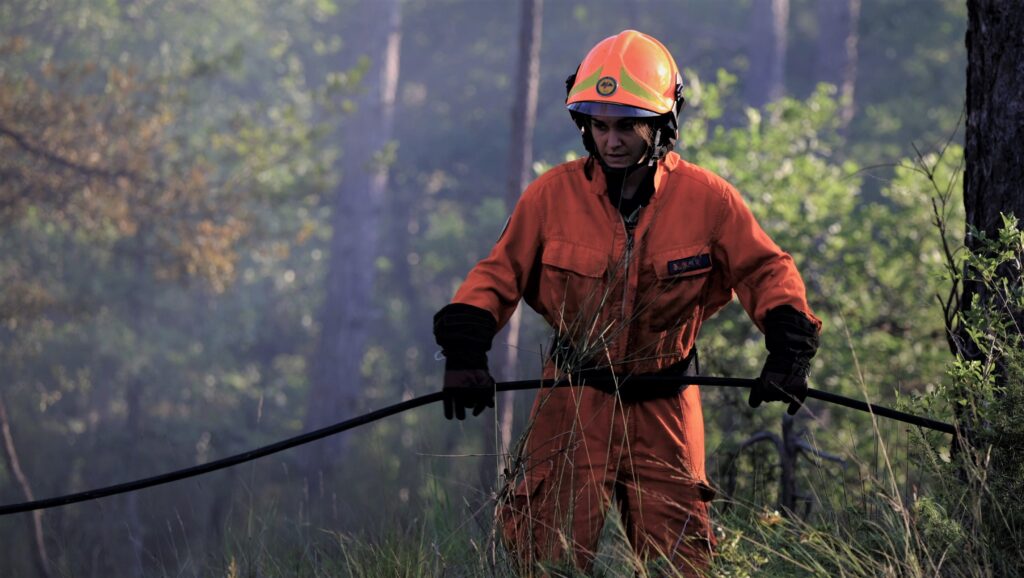
To date, the EU’s Emergency Response Coordination Centre has coordinated the deployment of 40 airborne assets this year. Eighteen ground teams provided risk analysis and preparations to participating countries, while 777 firefighters from 14 EU countries were preplaced in high-risk areas.
The EU’s rescEU fleet was also active this summer, with 18 aircraft and five helicopters, including a first helicopter financed entirely by the EU. While Ms Lahbib acknowledged that solidarity has succeeded, she warned that the bill for future disasters will increase unless governments bolster preventive measures.
Beyond applause for firefighters
Across parliamentary groups, MEPs paid homage to firefighters, volunteers, farmers, and rescue personnel who fought fires and shielded communities. Many argued that Europe must increase the prominence, competences, and funding available to those performing frontline roles.
They shouldn’t only be thanked; they should be paid. — Pascal Arimont (EPP/BEL)
Pascal Arimont (EPP/BEL) put it bluntly: “They shouldn’t only be thanked; they should be paid.” MEP Grégory Allione (Renew/FRA) added that the commitment of firefighters and communities throughout the summer means politicians must not forget them when the weather cools again.
Ms Lahbib also backed closer cooperation on firefighter training and readiness. She explained that the Commission has already united young volunteers across the EU and wants countries to share knowledge and expertise more easily.
Climate politics divides the chamber
Debate quickly went beyond civil protection into a broader disagreement over climate politics. Left, Green, and liberal MEPs suggested that this summer demonstrated the cost of being slow to act on climate. They urged the EU to develop more comprehensive climate adaptation strategies, dedicate budgets to implementation, introduce heat action measures, and implement mandatory inspections of EU-funded projects.
Climate change will happen as a series of disasters you watch on your phone, the footage a bit closer to where you live, until you’re the one filming it. — Kai Tegethoff, MEP (Greens-EFA/DEU)
Lena Schilling, MEP (Greens-EFA/AUT), said the State of the Union speech should treat the summer as an emergency, not a routine political moment. Kai Tegethoff, MEP (Greens-EFA/DEU), put it starkly: “Climate change will happen as a series of disasters you watch on your phone, the footage a bit closer to where you live, until you’re the one filming it.” Other MEPs pushed back, arguing the Green Deal had piled costs onto farmers and industry without offering adequate protection in return.
Farmers and forests on the front line
Farmers were mentioned repeatedly as among those most vulnerable to drought, fire, and water stress. MEPs said farmers have used water wisely, protected land, and helped with emergency response. But they have also warned that farmers are among the earliest victims of climate shocks.
The debate addressed land preservation, soil retention, irrigation, forest monitoring, and the question of how to cut local risks before fires ignite. Lahbib said conserving and restoring nature helps address the impacts of severe weather. She also mentioned the need for water-wise landscapes as well as upgrading Europe’s water infrastructure.
Cohesion policy, she pointed out, allocates €14.6bn to disaster risk reduction and climate adaptation. The Common Agricultural Policy (CAP) offers member states instruments like insurance schemes, cooperative funds, and income stabilisation tools that help farmers better manage climate shocks.
Turning point or another missed warning
The Commission highlighted the climate budget as the key to preparing for future disasters. MEPs called for increased funds for rescEU, aircraft, civil protection, early-warning systems, local governments, water infrastructure, and response instruments.
Lahbib said the production of firefighting aircraft in Europe is “something I regularly speak about” but it is only part of the solution. The other part, she said, is to prevent wildfires in the first place.
The Commission promises that an integrated climate-resilience framework will arrive in the autumn. MEPs want more money for prevention, bigger civil protection budgets, and increased support for firefighters, farmers, and vulnerable communities. But the divide remains.
For some, the fires prove that Europe must stand firm on its climate agenda. For others, they show climate policy has become too ideological, too detached from those who farm the land. Summer 2026 has added heat to that debate.
Europe has the satellites, the emergency centre, the rescue fleet, and the solidarity fund. Whether it has the time and money to act early, and how much it will spend on prevention, remains to be seen.