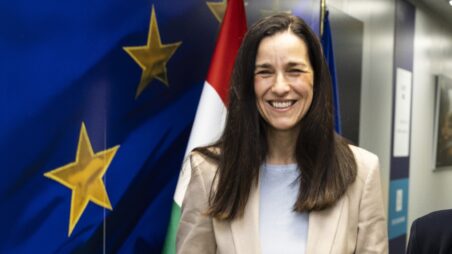
From nicotine marketing to unhealthy food, Europe’s new push to prevent heart disease is taking aim at the environment shaping people’s choices. The European Parliament’s lead author on the EU’s heart health strategy says in an exclusive interview with EU Perspectives that individual responsibility alone is not enough.
On Wednesday, the European Parliament voted on a report responding to the Commission’s Safe Hearts Plan, the EU’s first-ever strategy to tackle cardiovascular disease.
In an exclusive interview with EU Perspectives, rapporteur Romana Jerković (S&D/HR) explains what she conceded on alcohol and secured on nicotine. She also explains why funding remains the plan’s biggest weakness.
You said in June that you would personally have wished for a more ambitious approach, particularly on tobacco and alcohol. Three months on, what exactly did you give up?
The biggest compromises were on alcohol. My original draft went much further as I wanted stronger action on taxation and mandatory, clearly visible health warnings on alcoholic beverages. However, those elements did not survive the negotiations, but I am proud that we were finally able to move from just “harmful consumption of alcohol” by adding that such consumption is any consumption exceeding levels of scientifically established health recommendations.
There were compromises on tobacco as well, but I am pleased that the final text remains strong, particularly on removing the harm-reduction narrative. It calls for novel nicotine products to be covered by EU tobacco legislation and, importantly, for social-media advertising to be explicitly addressed. That matters because the way these products are marketed, particularly to young people, has changed dramatically.
So yes, I would have preferred to go further. But this is the nature of a Parliament of 720 members. As rapporteur, my responsibility was not only to write an ambitious text, but to build a majority behind it.
Beyond “eat better, drink less, exercise more”
Which single provision in this report are you proudest of, and which one do you defend without enthusiasm?
What matters most to me is the shift towards prevention and the recognition that prevention is not simply about individual responsibility.
For too long, our approach has essentially been to tell people: eat better, drink less, stop smoking, exercise more. Of course, individual choices matter. But those choices are made in an environment shaped by marketing, pricing, availability and commercial interests.
I am therefore particularly pleased that the report addresses those wider determinants of health such as commercial, social and environmental factors.
What matters most to me is the shift towards prevention and the recognition that prevention is not simply about individual responsibility.
— MEP Romana Jerković
You said the spirit of the compromise was that everyone gave something and everyone gained something. Who gained most?
I would not describe the compromise in terms of one political group or interest “winning”. What we achieved was a text that could bring together very different political views around a much stronger European approach to cardiovascular health.
Those who wanted a more progressive focus on prevention gained important language on tobacco, novel nicotine products, unhealthy diets and marketing. Those concerned about over-regulation secured a more cautious approach in areas such as alcohol.
The important point is that the final compromise still recognises something fundamental: we cannot reduce cardiovascular disease simply by treating people once they become ill. We have to address the causes much earlier.
Members tabled more than 1,100 amendments. Which fight was hardest to settle?
Without question, the most difficult negotiations were around the major risk factors: tobacco and nicotine, alcohol and food.
These are areas where public health policy meets very significant economic and commercial interests, and there were very different political views around the table about how far European action should go.
Alcohol was particularly difficult. Tobacco and novel nicotine products were also heavily debated, especially when we discussed flavours, marketing and social media. With more than 1,100 amendments, reaching a compromise required everyone to move. But I was determined that prevention could not be reduced to vague language about healthy lifestyles.
People need accurate information and an environment in which the healthier choice is not constantly competing against powerful commercial marketing.
— MEP Romana Jerković
In an earlier interview in October 2025 you said prevention cannot succeed if commercial interests keep shaping our environment against public health. Does this text confront those interests, or describe them?
It begins to confront them, but I would not pretend that the work is finished.
The important change is that we move away from treating cardiovascular disease purely as a matter of individual behaviour. If children and young people are constantly exposed to attractive nicotine products or their promotion online, simply telling them not to use those products is not a serious prevention policy.
That is why I consider the provisions on novel nicotine products and social-media advertising particularly important. The same principle applies to alcohol and unhealthy food: people need accurate information and an environment in which the healthier choice is not constantly competing against powerful commercial marketing.
The direction is clear: industry also has responsibilities when the products it sells contribute to major public-health risks.
What is a plan without funding
You said you would fight to strengthen the Commission’s plan with clearer targets and dedicated funding. Did you get either?
We have strengthened the political ambition around prevention, early detection, treatment and reducing inequalities, but funding remains the major weakness due to unwillingness of centre-right and far-right groups to ask for a secure funding for cardiovascular health. This is unfortunate, but as you know, they have the majority. Personally I will continue pushing for cardiovascular health to receive adequate and identifiable EU funding. The report is not the end of that discussion, it gives Parliament a mandate to continue and we will surely do so.
Funding remains the major weakness due to unwillingness of centre-right and far-right to ask for a secure funding for cardiovascular health.
— MEP Romana Jerković
Your own committee said this month that 2027 commitments are being cut by more than 8%, and named cardiovascular health among the areas at risk. What is the plan worth without the money?
That is precisely the problem. We cannot announce new European health ambitions and simultaneously reduce the resources needed to deliver them. Parliament has already warned about the pressure on EU health funding. The EU4Health programme has faced a €1 billion reallocation for 2025–2027 and, as you know, the Commission proposed to cut it as a standalone programme in the new MFF (Editor’s note: Multiannual Financial Framework, EU’s long-term budget for 2028-2034). But the reality is that if we want cardiovascular screening, better prevention, research, stronger health systems and reduced inequalities, somebody has to pay for implementation. Political commitments have to be reflected in budgetary decisions.
What does Wednesday’s vote mean for you and what are the next steps?
For me, today’s vote (Editor’s note: the interview was concluded on Wednesday) is not the end of the process. It is Parliament setting out what it expects European cardiovascular policy to look like.
Cardiovascular disease remains Europe’s leading cause of death, with around 1.7 million deaths every year, while an estimated 80% of cardiovascular disease is preventable. That tells us that we have enormous room to act before people become patients.
The next step is implementation. I want to see the Commission translate these recommendations into concrete measures, on prevention, tobacco and nicotine regulation, marketing, nutrition, early detection and access to treatment . And I want adequate funding behind them.
I also want us to continue the work on ultra-processed foods. The report calls for better assessment of their health impact, and I have pushed for a clear, science-based definition at European level. We need a common scientific basis if we are going to decide what further action is justified.
Today’s vote gives Parliament a voice and a mandate. Now the test is whether that political commitment is translated into legislation, funding and measurable improvements in Europeans’ cardiovascular health.