Dublin is trying to get EU governments to stop defending their red lines and start looking for room to compromise on the bloc’s €2tn long-term budget. The Council presidency will test that approach with a new negotiating box in October.
Tuesday’s Council discussion exposed familiar divisions over the size of the 2028–2034 Multiannual Financial Framework (MFF). But also gave Dublin a clearer picture of where governments may be willing to compromise on spending and new EU revenue.
The Irish presidency has spent recent weeks holding bilateral meetings with governments and is now preparing a revised ‘negotiating box’ for October. While governments mostly agree on the need for an ‘ambitious’ budget, they remain divided over what that means for its overall size, the balance between spending programmes and how the budget should be financed.
Ireland put three questions to ministers on Tuesday: Which three spending programmes are most critical? What changes would make the Commission’s proposed package of new own resources more acceptable? How open countries are to increasing contributions based on gross national income (GNI)?
The search for compromise begins
The questions reflect the central problem of the negotiations. Spending and revenue cannot easily be separated: governments calling for a smaller overall budget would need less additional revenue. While those seeking to protect or expand spending priorities need to consider how they will be financed.
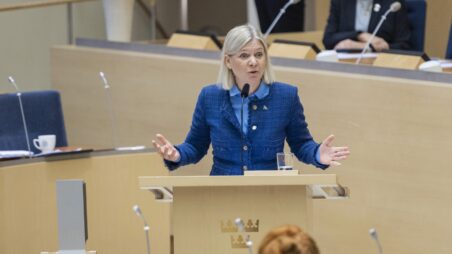
Irish Minister of State for European Affairs and Defence Thomas Byrne urged governments to move from setting out their positions to identifying where they can give ground. “Nobody has said something radically different inside the room than they said outside the room,” he said. “But now is the time for compromise.”
The presidency is looking for more precise answers before it puts its negotiating box to governments in October. “If we’re serious about reaching agreement by the end of the year, we must now start to identify where we show flexibility,” Mr Byrne said.
Costa’s tour maps the same divide
The Irish effort follows European Council President António Costa’s four-week ‘Tour des Capitales‘. He visited most EU capitals with the next long-term budget high on the agenda.
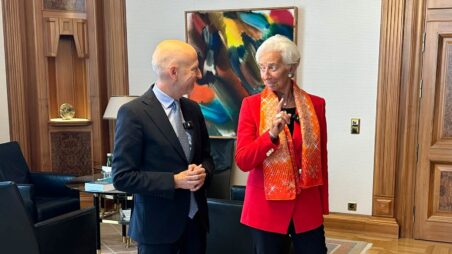
Mr Costa said the meetings had given him a clearer picture of where governments stand. He concluded the tour in Dublin last week, where he discussed the push for an agreement by the end of 2026 with Irish Prime Minister Micheál Martin.
The tour showed broad support for reaching a deal this year, but also the difficulty of reconciling competing priorities. Costa said his discussions with leaders had given him a “clear sense” of where governments stand on the next budget, while highlighting the need to reach agreement by the end of the year.
Germany has once again emerged as one of the strongest advocates of a smaller increase. Chancellor Friedrich Merz has called for cuts of several hundred billion euros from the Commission’s proposal.
That position was reinforced last week when Mr Merz joined the leaders of Denmark, the Netherlands, Austria and Finland in a joint intervention, arguing that Europe must “spend better, not just more”.
The five countries said the next budget should put greater emphasis on security and defence, competitiveness, innovation and migration, while arguing that new priorities cannot simply be added on top of existing spending.
Sweden, another major net contributor, made a similar argument in Tuesday’s Council discussion. It said the Commission proposal would result in a roughly 40 per cent increase in the EU budget. It argued that the overall volume should move closer to one per cent of EU GNI, with several hundred billion euros cut across the headings.
Cohesion and agriculture face pressure
The Commission’s proposal would bring the 2028–2034 budget to almost €2 trillion. The Commission has argued that the increase is needed to finance new priorities including competitiveness, defence and security while maintaining existing policies.
That creates a direct clash with governments that want to protect cohesion funding and the Common Agricultural Policy (CAP).
Poland argued on Tuesday that cohesion and agriculture should remain central to the next budget. Spain called for continued investment in cohesion, agriculture and fisheries alongside new spending on competitiveness and climate resilience. Italy similarly warned against opening negotiations with cuts to traditional policies.
For these governments, cohesion spending should not become a legacy item competing with new priorities. According to Poland, cohesion and CAP spending also support the digital and climate transitions, while Spain stressed the importance of regional investment alongside the EU’s new competitiveness priorities.
Spain also called for changes to the repayment of EU borrowing taken on during the pandemic. Portugal said it was open to common debt instruments. If cuts were necessary, the areas receiving the largest increases under the Commission proposal should be examined, Italy argued, rather than starting with cohesion and agriculture.
Governments split over new EU revenue
There is also not yet a common position on how to finance the next budget.
The Commission has proposed new own resources linked to measures including the Carbon Border Adjustment Mechanism (CBAM), emissions trading, e-waste and tobacco. Several governments remain opposed to parts of that package. Either because of concerns over its distributional impact or because they would prefer to rely more heavily on national contributions.
Ireland asked governments to identify what changes would make the package more acceptable.
There was some support for individual elements. Poland said it could support new own resources that bring in genuinely new money, while opposing an ETS-based resource on distributional grounds. Croatia backed resources linked to CBAM and e-waste, as well as a coal-related measure, but rejected the proposed ETS and tobacco resources. Greece also expressed openness to some of the proposals while calling for adjustments to their distributional effects.
Other governments put greater emphasis on GNI-based contributions. Hungary said it preferred the GNI-based system because it considered it fairer, simpler and more transparent. Poland and Croatia also indicated that they could accept a greater role for GNI contributions.
For Poland, the trade-off is clear. “If we have to choose between regressive new own resources and higher GNI contributions, we choose higher GNI,” said Secretary of State for European Affairs Ignacy Niemczycki on his country’s behalf.
Budget Commissioner Piotr Serafin told ministers at Tuesday’s meeting that the Commission was prepared to calibrate its proposal. He argued, however, that a modern budget with stable national contributions would require “a serious package of new own resources”.
October becomes the next test
Ireland’s negotiating box will be the first point at which governments are asked to respond to a more concrete attempt to bridge those differences. The presidency has described it as “not the end game, but the start of the end game”.
The European Council will discuss the MFF in October. Ireland’s goal is to give leaders enough room to make the trade-offs needed for a deal by the end of the year.