COVID-19 taught the world one lesson: when the next pandemic hits, the rich will get the vaccines first. More than a year after signing its pandemic treaty, the WHO still cannot fix that problem. The EU’s own negotiator says a solution is not coming for months.
The WHO Pandemic Agreement was adopted in May 2025, meant to make sure the world never repeats the chaos of COVID-19. Not a single country has signed it since. One unfinished annex blocks everything.
That annex covers pathogen access and benefit sharing, known as PABS. It sets the rules for how countries share dangerous viruses, and what they get back when those samples turn into vaccines, tests and treatments.
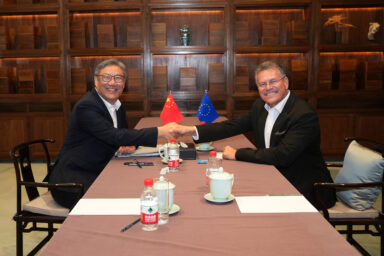
Americo Zampetti negotiates the annex for the EU. The Minister Counsellor for Global Health at the Delegation of the European Union to the United Nations came from Geneva to the European Parliament’s subcommittee on public health (SANT) to set out what the EU is asking for, and why it is not getting it.
Where the talks are stuck
Talks have stalled over two fault lines. The negotiation is “marked by deep-seated divisions between developing and developed countries especially on how access to pathogen with pandemic potential can be achieved”, he said, “and how private companies can be bound by benefit sharing obligation”. After more than a year, positions “remain quite apart on many issues”.
Those are the two halves of the system. On the access side the EU wants researchers and manufacturers to reach virus samples and their genetic sequence data quickly, which is what allows surveillance and product development to start early. On the benefit sharing side it wants the resulting vaccines, treatments and tests spread more fairly, through contracts between companies and the WHO.
Negotiators still disagree over who may receive a pathogen and on what conditions, and over whether anyone can hold a private company to anything at all. Those two questions have run the clock down.
Mr Zampetti did not soften it. “The whole agreement, let’s say the mother agreement, is kept hostage by this annex,” he said, describing it as “ideologically driven by different views on how you do things in the area of health, which really risks having the whole project collapse”.
The polarisation is there and unfortunately I don’t think it is solvable in the next few months. — Americo Zampetti, Minister-Counsellor for Global Health at the Delegation of the European Union to the United Nations
He offered no quick fix. “The polarisation is there and unfortunately I don’t think it is solvable in the next few months.”
Ten per cent, in goods not cash
The EU’s core demand is narrow and commercial. It wants “private law contracts between pharmaceutical companies and WHO”, signed by whichever manufacturer wins market authorisation for a product against the pandemic disease.
Mr Zampetti spoke of “the voluntary conclusion of contracts for benefit sharing between pharmaceutical companies and the WHO”. Later he said companies should be “bound by private law contract with WHO”. Voluntary to enter, binding once signed. One of the two questions holding up the talks is exactly that: can anyone bind a company at all?
The volume matters. “It will be, let’s say, 10 plus per cent of their real-time production,” Mr Zampetti said. “So whatever they get out of the factory, 10 per cent will be available to WHO to use.”
Real-time production means doses as they come off the line during the emergency, not deliveries promised for later.
He ruled out cash. “No financial flows of money, we think, to WHO, but the goods that would be necessary to fight the pandemic.”
The treaty text is more generous on paper. Article 12 targets 20 per cent of real-time production. Manufacturers donate a minimum of 10 per cent and reserve the rest for the WHO at “affordable prices”. Mr Zampetti led with the donation floor, though earlier in the session he put the range at “10 to 20 per cent”.
Industry, on his account, is willing. Most pharmaceutical companies “understand that they have to play a more active role”, he said, and “they are on record on this”.
The EU’s way out is to aim lower
His answer to the deadlock is to shrink the ambition. The EU wants to “pursue realistic straightforward solution that focus on the core elements of the annex and aim to secure tangible results on the ground”, he said, and to build a PABS system that is “reasonable useful implementable and ratifiable”, one that “offers good prospect for private sector uptake and can make a real difference for global public health”.
Both camps should be able to agree “that making WHO better equipped is in the interest of all”. “If people don’t recognise that, then we have a big problem. Because then nothing will be agreed.”
He also wants the annex to stop growing. The talks are “branching into extremely complex areas of database management, of issues similar to the European Health Data Space”. Interesting, he said, “but surely not useful”.
The EU has already bent once. Before the May 2026 assembly it “fully reassessed its previous proposals” and tabled “several potential landing zones” at the March negotiating round. It stays open, he said, to “alternative approaches that negotiated partners may wish to offer”.
We need to activate
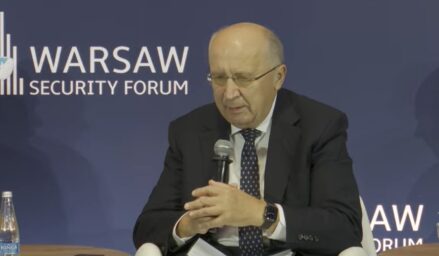
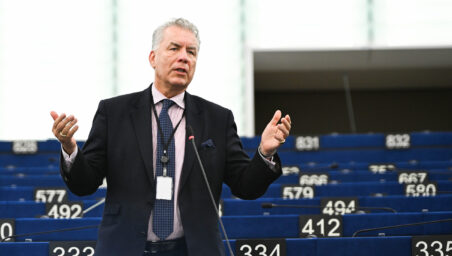
MEP Vytenis Andriukaitis (S&D/LTU), a former European commissioner for health, wanted a diplomatic offensive: the G7, the G20, the EU with the African Union, the EU with Mercosur, plus “sectorial debates” with like-minded countries. “But we need to activate,” he said. On the state of play his verdict was short. “I see lack of leadership in this situation.”
He thinks the window is nearly shut, “more or less two months”, and that some parties are “deliberately playing games”.
Mr Zampetti did not take the coalition idea up. “Creating a coalition of like-minded is difficult because we come from a very polarised sort of approach,” he said. Any grouping, “be that G20 or African Union or whatever, suffers from this polarisation”.
Fight mistrust
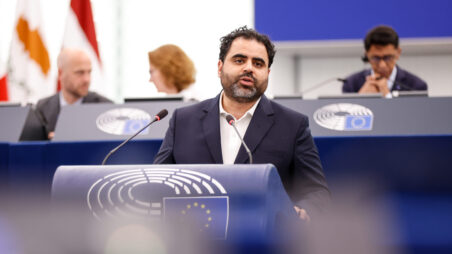
MEP Tilly Metz (Greens/EFA/LUX) came at it from another direction: public trust. She said she struggles with people who are critical of the pandemic treaty, and that what she runs into is “the misinformation or mistrust that we have there”. Her answer was a joint communication push. “Should we not together also organise, like, campaigning what is the pandemic treaty, what is really the use of the pandemic, what can we really achieve?” She wanted the WHO, the European Commission and the Parliament doing it together, and asked Zampetti directly how to fight the mistrust.
Her point was that the treaty’s defenders are underselling what is already in it. Three things would make the case on their own, she argued: common rules on preventing a pandemic and handling one when it comes, a single monitoring unit at EU level based at the European Centre for Disease Prevention and Control (ECDC), and “one model of a sample of contracts to work with the companies”. “Already these three points could show why it is important to have this pandemic agreement.”
Not only the companies
She also pushed back on the idea that industry is the obstacle. “Behind the companies, if you speak about Moderna or another vaccine from China, there are countries behind,” she said, and it is those countries resisting pathogen sharing. “So I think it’s not only the companies.”
Mr Zampetti took the question as one about making a better case for the agreement, and answered with the WHO’s constraints rather than a plan. The organisation is “in a very difficult situation, as you know, because of the lack of funding, the cut of funding that they have”. It is also “very concerned not to appear to take sides”, because it “receives a lot of criticism from different quarters”. And is tempted to preserve its role as “impartial support, almost secretarial support to the negotiation, and leave it to the members to discuss and to decide”.
What happens next
Negotiators return to Geneva from 14–18 September for the eighth meeting of the intergovernmental working group handling the annex.
I see lack of leadership in this situation. — Vytenis Andriukaitis, MEP (S&D/LTU) and former European Commissioner for Health
The deadline has already moved once. In May 2026 the World Health Assembly agreed to extend the talks, with the outcome now due at the assembly in May 2027, or at an earlier special session. Zampetti called the earlier option “a little bit optimistic”, adding “at least no later than the next World Health Assembly”.
Every month of delay keeps the rest of the agreement frozen, including its chapters on prevention, preparedness and response. Those rules bind nobody until countries sign and ratify, and they cannot sign until the World Health Assembly adopts the annex.
Nobody in the room claimed the job of breaking the deadlock. The EU is aiming lower, the WHO is staying out of the argument, and the two blocs furthest apart are waiting for each other to move. Mr Andriukaitis was left with a warning rather than a plan. “I was part of debates for many, many years. And now I am very worried about the situation.”