Starlink disruptions hampered Ukrainian military operations just as Kyiv faced another wave of Russian missile attacks. The European Commission is now discussing access to Europe’s satellite capabilities with Ukraine. It wants to expand a short-term safety net next year, but its fully fledged satellite constellation will not be ready until 2029.
Ukraine’s armed forces received no prior notice before SpaceX restricted some Starlink services overnight, Serhii Beskrestnov, an adviser to the Ukrainian president, said on Wednesday.
The news came as Kyiv faced two consecutive nights of Russian ballistic missile attacks, with Ukrainian officials reporting that they had not received the usual early warnings. Together, these developments have exposed Ukraine’s vulnerability to disruptions in the American technology and capabilities it relies on for military communications and intelligence.
Our partners are depriving us of one of the few chances we have to defend the country against jet-powered Shaheds. — Serhii Beskrestnov, an adviser to the Ukrainian president
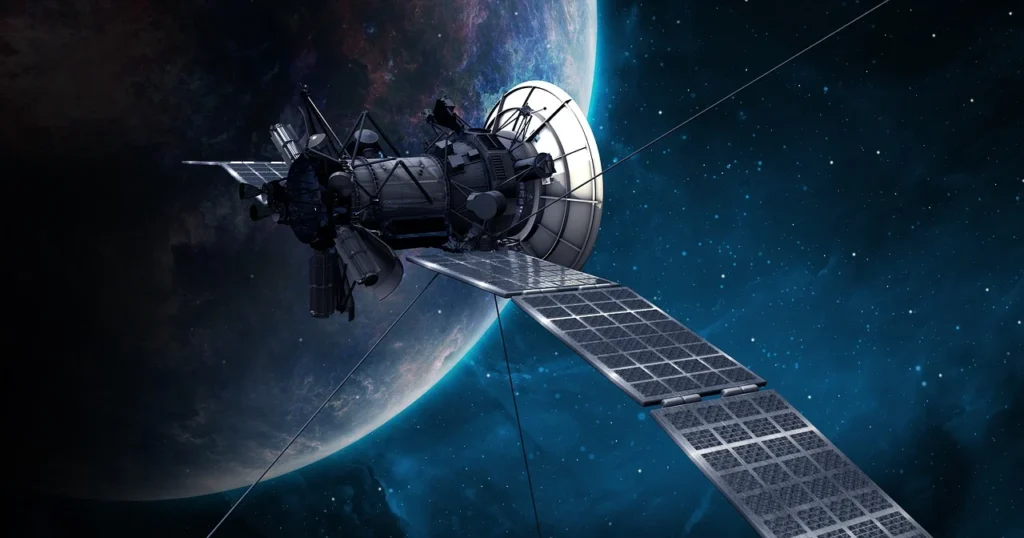
The European Commission confirmed it was discussing Ukraine’s access to the EU’s Govsatcom satellite communications system. But Europe’s existing capabilities cannot yet fully replace all the services Ukraine gets from Starlink. SpaceX’s extensive satellite internet network supports Ukrainian forces with battlefield communications and drone operations, among other things.
Starlink limits the speed
Mr Beskrestnov said SpaceX had restricted the speed of Starlink terminals while in motion to 100 miles per hour. “Our partners are depriving us of one of the few chances we have to defend the country against jet-powered Shaheds,” he added.
Ukrainian sources reported disruptions affecting drones, reconnaissance, logistics and signal transmission, according to the Kyiv Independent. Some missions had to be cancelled.
The presidential adviser suggested the restrictions were linked to the current political climate. “Clearly, this action cannot be a coincidence,” he wrote on Telegram. However, he offered no evidence that SpaceX had acted at the request of US President Donald Trump’s administration. The company did not immediately comment.
The incident comes amid tensions between Washington and Kyiv. Mr Trump has been pressing Ukraine to halt attacks on Russian oil refineries while also pushing for a ceasefire covering strikes on energy infrastructure. Russia, meanwhile, continued its large-scale attacks on Ukrainian energy facilities on Tuesday and Wednesday.
The Starlink restrictions do not, in themselves, prove that the United States has stopped sharing intelligence with Ukraine. The two developments have occurred at the same time, but no direct link between them has been confirmed.
Europe’s satellite gap
The EU has satellite capabilities of its own, and the Commission wants to use them wherever they can help Ukraine. “We do not start from scratch,” Commission spokesperson Thomas Regnier said. Talks with Kyiv are under way on bringing Ukraine into Govsatcom, he added.
Launched in January 2026, Govsatcom pools satellite communications capacity available to EU member states. Existing resources could help Ukraine maintain basic satellite connectivity.
Timing is the central challenge. Ukraine’s military needs reliable communications now, while Europe’s plans are still taking shape. At the beginning of 2027, the EU plans to bring commercial satellite capacity into Govsatcom as well. This could provide a broader range of services, including some military capabilities.
We have no indications that intelligence sharing has stopped. — Paula Pinho, European Commission Spokesperson
In the longer term, Europe plans to strengthen its satellite communications network through IRIS². The constellation is due to become fully operational in 2029, with more than 300 satellites. “Here we have a way to bridge it until 2029,” Regnier said, referring to the plan to use commercial capacity to fill the gap until Europe’s own infrastructure is fully available.
The missing missile warnings
A separate question remains: why did Ukraine, according to President Volodymyr Zelenskyy, miss the usual warnings before Russian ballistic missile attacks? On Tuesday, Mr Trump said Washington was still sharing intelligence with Kyiv.
The European Commission reiterated on Wednesday that it had no information suggesting this cooperation had stopped. “We have no indications that intelligence sharing has stopped,” spokesperson Paula Pinho said.
Satellite internet and warning systems for ballistic missile launches are two different things. Starlink provides satellite communications, but early warning relies on a different set of space-based capabilities.
Fabian Hoffmann of the Norwegian Institute for Defence Studies says European allies have only a “very limited” ability to replace the US space-based early warning system on which Ukraine relies. “The US system is really second to none and only the United States can provide that.”
Sikorski takes aim at Musk
The situation has also prompted a political reaction in Europe. Poland’s foreign minister, Radosław Sikorski, took aim on X at the platform’s owner, Elon Musk, who also owns SpaceX.
Mr Musk is a close ally of president Trump, and speculation about a possible restriction of Starlink services for Ukraine has fuelled fears that Washington could suspend its support for Kyiv and pressure it into concessions.
“Hey, Elon Musk, big man, are you playing politics with your products again?” Sikorski wrote. He also warned Musk that Poland, as his customer, was “watching you”.
The remark was a reference to the Polish government’s role in paying Ukraine’s Starlink subscription. According to an earlier statement by Sikorski, the bill amounts to around $50 million a year.
His comments capture a broader problem: infrastructure critical to European security also depends on decisions made by a private American company. There is, however, no proof so far that the latest Starlink restrictions were politically motivated.
The EU is trying to reduce this dependence over time. Govsatcom and the planned addition of commercial capacity could provide a temporary safety net, while IRIS² is intended to offer a longer-term European alternative. For Ukraine, however, the immediate question remains: What can Europe offer in the coming weeks and months?