Kyiv needs the cash, but Brussels cannot foot the bill alone. A stalemate over frozen Russian assets, rising borrowing costs and reluctant partners complicate the search for additional €70bn.
Ukraine requires the extra money next year to cover its financial and military needs. The European Commission is exploring ways to plug the gap but has yet to present a concrete solution. It is also urging international partners to pledge more support and honour their existing commitments.
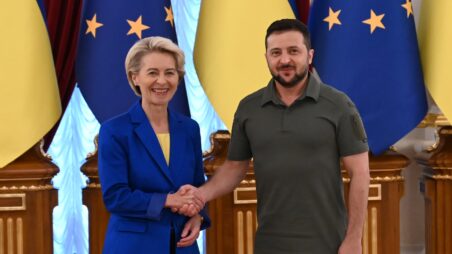
At their summit on 15 and 16 October, European leaders tasked the Commission with drawing up a proposal to cover Ukraine’s additional funding needs for 2027. Ukrainian President Volodymyr Zelenskyy called for another €70bn during the meeting.
“It is clear that we have a gap of 70 billion that needs to be covered,” European Commission President Ursula von der Leyen said after the summit. The sum comes on top of the €45bn the EU has planned for Ukraine next year under a €90bn loan covering 2026 and 2027.
We cannot do this all alone. Our partners in general must step up. — Balázs Ujvári, European Commission spokesperson
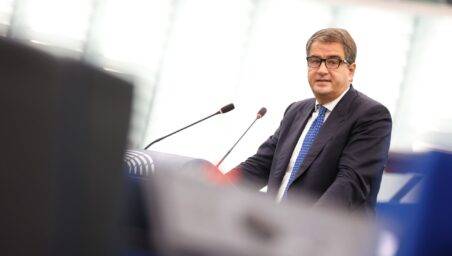
On Monday, Commission spokesperson Balázs Ujvári confirmed that existing pledges still leave the massive funding gap. Brussels is now examining the options available. “We cannot do this all alone,” Mr Ujvári stressed. “Our partners in general must step up.”
The Commission has therefore stopped short of promising to cover the entire shortfall with European money. Mr Ujvári said any further EU action must go hand in hand with firm commitments from international partners. “They have to come forward with pledges, and they have to deliver on those commitments.”
It is too early, however, to say when the Commission will present concrete proposals or which instruments it might use. “For the moment we’re not in a position to anticipate what will be those options,” he said.
First, this year’s money must reach Ukraine
Alongside preparations for 2027, the Commission is working to deliver aid already approved. According to Mr Ujvári, Ukraine is due to receive around €30bn this year, most of it through the Ukraine Support Loan, with the rest coming from other instruments.
Releasing the funds depends partly on Ukraine continuing its reform programme. Defence funding also requires the completion of agreements that will allow Kyiv to draw on money already approved. “It’s very important that we don’t lose the momentum and we keep going ahead,” the spokesman said.
The Commission is also preparing a financial strategy for 2027. This will set out how much Ukraine should receive through the various funding instruments and which reforms it will need to carry out to access the support.
Borrowing costs climb
The search for more money comes as the EU faces rising borrowing costs. Yields on ten-year EU bonds have climbed from 3.2 per cent to just over four per cent in the past six months.
According to Mr Ujvári, higher financing costs are affecting other issuers too, partly reflecting geopolitical developments. He stressed, however, that the EU’s relative position in the market has not deteriorated and that the bloc remains a competitive borrower.
A clearer picture of how much more the EU can borrow should emerge in the coming weeks. The Commission expects its regular report on the EU budget headroom in late November or early December. This headroom acts as a guarantee for part of the bloc’s borrowing. The report will include an outlook for 2027–2034.
Russian assets remain up in the air
Whether frozen Russian assets could help cover the shortfall remains an open question. Belgium has yet to change its opposition to the idea — most of these assets are held through Euroclear, the international securities depository based in Brussels.
Mr Ujvári declined to speculate on whether the option would feature in the Commission’s upcoming proposal. Brussels must first assess the available alternatives and consult international partners, he said. “For the moment it’s too early to be specific on what could be options to fill that gap on our side,” he added.
Even after the summit, it remains unclear where the missing money will come from. The Commission has yet to set a date for presenting a concrete proposal.