Europe’s factories want relief from soaring carbon costs. Yet cheap carbon has its price too. In an interview, energy lawyer Vít Stehlík says the debate comes down to a choice between short-term relief for consumers and long-term investment in emission-free sources.
European policymakers face a difficult decision. On the one hand, they stick to ambitious targets for cutting carbon dioxide emissions. On the other, they watch with concern how expensive emission allowances affect the health of industrial companies. Vít Stehlík heads the energy and infrastructure practice at law firm White & Case and is executive partner of its Prague office.
Expensive allowances weigh on industrial companies. Yet allowances that are too cheap are not always an advantage either. “The relatively low price of electricity and allowances in the past effectively contributed to delaying key investments in new nuclear and gas sources in Europe, including the Czech Republic. I therefore believe that the question of whether or not to lower the allowance price is essentially a choice between short-term relief for consumers and long-term motivation to invest in emission-free sources,” Mr Stehlík warns in an interview with Ekonomický deník, EU Perspectives’ sister publication.
European industry is calling for relief from carbon payments. What chances of success do you give it?
Even after the latest reforms of the EU Emissions Trading System (EU ETS), free allocation of allowances remains an important tool for protecting European industry against the risk of carbon leakage. However, it is only one part of a broader revision of the system launched this year. Both legislative proposals presented by the European Commission in July show the EU’s effort to better reflect the impact of rising ETS costs on energy-intensive sectors. At the same time, they aim to link free allocation more closely to the decarbonisation of industry.
Can you describe these proposals?
In the first and more extensive proposal, the Commission suggests extending protective measures, including free allocation of allowances for energy-intensive sectors, until 2040 instead of the current 2030 deadline. Newly, however, free allocation would depend on submitting and implementing an independently verified plan to invest in decarbonisation in the EU. In this plan, the company describes specific investments at the level of the installation that lead to climate neutrality by 2050. Their value must match 100 per cent of the value of the free allowances allocated.
The mechanism works in two steps. The company receives 80 per cent of the allowances once the plan is approved. It gets the remaining 20 per cent only after the emission savings have been verified.

And the second proposal?
The second, narrower proposal responds to a specific problem that arose in the meantime. In June, the updated benchmark values for 2026–2030 were published. Industry and member states then pointed out that the newly set heat and fuel benchmarks did not sufficiently protect energy-intensive sectors against the risk of carbon leakage. On top of the roughly 88m allowances available under free allocation, around 33m more allowances are to be used. These were not allocated because some operators failed to meet the existing conditions.
Neither the European Parliament nor the Council has yet adopted a final common position on either proposal. The final shape of the rules for the period therefore remains open.
Will these proposals help keep industrial production in Europe?
The Commission presents the proposals as parts of a broader package. Its aim is to ensure Europe’s economic resilience and competitiveness while meeting the 2040 climate target. We believe this logic explains why the Commission, on the one hand, extends protection through free allocation, so that companies do not move production outside the EU. On the other hand, it newly makes this protection conditional on investment plans, so that free allowances actually lead to real decarbonisation.
The question remains whether this compromise between protecting competitiveness and pushing for lower emissions can be balanced in practice. That will only become clear from the final text after negotiations between the Council and Parliament, and of course from industry’s subsequent reaction.
What other changes does the Commission’s proposal contain?
Besides adjusting free allocation, the Commission uses these proposals to slow the pace at which the overall cap on allowances falls after 2030. It sets up a new Industrial Decarbonisation Bank, financed by the sale of hundreds of millions of allowances, to support the decarbonisation of industry. It also requires member states to channel a substantial share of auction revenues back into decarbonising sectors covered by the ETS. In addition, it gradually brings waste incinerators into the system and reforms the Market Stability Reserve so that it better dampens swings in the allowance price.
Such high climate ambitions cannot realistically be met with a low allowance price. — Vít Stehlík, executive partner, White & Case Prague
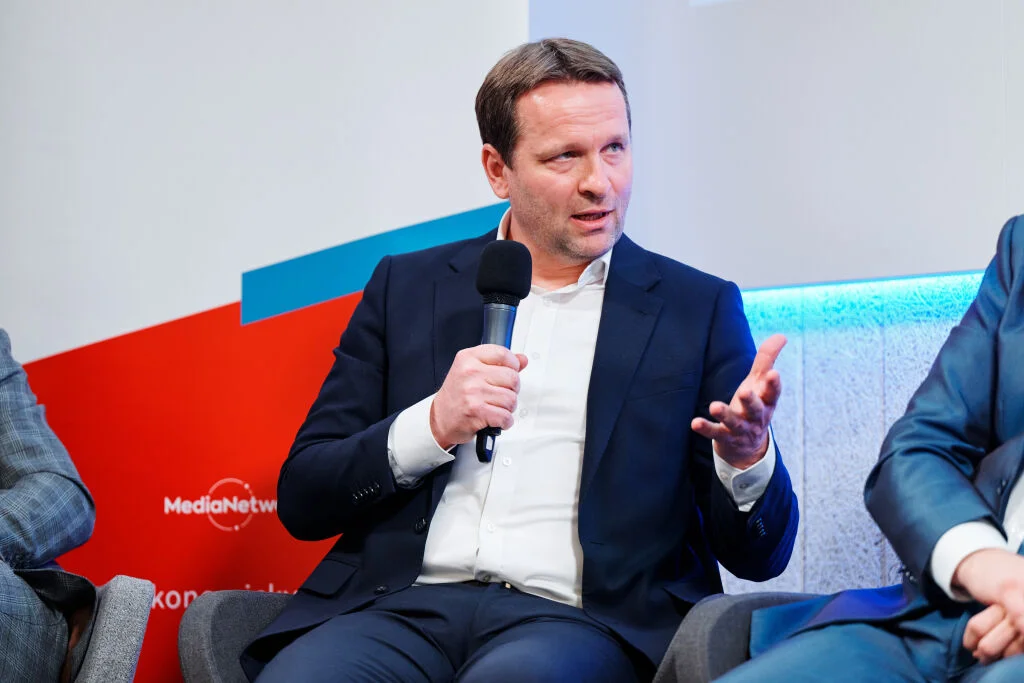
Can we say emission allowances are too expensive? That they contribute to industrial decline and push up electricity prices for people and companies?
If we look at the problem from the perspective of legislation and the EU’s direction, it must be said that the EU ETS was designed from the outset as a tool to meet the Union’s climate goals. Keeping energy prices low largely contradicts those goals. The question of whether the current allowance price is too high must also be assessed with this purpose in mind. From the EU policy perspective, the question is therefore whether the current price leads to meeting the emission targets set. If it does, the price is not too high. It is a price that matches the targets.
The European Union has adopted a legally binding target to cut net greenhouse gas emissions by 90 per cent by 2040 compared with 1990 levels. Such high climate ambitions cannot realistically be met with a low allowance price.
But are carbon payments not already becoming unbearable for many companies?
Whether the allowance price affects the competitiveness of European companies is, of course, a different question. Here, the negative impact of the allowance price is clearly visible. In that case, however, it is appropriate to talk about easing the ambitious climate targets. They should be achievable without the competitiveness of European companies falling below a tolerable level.