Car motors, wind turbines, and missile guidance all rely on magnets Europe mostly buys from China. Europe has been naive about that dependence for too long, Dutch lawmaker Brigitte van den Berg says in an interview with EU Perspectives. She wants the EU’s planned raw materials centre running by 2027.
Earlier this month, Beijing agreed to keep fast-tracking export licences for rare earths and permanent magnets bound for the EU. The deal is an important step as Brussels seeks to rebalance its trade relationship with China. Yet Beijing’s leverage over European supply chains through critical raw materials remains.
The Critical Raw Materials Act is the EU’s main instrument to reduce that leverage. The Commission is now preparing a new Critical Raw Materials Centre under the revised Act: a hub that should coordinate those efforts and strengthen Europe’s strategic autonomy.
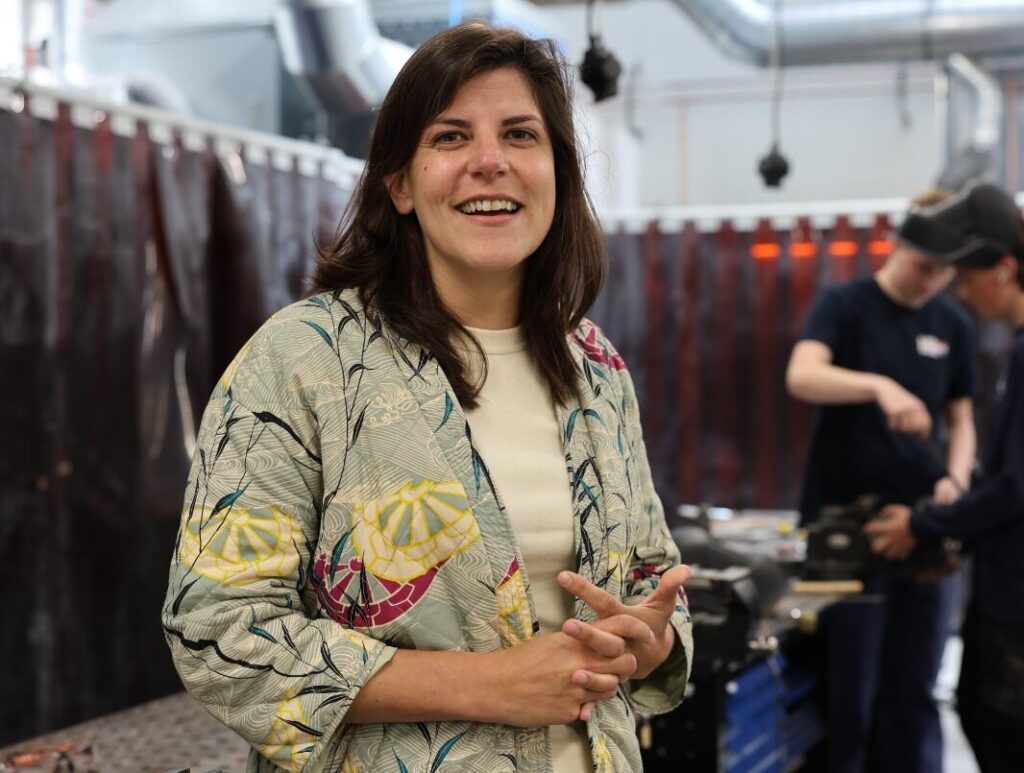
EU Perspectives spoke to Brigitte van den Berg (Renew/NLD), shadow rapporteur (her political group’s lead negotiator) on the revised Act in the European Parliament’s Committee on Industry, Research and Energy (ITRE). They discussed the urgency of the situation, what difference the centre could make for Europe’s competitiveness, and what it will take for the centre to become operational and effective.
Europe’s dependence on China for raw materials has long concerned Brussels. But this month, the Commission struck a deal with China on rare-earth exports. Does that deal make you less worried about Europe’s supply of critical raw materials?
Not really. The deal has made the situation somewhat less worrying by those agreements on export licences, but this could in theory be reversed at any moment. China requires government licences for exports to European customers. Effectively, that system can bring exports to Europe to a halt. China still has that leverage over us.
A key worry that I have, for example, is how China will react to the Industrial Accelerator Act. The Act aims to boost European industrial capacity, and that also includes protecting the EU’s own manufacturing base. China might react to that negatively, as it doesn’t want Europe to become less dependent on China.
That does not mean we should let this fear prevent us from implementing the Industrial Accelerator Act. In fact, the Industrial Accelerator Act is crucial to building up European industry, strengthening its competitiveness and reducing its dependencies. We hear that many companies in Europe are, in theory, willing to buy raw materials from elsewhere, but often there is not enough supply available elsewhere, or the price difference makes it unfeasible for companies to do so.
We do see some promising examples. Take Phoenix Metals, a Dutch deep-tech company developing a pilot facility to recover valuable materials, including vanadium, from industrial waste streams such as steel slag.
There is no level playing field, and we should act accordingly. — Brigitte van den Berg (Renew/NLD), shadow rapporteur on the Critical Raw Materials Act
These are fantastic initiatives, but with large financial commitments from the EU, they could develop into factories large enough to contribute to Europe’s competitiveness on a greater scale. For that, we also need long-term offtake agreements and purchase guarantees so that there is a real incentive to invest. Matching supply and demand is key.
Dutch MP Tom van der Lee of the green social-democratic PRO party recently argued that Europe needs to move away from the idea that ‘industrial policy’ is a bad thing. Do you see it that way too?
I do. Look, I would love for the world to have free trade. But that idea no longer reflects the current reality. The Chinese government subsidises much of its industry and exports enormous quantities to Europe, while the US is shielding its own market. There is no level playing field, and we should act accordingly.
When it comes to raw materials, do you think there’s one dependency that the EU should prioritise?
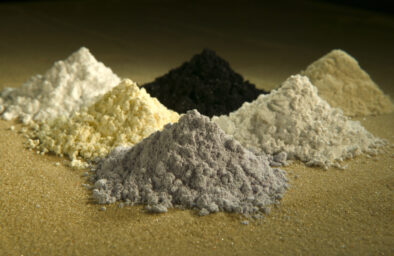
I think magnets are crucial. There are different types of permanent magnets: rare-earth magnets use materials such as neodymium and samarium, while ferrite magnets can contain compounds such as strontium ferrite. Magnet materials are essential for anything that rotates, such as car motors, electric vehicles, and wind turbines. So they have a big impact on the car industry, for example.
Whenever China places export restrictions on these materials, it can cause significant economic damage. It’s not just a concern for now, but also for the future. Demand for the rare earth elements used in magnets has nearly doubled since 2015 and is expected to grow by more than a third by 2030, mainly driven by efforts to support the green transition.
Another important sector is defence. Think, for example, of sonar, missile guidance, and aircraft generators.
What will the Critical Raw Materials Centre mean in tackling this issue?
The centre should act as a hub, bringing together industry, expertise, and national interests. As shadow rapporteur, I want it to operate as an independent agency that can respond to the needs of industry.
What we see is that, while there is broad agreement across Europe that we need to reduce our dependence, knowledge and interests are scattered across member states. In the Netherlands, for example, we have the Netherlands Organisation for Applied Scientific Research (TNO), which has expertise in applying scientific innovations to strengthen industrial competitiveness. Germany has something similar. But there are also many member states that do not have that expertise.
Reducing this dependency and increasing competitiveness works best when we operate as a bloc. We need to share knowledge and not compete against each other.
An important aspect is also stockpiling. That means building up and maintaining reserves of critical raw materials that can be used if supplies are disrupted. It requires both a strategic approach and sufficient storage locations across Europe.
Japan has an organisation similar to the hub we envision, the Japan Organization for Metals and Energy Security (JOGMEC). It works with private companies to secure critical raw materials and manage stockpiles. We can see that it works well. Companies are actually on board, and they also tell us they consider it a success.
Where are we in the process now? What are the roadblocks and disagreements that could prevent the centre from becoming operational?
The way this proposal came about is politically interesting. Parliament’s industry committee (ITRE) had already adopted its position on the revised Critical Raw Materials Act in June. The Commission then asked for the proposal to be reworked to include the centre. This meant that its establishment could be incorporated into the existing legislative process rather than having to start from scratch, which would have made the process longer. The Commission has asked member states to look at this quickly.
An important challenge will be the governance of the centre. All 27 member states want representation on the board because they are afraid their national interests will not be represented. But we also need a small executive board that can make decisions quickly and respond to crises. Parliament has called on the Commission to come forward with a proposal by the end of the year. The location of the centre may also be politically sensitive, as may the question of where the stockpiles will be located.
I think the most important thing is not to allow those discussions to delay the centre. Instead, I think we should adopt a gradual approach.
My proposal is that, by 2027, the centre could start operating using existing resources, perhaps as a kind of Commission office. By 2028, it could become a fully fledged agency, with a director and senior staff.
You recently praised Canadian Prime Minister Mark Carney’s call for closer cooperation with the EU on critical minerals. Do you think Canada can play an important role in reducing Europe’s dependence on China?
Absolutely. I really like Carney’s idea that middle powers should reconfigure their position in the world and bundle their forces [as he laid out at the World Economic Forum in Davos in January]. That’s about upholding the rule of law, countering the big powers, but also about strategic autonomy.
Last month, Mr Carney told the European Parliament that he wants to cooperate directly with the EU. Canada has deposits of more than 34 critical minerals and is among the leading producers of 10 of the most essential minerals for the energy transition. These resources could be important for Europe, including for the materials needed to make magnets.
It’s confronting to see how naive we’ve been for so long, and this is what we have to tackle now. — Brigitte van den Berg
That cooperation could also be crucial for stockpiling, one of the key pillars of the centre. Next week, there is an EU–Canada summit, and this is likely to be discussed as well.
Parliament’s Committee on International Trade (INTA) will also be heading to China next week. Do INTA and ITRE share the same objective, or are there differences?
I’d say the fault lines are more about different political colours, not so much about the committees themselves. We coordinate well and share a common interest in increasing competitiveness and becoming more independent. It’s confronting to see how naive we’ve been for so long, and this is what we have to tackle now.