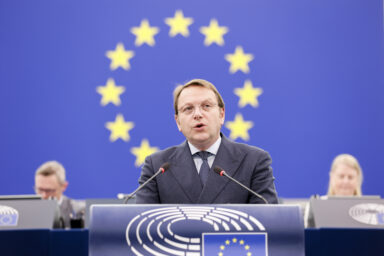
The European Parliament is pushing for more funding for transport, energy and research in the EU’s 2027 budget. Lawmakers backed that demand on Wednesday, voting 400 to 189 in favour of boosting spending on the programmes.
Parliament wants to reverse member states’ governments’ proposed cuts and add €1.17 billion above the Commission’s original draft. General budget rapporteur Nils Ušakovs described negotiations taking place amid strained public finances and political divisions.
“Every line we’ve got is having real people behind,” he said after the vote.
Students, hospitals and security compete with debt costs
Mr Ušakovs linked Parliament’s proposed increases to decisions people face: whether students can afford an exchange semester, researchers can stay in European laboratories, or regional hospitals can provide timely cancer screening. Parliament is seeking an additional €96 million for Erasmus+, €63 million for Horizon Europe and €50 million for EU4Health above the Commission’s draft.
Repaying pandemic recovery borrowing is another source of pressure. “It’s obvious that the debt, when we talk about NextGenerationEU recovery, has to be repaid, but it shouldn’t be repaid by programmes which are vitally important for students, researchers or young farmers,” Mr Ušakovs said. Parliament proposes covering 65% of the relevant repayment costs through money committed in previous years but ultimately unused.
It’s obvious that the debt has to be repaid, but it shouldn’t be repaid by programmes which are vitally important for students, researchers or young farmers.
— Nils Ušakovs, General budget rapporteur
Security is also prominent, including proposed increases for border management, Europol and the European Public Prosecutor’s Office. Michalis Hadjipantela, the rapporteur responsible for the other institutions’ budgets, highlighted physical security, cybersecurity and secure communications. “Efficiency and savings are important, but they must not come at the expense of essential institutional capacities,” he said.
The negotiations will pit Parliament’s proposed increases against the Council’s roughly €1 billion in cuts to the Commission’s draft. Mr Ušakovs declined to disclose Parliament’s red lines. “Member states, they don’t want to spend more money,” he said. Parliament’s task, he argued, was to secure additional funding for European programmes.
A bridge to the next seven-year budget
The 2027 budget is the final annual spending plan under the EU’s 2021–27 long-term budget. It remains subject to that framework’s spending limits and is separate from negotiations over the next long-term budget (MFF), covering 2028–34.
Nevertheless, Mr Ušakovs explicitly connected the two. Parliament was using the 2027 budget to create a bridge towards the next framework through the programmes and priorities it chose to defend. “This is what we would like to believe is kind of our budgetary legacy for the negotiations on the new MFF,” he said.
Asked about Ukraine’s additional financing needs, Mr Ušakovs said the budget included commitments already agreed by European leaders. Mr Hadjipantela defended continued support as serving Europeans’ own security: “By supporting Ukraine, we support the European Union citizens.”
Wednesday’s vote sets Parliament’s negotiating position. The final amounts still require agreement with the Council. “We must now defend our priorities at conciliation,” Mr Hadjipantela said, calling for an agreement that preserves essential needs while maintaining responsible spending.