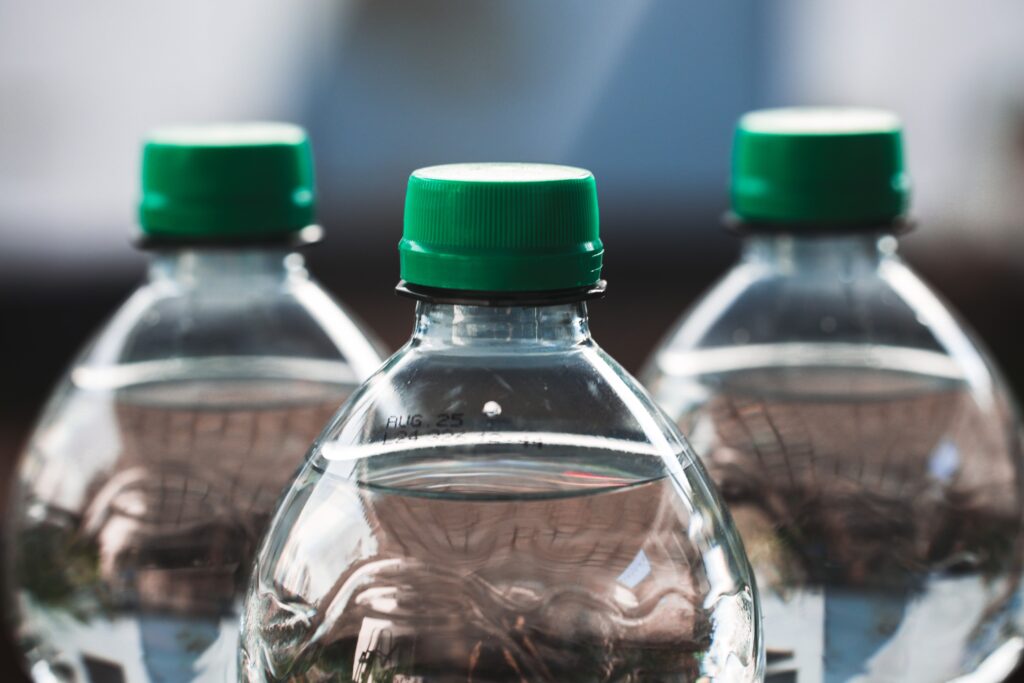
The average European drinks about 118 litres of bottled water a year, almost all of it from plastic bottles. Many of them promised to be “100% recycled” and ready for another life. After a three-year fight with consumer groups, Coca-Cola, Nestlé, and Danone are changing their labels across the EU.
The labels sounded reassuring. Some bottles introduced themselves as “made from 100% recycled plastic”. Others asked buyers to “recycle me again”. Consumer groups argued that neither message told the whole truth. The cap is never made from recycled plastic, and the label rarely is. The European Consumer Organisation (BEUC) also said that some producers mixed fresh plastic into the bottle itself.
On 22 October, the European Commission announced that all three drinks giants had committed to change their claims. Coca-Cola and Nestlé wrapped up their talks in June 2025 and February 2026. Danone now completes the trio. The firms negotiated with the Consumer Protection Cooperation (CPC) network, which brings together national consumer watchdogs. Sweden’s Consumer Agency and Hungary’s Competition Authority led the talks.
What changes on the shelf
Bottles will soon say “This bottle is 100% recycled. Excluding cap and label”. The cheerful “Recycle me again” will shrink to a plain “Recycle me”. The old wording suggested that the bottle had already lived one life and would surely get another. The companies also promised to stop pairing their claims with green symbols that make plastic look harmless. The same rules will apply on their websites and social media. “European consumers deserve accurate information about the environmental practices of all companies operating in the Single Market,” said Michael McGrath, EU Commissioner for Consumer Protection.
The saga began in November 2023. BEUC and its member groups from 13 countries filed a complaint with EU consumer authorities. ClientEarth and the Environmental Coalition on Standards (ECOS) backed them. The complaint targeted some of the best-known names in European supermarkets. They included Evian and Font Vella from Danone, Vittel and Henniez from Nestlé, and Römerquelle and Bonaqua from Coca-Cola.
The figures behind the complaint were sobering. According to BEUC, the EU recycles only about 55 per cent of PET bottle bodies. A bottle has roughly a 30 per cent chance of becoming a bottle again. Recycling also wears plastic down, so no bottle can circle the loop forever. Drinks bottles meanwhile rank among the most common plastic litter on European beaches.
Coca-Cola moved first. It stressed that its commitments did not amount to an admission that it had broken the law. BEUC Director General Agustín Reyna welcomed the step but kept up the pressure. “We expect authorities to monitor if Coca-Cola turns their words into deeds and to take strong measures if this is not the case,” he said at the time.
Trust in the recycling logo
Labels matter because shoppers take them at face value. An Ipsos survey for ClientEarth in 2024 found that 80 per cent of respondents in Poland and Germany believed products with a recycling logo really get recycled if they dispose of them properly. Reality looks different. Eurostat figures published on the same day show that the average European generated 35.9 kg of plastic packaging waste in 2024. Only 15.3 kg of it was recycled, a recycling rate of 42.4 per cent.
The fight has also moved to national courts. In September 2025, ClientEarth sued Nestlé Poland in Warsaw over its Nałęczowianka water. Its bottles told buyers: “I am made from another bottle.” Nestlé Poland said it would “vigorously defend” its position. In Hungary, the competition authority closed its own probes into mineral water producers this spring. One bottler agreed to swap “Use me again” on its glass bottles for “Recycle me”.
Sorting waste and recycling are worthwhile elements in the fight against the plastic crisis, but we cannot pretend that this will ever be enough. — Kamila Drzewicka, senior lawyer at ClientEarth
Campaigners warn that honest labels alone will not solve the problem. “Sorting waste and recycling are worthwhile elements in the fight against the plastic crisis, but we cannot pretend that this will ever be enough,” said Kamila Drzewicka, senior lawyer at ClientEarth, when her organisation filed the Polish lawsuit.
National authorities will now check whether the three companies keep their word, and they can step in if not. The Commission may also approach bottling industry associations, so that smaller brands play by the same rules. Since 27 September, new EU rules ban vague claims such as “eco-friendly” unless a company can prove them. Twenty member states, however, missed the deadline to write those rules into national law, and the Commission opened infringement procedures against them in May. Brussels is also still arguing over how producers should organise packaging recycling across borders.