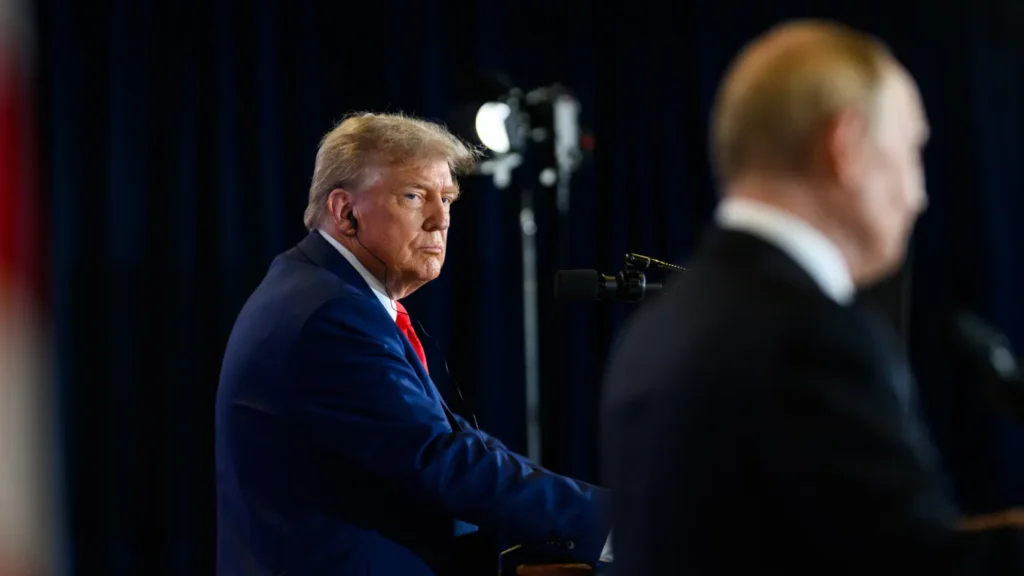
US President met Russian envoy Kirill Dmitriev on Thursday and said a Ukraine peace deal could involve all of Europe. New talks are planned for next week. Ukraine and its European partners are discussing with Washington how to prevent another war.
“It’s going to be a big agreement, and it’s going to involve more than Ukraine,” US President Donald Trump told reporters, according to Reuters. He offered no details of his private conversation with President Vladimir Putin’s envoy. Although Ukrainian representatives were also visiting the White House, Mr Trump said he had not met them.
Washington keeps talks moving after the midterms
The visit marked the first in-person contact between Russian and US officials since Democrats won control of both chambers of Congress. Their incoming majorities are expected to press for more support for Ukraine and scrutinise the administration’s dealings with Moscow, including sanctions relief and a diesel agreement. The new Congress takes office in January.
US negotiators are due to mediate talks between Russian and Ukrainian representatives in Abu Dhabi on 10–11 November. Mr Trump has repeatedly predicted that an agreement was close, but Thursday’s meeting produced no publicly announced settlement or nationwide ceasefire.
Together, we can create something more enduring than a temporary ceasefire. — Melania Trump, First Lady of the US
Mr Dmitriev and Ukrainian officials attended an event hosted by First Lady Melania Trump following a temporary ceasefire in Russian-occupied Oleshky. According to the White House’s account, the operation allowed humanitarian deliveries and the evacuation of nearly 800 people.
Ms Trump said she had worked on arrangements covering evacuation routes, medical resources and access to hospitals. “Together, we can create something more enduring than a temporary ceasefire,” she said.
Ukrainian representatives presented her with a state award recognising her involvement. She also handed the delegations letters addressed to Mr Putin and Ukrainian President Volodymyr Zelenskyy. The humanitarian cooperation provided an opening for contact while negotiations over the wider war continued.
Europe’s security enters the negotiations
In Brussels, US envoy Jared Kushner reported discussions with Ukraine, NATO and European partners about security guarantees and a broader European security framework. His statement, reported by RBC-Ukraine, identified practical measures including permanent consultations, reliable communication during crises and greater transparency about military activity. The aim, he said, was to reduce the risk of another conflict.
Mr Kushner also set out a condition with direct implications for Ukraine’s future relationship with NATO: “Each country will retain authority over its own security and alliances, and no country would have a veto over another’s sovereign choices.” He said NATO would retain its central role in European collective defence. These were negotiating principles; he announced no agreement with Russia on them.
Europe’s participation in the next stage remains conditional. Mr Kushner said Washington would consult European partners alongside the Abu Dhabi talks and seek their direct participation in a broader format if negotiations progressed. For European governments, the issue is therefore both what security arrangements emerge and whether they help negotiate them. Mr Trump has raised the prospect of a deal reaching beyond Ukraine; its terms, participants and guarantees remain unsettled.