A foreign military presence would make any peace deal a recipe for renewed war, Russian president warns. Yet Washington is signalling progress and offering Europe a seat at the table.
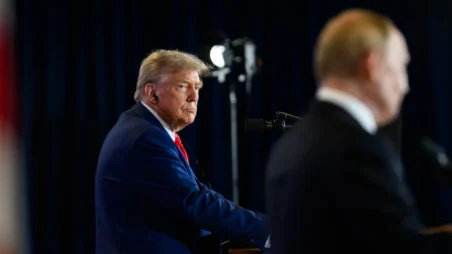
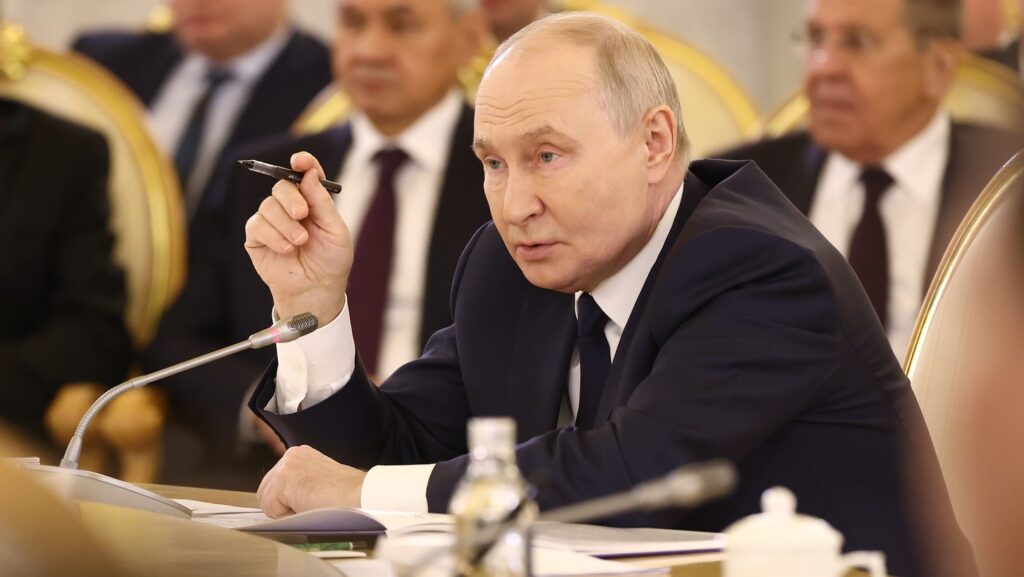
Deploying European troops in Ukraine after a peace deal would trigger a resumption of the war, Russian President Vladimir Putin warned on Thursday. He made the remarks during talks with US envoys Steve Witkoff and Jared Kushner at the Kremlin.
After their meeting in Moscow, the Americans flew to Dublin, where they are due to meet Ukrainian President Volodymyr Zelenskyy. Witkoff also announced that European countries would take part in the next round of peace talks.
No grey zones, only borders
During his meeting with the US envoys, Mr Putin reiterated that Moscow considers any foreign military presence in Ukraine unacceptable. “The Europeans are aware of this. And what do we hear from them? That once a peace agreement is signed, they will immediately deploy troops to Ukrainian territory,” he said. “What does this mean? We have already talked about it: for us, they are a legitimate target, meaning the war will resume immediately.”
You might be interested
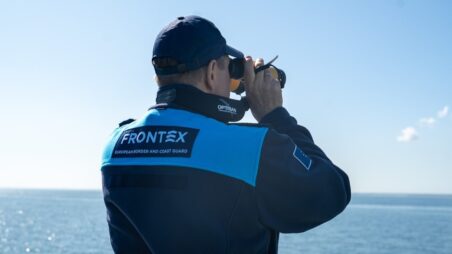
His remarks targeted European plans to establish a Multinational Force for Ukraine (MNF-U). The force could deploy once the fighting ends. Its task would be to help rebuild and strengthen Ukraine’s armed forces, secure its airspace and support maritime security. It would not be a peacekeeping or monitoring mission. France and the UK are leading the initiative.
For us, there is only one demarcation line — the state border. — Vladimir Putin, President of Russia
Moscow also rejects compromise over the territories it claims. Mr Putin ruled out any demilitarised or so-called grey zones between Ukrainian and Russian positions. “For us, there is only one demarcation line — the state border. Because then it will be clear and understandable: here you are, here we are,” he said.
The Russian president made clear he has no intention of backing down from his territorial demands. According to his aide Yuri Ushakov, Moscow also told the Americans in no uncertain terms that NATO must not expand further.
Washington sees progress, Moscow stands firm
Mr Witkoff described the meeting as progress, but offered few details about its concrete results. Mr Ushakov called the talks useful. He said Putin also plans to discuss Ukraine with US President Donald Trump at next week’s Asia-Pacific Economic Cooperation (APEC) summit in Shenzhen, China. The summit is due to take place next week.
Mr Putin also proposed a humanitarian mission to the Ukrainian city of Kostiantynivka in the Donetsk region. He claimed Russian forces controlled the city and said Moscow was ready to guarantee the operation’s security. According to him, around 500 civilians remain there.
Ukraine, however, rejects Moscow’s claim of full control over the city. Kostiantynivka remains one of the most fiercely contested sections of the front. Fighting continues both inside the city and in the surrounding area.
Ukrainian presidential adviser Dmytro Lytvyn also warned that Moscow could exploit a humanitarian operation for military purposes. He pointed to an earlier operation in occupied Oleshky. Russia had allegedly used a humanitarian pretext to rotate troops and move military equipment into the area.
A seat at the table for Europe?
After the Kremlin meeting, Mr Witkoff announced that European countries would join the next round of peace talks. The United States considers their participation important, he said.
“They are our partners and it’s important to us that they take part,” he told reporters. According to AFP, the US envoys directly urged Putin to accept European representatives’ participation.
At the start of the meeting, Kushner also spoke about discussions with European countries on a future security architecture for Europe. He said it should help end the current conflict and prevent another one from emerging.
The Europeans will join at the next meeting, which we consider to be a very important moment because they are our partners and it’s important to us that they take part. — Steve Witkoff, US envoy
President Zelenskyy also called for Europe to play a role in the peace effort on Thursday. Speaking at the European Political Community summit in Dublin, he urged European leaders to follow the talks between Washington and Moscow closely.
The discussions concern more than security guarantees for Ukraine, he argued. They will also shape the future relationship between Europe and Russia. Mr Zelenskyy stressed that Europe must have a firm place at the negotiating table.
European Council President António Costa warned that the coming days would show whether Russia genuinely wants to end the war. So far, Moscow’s actions point instead to escalation and continued attacks on Ukrainian civilians, he said.
Abu Dhabi, Moscow, Dublin
Thursday’s Kremlin meeting followed two days of talks between US, Russian and Ukrainian representatives in Abu Dhabi. The discussions ended on Wednesday. Mr Kushner described the talks as productive but difficult. Territorial disputes remain the biggest obstacle.
The only tangible outcome so far is an announced agreement in principle on a large-scale prisoner exchange. Both sides agreed to the deal in principle, but still had to settle details, including the number of prisoners involved.
European representatives also attended the Abu Dhabi talks. However, their delegation held separate discussions with the Americans and Ukrainians. It did not meet the Russian delegation.
Messrs Witkoff and Kushner have left Moscow for Dublin, where they will meet Mr Zelenskyy. The Ukrainian president had already said he wanted to discuss the outcome of the past few days with the US envoys.