More leisure, fewer drinks and growing digital consumption. Europeans are changing how they spend their money. But while recreation and communication are gaining ground, housing, food and transport continue to dominate household budgets.
EU household consumption grew by 1.6% in 2025 after adjusting for inflation, according to new Eurostat figures. Information and communication led the increase, followed by recreation, sport and culture. Clothing and footwear also gained.
The figures offer more than a snapshot of shopping habits. Businesses and researchers help explain what these trends mean in daily life. More bars serve alcohol-free beer, people increasingly use digital services, and housing costs can limit their choice of where and with whom to live.
The alcohol-free option moves onto the draught tap
Alcoholic beverages, tobacco and narcotics were the only broad spending category to decline in 2025. Inflation-adjusted consumption fell by 1.9%, continuing a downward trend.
You might be interested

Brewers are responding to demand for alternatives. In its 2025 results, Heineken reported that its alcohol-free beer was available on draught in more than 10,000 outlets across key European markets. In other words, choosing a beer without alcohol increasingly means ordering from the tap rather than settling for a bottle from the soft-drinks fridge.
Despite spending more of their incomes on housing, young people tend to live in poorer-quality dwellings.
— Eurofound
One company’s expansion cannot explain the EU-wide figures. Eurostat combines alcohol, tobacco and narcotics in one category, so the overall decline does not establish that consumption of each fell equally. Nor does it identify whether people were responding to prices, health concerns or changing preferences.
The decline in alcohol, tobacco and narcotics stands in contrast to rising spending in other areas. Recreation, sport and culture grew by 3.1%, while clothing and footwear rose by 2.7%. The recreation category covers a broad range of purchases, from books and cultural activities to package holidays.
Housing shapes more than the monthly budget
Housing, water and energy absorbed 23.8% of EU household expenditure in 2025. Food and non-alcoholic drinks took another 13.2%, and transport 12.5%. Together, these categories accounted for 49.5% of spending. The housing share was particularly high in Czechia, accounting for 32.3% of household expenditure.
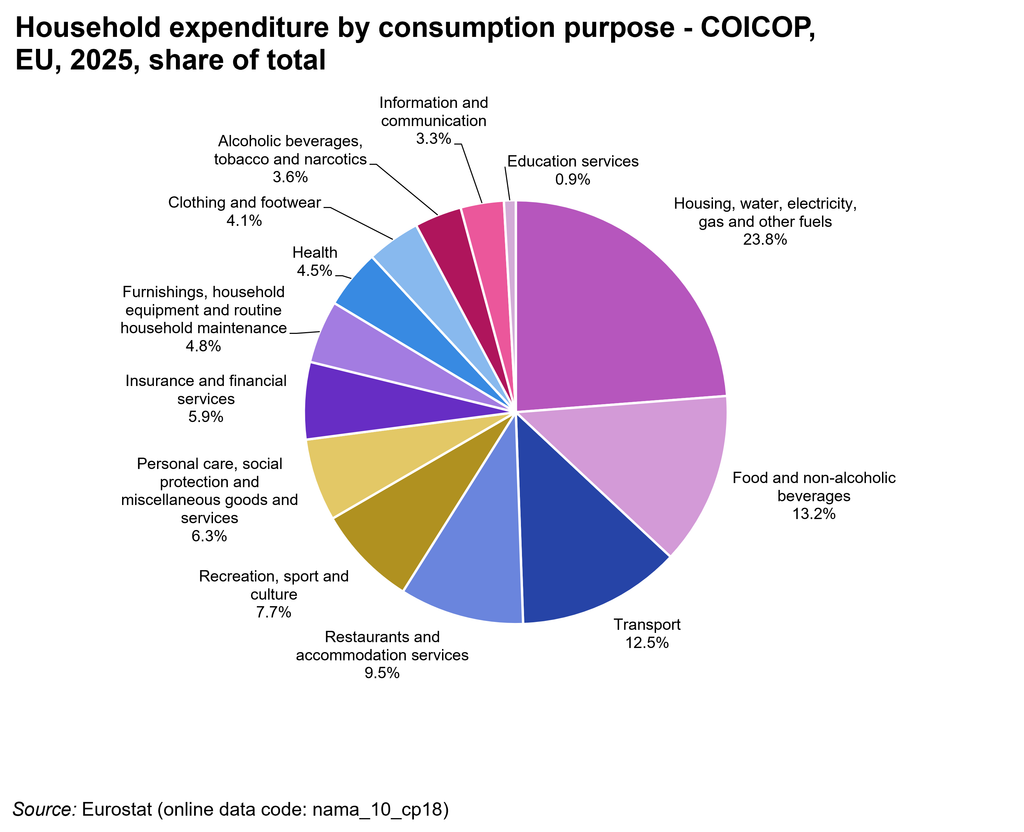
Housing, food and transport accounted for 49.5% of EU household expenditure in 2025. Housing includes an estimated rental value for owner-occupied homes. Source: Eurostat.
Separate research shows what housing pressure can mean in everyday life. “Despite spending more of their incomes on housing, young people tend to live in poorer-quality dwellings,” Eurofound concluded in its study of Europe’s youth housing struggles, published in December 2025.
Surveys in Czechia, the Netherlands, Spain and Sweden found that more people were living with parents, relatives or friends than they wanted, while fewer lived alone or with a partner than preferred. The consequences extended beyond a cramped room: unmet housing preferences were associated with difficulties pursuing careers, poorer mental health and delayed decisions about having children.
Cheaper digital consumption, more expensive everyday life
The full Eurostat analysis reveals a striking contrast in prices. Between 2010 and 2025, its price measure for information and communication fell by 27.4%. Over the same period, the measure for food and non-alcoholic drinks rose by 55%, while restaurants and accommodation increased by 54.7%.
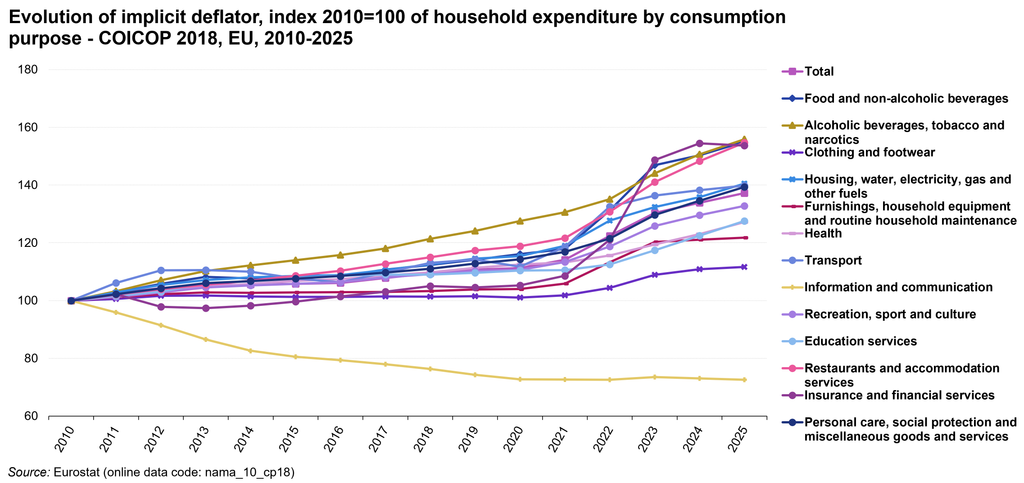
Price trends across EU consumption categories, with 2010 set at 100. The chart uses national-accounts price measures, known as implicit deflators. Source: Eurostat.
These are broad statistical measures, not price comparisons for an identical phone, supermarket basket or hotel room. But they help explain why growing digital consumption can coexist with pressure on everyday budgets.
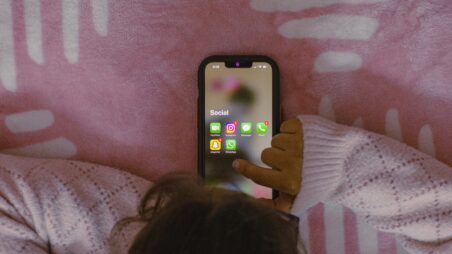
Information and communication consumption increased by 3.3% in 2025, the strongest growth of any main category. Yet it accounted for only 3.3% of total household expenditure. Even a favourable price trend in this area has limited weight beside the much larger shares devoted to housing, food and transport.
Higher consumption across Europe therefore does not mean every household feels better off. There can be more spending on recreation, more alcohol-free options at the bar and continued growth in digital services, while the decision to rent a home alone or move in with a partner remains out of reach.