Bulgaria now has a president and a prime minister who would both rather talk to Moscow than arm Kyiv. Iliana Iotova won Sunday’s run-off by a wide margin, cementing her alliance with Prime Minister Rumen Radev. That matters in Brussels, where Sofia holds a veto whenever EU sanctions on Russia come up for renewal.
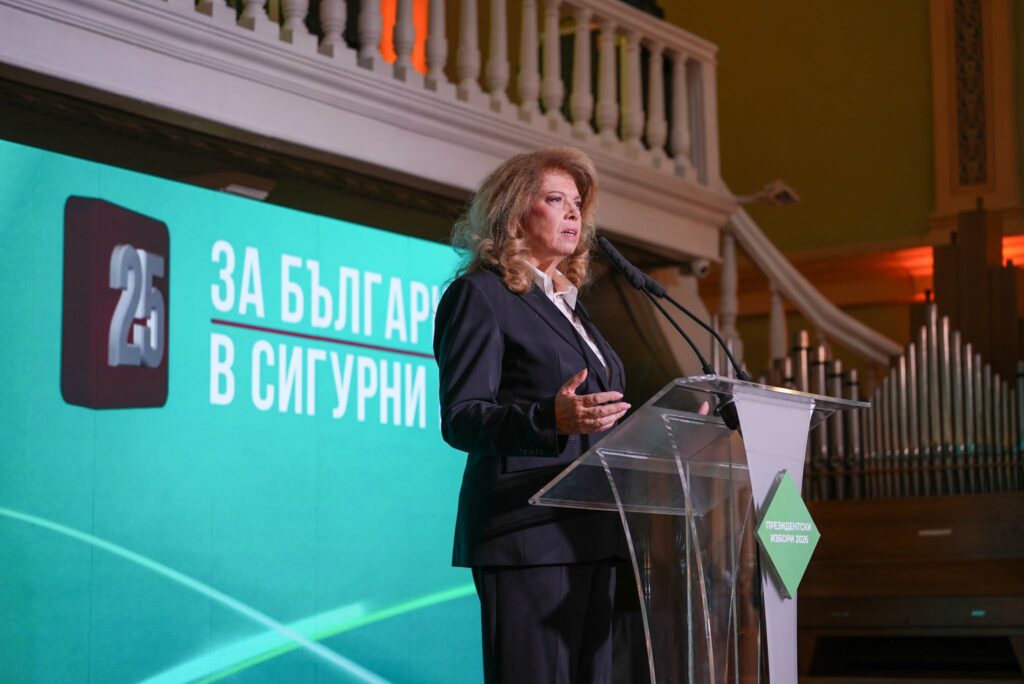
“Dear Mr Radev, we would not have done it without you,” Ms Iotova said in her victory speech on Sunday. Her thanks captured the significance of the result: voters have kept two long-standing allies in Bulgaria’s highest offices, following a campaign that brought Russia’s war against Ukraine close to home.
A new mandate after a divided campaign
Ms Iotova was already president before Sunday’s election. She took over in January, when Mr Radev resigned to enter parliamentary politics and subsequently became prime minister. Previously his vice-president, the former journalist and MEP now becomes Bulgaria’s first elected female head of state, supported by his governing Progressive Bulgaria party.
She won 57.57 per cent of the vote, against 39.48 per cent for former caretaker prime minister Andrey Gyurov, according to Central Election Commission figures reported by BNT. The gap widened after a close first round on 25 October, when neither secured a majority. Turnout remained low, at around 27 per cent. “We accept the results as they stand,” Mr Gyurov said in his concession statement.
Peace could come only through negotiations. — Iliana Iotova, President of Bulgaria
The candidates offered different responses to the war. Mr Gyurov, backed by pro-Western opposition parties, supported Kyiv and signed a security cooperation agreement during his time as premier. Ms Iotova opposed further Bulgarian military assistance. “Peace could come only through negotiations,” she said during a television debate, according to AP. She proposed a meeting of all six Black Sea countries to agree to a moratorium on hostilities at sea.
Recent drone attacks on merchant ships near Bulgaria made those differences more urgent. Sailors have been killed or remain missing, and Sofia has sought allied assistance to strengthen maritime security. Both candidates condemned the attacks. Mr Radev said their outcome benefited Russia, but his government has stopped short of directly attributing them to Moscow.
European ties, differences over Russia
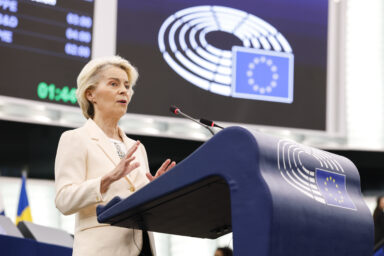
European Commission President Ursula von der Leyen congratulated Ms Iotova on X. “From security and defence to our competitiveness and energy independence, I look forward to continuing our joint work,” she wrote. Observers expect Ms Iotova to maintain Bulgaria’s European orientation while seeking better relations with Russia and the lifting of sanctions.
Under the country’s constitution, the government directs foreign policy. The president represents Bulgaria, heads the armed forces, and can return legislation to parliament for reconsideration. Ms Iotova’s victory keeps both offices in the hands of allies who favour negotiations with Moscow and oppose further military aid to Ukraine.
Bulgaria’s position could also affect European efforts to maintain pressure on Russia. EU decisions to adopt, renew, or lift sanctions require unanimous agreement among member states. Mr Radev’s government will decide how Bulgaria votes in those negotiations and whether it changes its military support for Kyiv.