One criminal network used 40,000 SIM cards to set up almost 50m fake online accounts. As Europe heads into a busy election year, lawmakers in Brussels are asking how to stop such bot armies without taking away people’s right to speak anonymously online.
With a string of national elections due across Europe in 2027, the stakes are rising. Fake accounts, coordinated disinformation campaigns, and online harassment are fuelling concerns across the EU. Yet lawmakers are divided over how to tackle manipulation without undermining anonymity and freedom of expression.
Bot farms and social media anonymity took centre stage in the European Parliament on 16 November. MEPs, Europol, and civil society representatives met at a hearing of the Special Committee on the European Democracy Shield (EUDS). They discussed how automated accounts distort political debate, amplify divisive content, and target public figures. What divided MEPs most was the line between anonymity and inauthenticity.
Fake accounts on an industrial scale
Edvardas Šileris, head of Europol’s European Cybercrime Centre, illustrated the scale of the problem with Operation SIMCARTEL. The investigation dismantled a criminal infrastructure built on some 40,000 SIM cards. According to Europol, the network used them to create almost 50m accounts. Mr Šileris told MEPs the network used them to create some 50m accounts across 160 online platforms.
You might be interested

Authorities in Latvia, Austria, and Estonia carried out the operation in October 2025. It exposed how easily criminals can bypass conventional verification systems. It also showed how they build networks capable of manipulating online activity. “We are a bit against anonymity. We are for privacy, but we don’t think that internet should be anonymous,” he said.
The cross-border dimension is another major obstacle. Europol can coordinate investigations involving several EU countries. However, it does not have direct access to social media platforms or an independent monitoring system. Investigators must generally request information through the relevant authorities. And platforms do not always cooperate. “In seconds you can switch between five or ten different jurisdictions, but when it comes to collection of data, it takes sometimes years,” he explained.
Inauthenticity, not anonymity
Some lawmakers want a system that links every social media account to a verified individual. Others warned that mandatory identification could expose journalists, whistleblowers, activists, and political dissidents to surveillance and retaliation.
According to Saman Nazari, director of intelligence and threat disruption at Alliance4Europe, the danger goes well beyond the creation of fake profiles. Bot farms can hijack legitimate conversations, drown out opposing views, spread fabricated content, and manufacture the impression of widespread political support. “We need to stop inauthenticity, not anonymity,” Mr Nazari told MEPs. The two issues, he argued, are not the same.
You have freedom of speech, right? We all believe in that, but you don’t have freedom of behaviour of doing inauthentic things. — Saman Nazari, director of intelligence and threat disruption at Alliance4Europe
His research identified several ways in which coordinated networks operate. They create accounts in bulk, buy profiles from online vendors, rent accounts run by recruited individuals, and hack existing ones. Some networks also use so-called comment-section flooders to overwhelm discussions and discourage users from expressing opposing opinions. “You have freedom of speech, right? We all believe in that, but you don’t have freedom of behaviour of doing inauthentic things,” he remarked.
Mr Nazari questioned whether private companies should be responsible for verifying users’ identities. If such a system ever came in, he argued, an independent non-profit organisation should run it rather than the platforms themselves. “Social media companies should never have our IDs. We never want to give them that much power,” he added. He was referring to the risks of handing sensitive personal information to companies such as X.
Mr Nazari also proposed a three-stage approach to disrupting bot networks. First, investigators establish evidence of coordinated inauthentic behaviour. Then they use platform policies and existing legislation to dismantle the operations. Finally, they apply public pressure when platforms fail to act.
Pseudonyms with a paper trail
Greece is pushing for an EU-wide identity verification system. It is also one of the member states heading to the polls next year.
During the debate, Dimitris Kirmikiroglou spoke for Athens. He is secretary general for communication and information in the Greek prime minister’s office. He stressed that the government has neither introduced legislation nor drafted a bill banning online anonymity. Instead, it has launched a public debate on the issue. “The problem isn’t a citizen who is anonymous. But a citizen who doesn’t exist is inauthentic,” he said.
The Greek proposal would allow users to keep pseudonyms. However, judicial authorities could still access their identities when investigating serious offences. Mr Kirmikiroglou argued that a European framework would be “necessary”. National governments, he explained, cannot impose obligations on platforms established in other member states. Greece also wants to build on its Kids Wallet app. The app helps parents verify their children’s age while protecting their personal data. For now, there is “no timetable” and no concrete legislative proposal for the broader identity-verification plan.
Same threat, different cures
At its core, the clash was over anonymity and freedom of expression, and how each political group approaches them. In short, it is an old story.
On one side, the European People’s Party (EPP) called for stronger identity checks. At the same time, it would allow users to keep their pseudonyms. On the other side stood the Socialists and Democrats (S&D), the second-largest group in Parliament. The S&D warned that fake accounts distort public debate and urged platforms to tackle the algorithms that amplify them. It also questioned whether anonymity can still protect free speech when users face online intimidation. The centrist Renew Europe group suggested a compromise. Users could remain anonymous publicly, while platforms would know their real identities.
Yet all three groups agreed on one point. Coordinated fake accounts pose a growing threat to democratic debate.
Platforms missing from the room
The discussion among lawmakers ultimately returned to the responsibility of social media companies. How effectively do platforms cooperate with European and national authorities when investigators target bot networks? No clear answer emerged. Meanwhile, existing safeguards are struggling to keep pace with increasingly sophisticated manipulation techniques.
Human rights are not designed for robots. We all care about freedom of expression, but freedom of expression is not designed for robots. — Nathalie Loiseau (Renew/FRA), chair of the EUDS committee
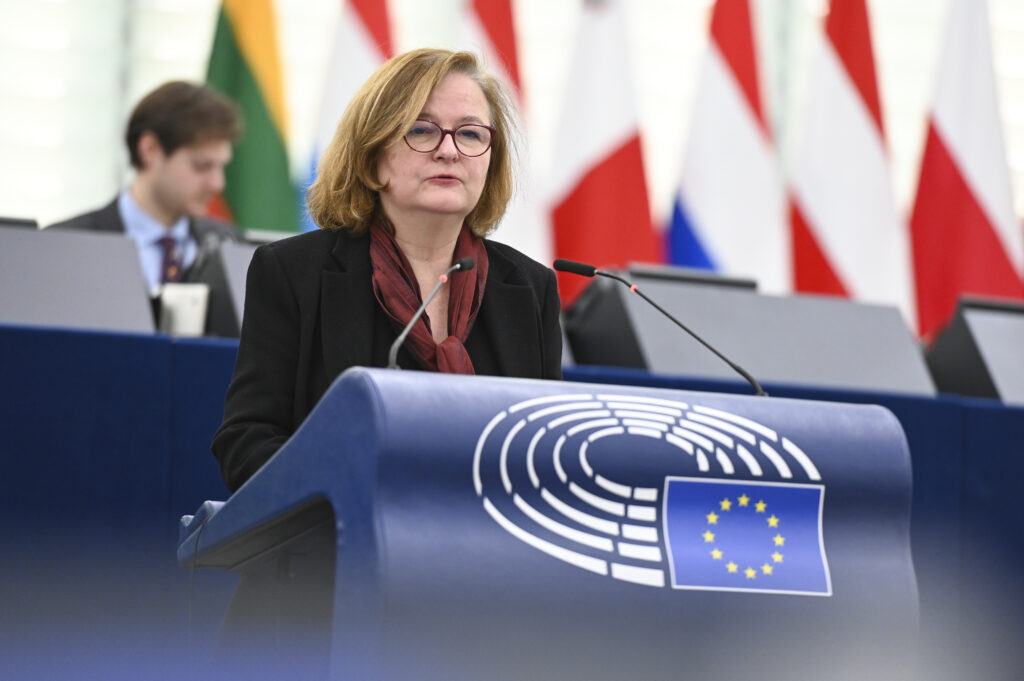
Nathalie Loiseau (Renew/FRA), who chairs the EUDS committee, criticised the absence of social media companies from the discussion. The committee had repeatedly invited platforms to its hearings, she said, but they had consistently refused. “Human rights are not designed for robots. We all care about freedom of expression, but freedom of expression is not designed for robots,” she added.