With crucial trilogue on 9 December approaching, Parliament and Council put talks on hold on four military mobility package issues. The cash is missing, too.
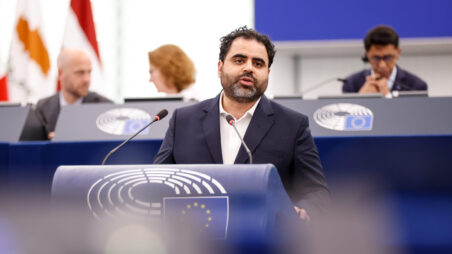
The European Parliament is ready to compromise with the Council on several issues in its talks on military mobility. It has, however, chosen to play its cards close to its institutionary chest. SEDE rapporteur MEP Michał Szczerba (EPP/POL) told the committee on 3 November that Parliament kept those issues open to preserve its negotiating leverage with the Council.
The plan is to trade them as part of a broader package. Mr Szczerba said Parliament had already secured much of what it wanted. Military transport permission procedures are significantly simpler; digitalisation is stronger; cooperation with Ukraine and Moldova is closer.
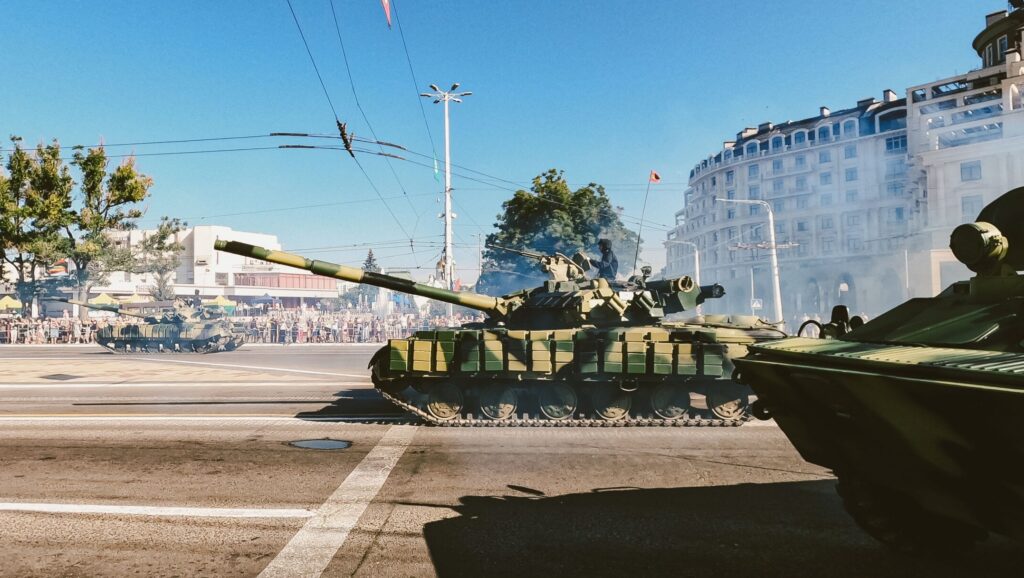
The stakes are high. The military mobility package (2025/0847(COD)) would replace voluntary, fragmented agreements with a legally binding framework. It aims to create what Brussels often calls ‘a military Schengen’. Troops, vehicles, and equipment would move quickly and seamlessly across the EU.
Delay is costly. The lesson of moving aid to Ukraine is that Europe cannot defend itself if a convoy needs weeks to cross internal borders. The package would set a legal limit of two to three working days for ad hoc transit permissions.
The vexed Annex 1
The sharpest dispute concerns Annex 1. It defines the types of military transport operations covered by standing permissions. The Council wants to remove it from the regulation and move its content to an implementing act — and Parliament objects.
Mr Szczerba gave two reasons. The change could delay the application of the framework, he said. It could also limit Parliament’s scrutiny. “Our position is clear. We want to retain Annex 1 in the regulation.” Parliament would let the Commission update non-essential elements through delegated acts.
Our aim was to make the military Schengen Zone. But we are not close to this point yet. — MEP Mārtiņš Staķis (S&D/LAT)
Negotiators did endorse a provisional technical agreement on the so-called green lines. These update the forms in Annex 1, which holds the harmonised EU forms and templates for cross-border permissions. A single application form would cut clearance from up to a month to a maximum of three working days.
The forms also digitalise standard transit documents. They align EU protocols with Form 302, the main EU and NATO customs declaration for moving military equipment. Mr Szczerba urged the Commission to accelerate its work, as he did in a letter to Commissioner Andrius Kubilius. The Commission promised new annexes by the end of the month.
Where the Council holds firm
Several issues remain open. Negotiators agreed deadlines of “six hours for defined roads and 12 hours for roads that are not predefined”. The deadlines refer to the maximum approval or response windows that national authorities have to grant border-crossing and transit permissions for military convoys.
Essentially, it establishes a two-tiered system for how quickly a country must say ‘yes’ or ‘no’ when another EU country asks to move troops or weapons through its territory. If the military convoy is travelling along a pre-agreed, logistically mapped-out transit corridor (the primary highway or rail networks optimised for military use), national authorities are legally obligated to approve the transit request within six hours. Because the route is already vetted for weight limits and safety, the paperwork is fast-tracked.
If the convoy needs to take an alternative, non-standard route—or if it is transporting heavy, abnormal loads or dangerous goods that require custom routing—the state has slightly more time to verify that the bridges and infrastructure can handle it. However, they must still issue a decision within a strict 12-hour window.
A drastic change
This represents a radical acceleration of military logistics. Currently, getting permission to move troops across European borders can take several days or even weeks. By locking in 6-hour and 12-hour response limits, negotiators are drastically stripping away peacetime red tape to ensure that in an emergency or sudden deployment scenario, bureaucratic delays cannot stall a military response.
The talks are on hold for now. The conditions and justification for suspending, revoking, or modifying military transport permissions also remain unresolved. Mr Szczerba described these as particularly sensitive for the Council. The talks also covered the Military Mobility Digital Information System, one of the four issues Parliament is holding back.
I think the step is to develop a genuine strategy to ensure we have European tools which are of course interoperable with those of NATO, but which are designed, developed and controlled in Europe. — MEP Christophe Gomart (EPP/FRA)
Some points are settled, such as the participation of non-EU countries. Both Ukraine and Moldova will be named explicitly. That gives a clear reference without requiring agreement on a broader category of countries. Debate on extending the framework to non-EU NATO partners, such as Norway or the UK, and to other candidate states remains delicate.
Transport workers also won a concession. Negotiators agreed to include an explicit reference to working conditions in the transport sector. Mr Szczerba said this was a red line for the S&D group. He added that it was secured on individual train paths during priority access.
Sovereignty divides the room
MEP Elio Di Rupo (S&D/BEL), a shadow rapporteur, praised both rapporteurs for defending Parliament’s position. His group wants to avoid interference with civil transport. “Military transport cannot take predominance over everything,” he said. In peacetime, he added, dual-use transport should also contribute to economic development.
MEP Jaroslava Pokorná Jermanová (PfE/CZE) stressed sovereignty. “We believe that decisions should remain in the hands of the member states,” she said. She predicted a successful outcome at the final trilogue on 9 December. Her group shares a number of perspectives with the Council.
Mārtiņš Staķis (S&D/LAT) was quick to place the problem in the Council, not in Parliament or the Commission. “Our aim was to make the military Schengen Zone. But we are not close to this point yet,” he said. Member states, he argued, still want to keep control.
The legal basis explains some of that caution. The regulation rests on Articles 91 and 100(2) of the TFEU, which are transport competences, not defence ones. Defence ministries are wary of handing regulatory oversight to Brussels. That fuels pushback on how far the EU can dictate national border-crossing processes.
The money is missing
Liability is another rift. Parliament and the International Road Transport Union favour a common EU framework to protect private operators whose trains, trucks, or ferries are damaged or requisitioned. The Council prefers national discretion. Operators fear that would create an unworkable patchwork of local liability laws.
Funding is thinner still. Dual-use infrastructure under the Connecting Europe Facility has around €1.69bn. The European Policy Centre and other analysts put the necessary upgrades closer to €70bn. A proposal under the Irish Presidency to cut the military mobility budget line by 11 per cent was fiercely opposed by Parliament.
We believe that decisions should remain in the hands of the member states. — MEP Jaroslava Pokorná Jermanová (PfE/CZE)
MEP Christophe Gomart (EPP/FRA) looked beyond the text. “I think the step is to develop a genuine strategy to ensure we have European tools which are of course interoperable with those of NATO, but which are designed, developed and controlled in Europe,” he said. He wants a strategy for European tools, designed, developed, and controlled in Europe, and interoperable with NATO’s.
The calendar is tight. At least seven more interinstitutional technical meetings are planned before the final trilogue on 9 December. Mr Szczerba is optimistic. “We remain confident that we will reach an agreement on the regulation by the December plenary session as planned.”