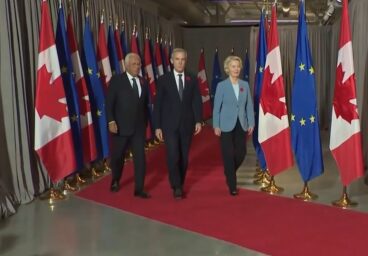
Britain and the EU are both weaker because of Brexit, Poland’s European affairs minister said on Thursday, as negotiations continued ahead of Friday’s EU–UK summit. Talks on food checks, carbon trading and a youth experience scheme were still underway.
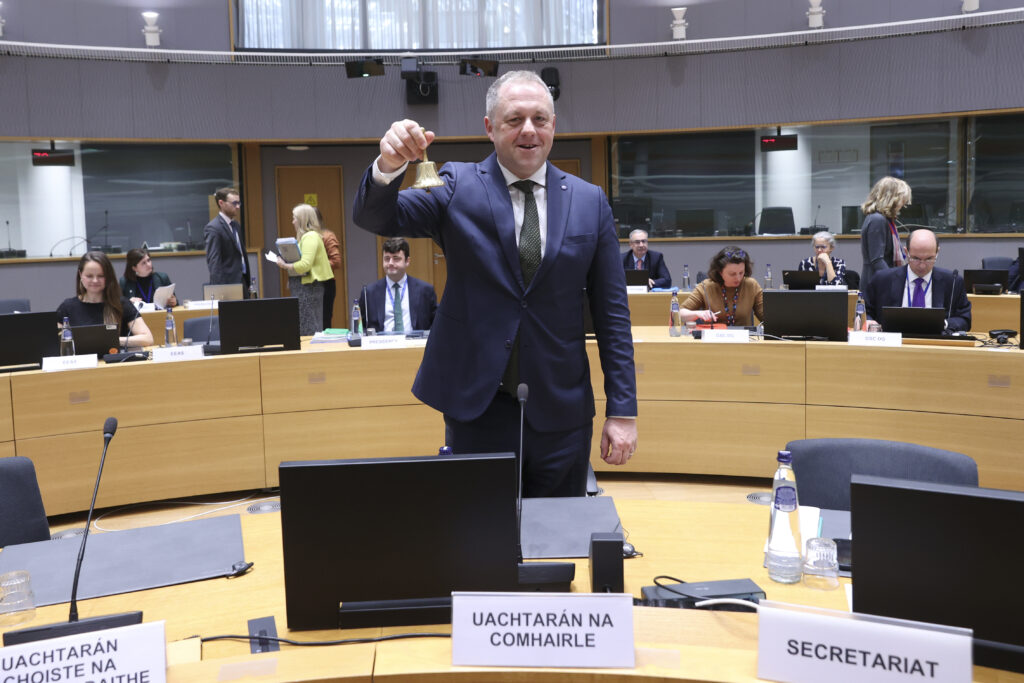
“The EU is weaker after Brexit, and the UK is weaker after Brexit too,” Ignacy Niemczycki, the Polish European minister told reporters in Brussels. “We are friends, and let us find the right framework for that.” Ireland’s Thomas Byrne, representing the Council presidency, said negotiators were working “up to the last moment”.
The EU is weaker after Brexit, and the UK is weaker after Brexit too. — Ignacy Niemczycki, Poland’s European affairs minister
“These negotiations are absolutely worth it, but it doesn’t mean that they’re easy,” Mr Byrne said after the General Affairs Council. Ministers also discussed legislative priorities, crisis preparedness and the rule of law, while enlargement talks exposed differences over Montenegro’s path to membership.
You might be interested
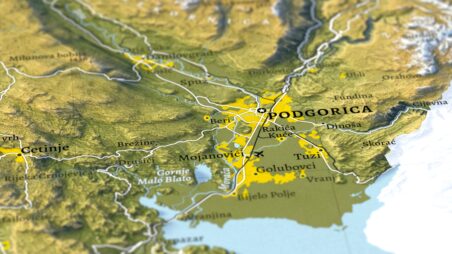
Montenegro faces Croatian concerns
Mr Byrne reiterated Ireland’s ambition to close Montenegro’s remaining negotiating chapters before its presidency ends in December. He also sought further chapter closures with Albania and the opening of the remaining two negotiating clusters with Ukraine and Moldova. “We are going to spare no effort in that regard,” he said.
German Europe Minister Gunther Krichbaum criticised bringing disputes between neighbours into accession negotiations. Such disputes “simply have no place” there, he said, pointing to arbitration as a way to resolve them. Lithuania’s Sigitas Mitkus also called for a merit-based process resilient to bilateral blockages.
We do not want the issue of maritime delimitation to slow down and delay Montenegro’s progress towards the EU. — Andreja Metelko-Zgombić, Croatia’s State Secretary
Croatia’s State Secretary Andreja Metelko-Zgombić defended her country’s demands as accession requirements, citing war-crimes prosecutions and the return of confiscated property. “We do not want the issue of maritime delimitation to slow down and delay Montenegro’s progress towards the EU,” she said, speaking in Croatian. However, she challenged maritime claims in documents submitted under Montenegro’s energy chapter and called on the country to confirm the former Yugoslav republic’s boundary.
Divisions and simpler rules
Germany and Poland outlined contrasting positions ahead of a revised proposal for the EU’s 2028–2034 budget. Mr Krichbaum said the proposed total remained too high and opposed concentrating cuts on competitiveness and technology. Mr Niemczycki rejected cuts to national cohesion allocations and using ETS revenues as an EU funding source. Both supported continued financing for Ukraine.
The Council formally adopted simplified rules for chemicals, cosmetics and fertilisers. The law eases formatting requirements for chemical labels, advertisements and online sales, reduces duplicate reporting and expands digital procedures. It also pushes the application of revised chemicals labelling rules from January 2028 to January 2030. For cosmetics, it provides for the gradual phase-out of certain substances that can cause cancer, genetic mutations, or reproductive harm, giving manufacturers time to find alternatives.
Mr Byrne reported progress on further simplification packages covering digital rules, the environment, food safety and energy products. Ministers also reviewed the rule of law in Hungary, Lithuania, Luxembourg, and Cyprus and discussed crisis preparedness. Their examination of the Commission’s 2027 work programme will feed into an agreement with Parliament on shared legislative priorities by the end of the year.