EU leaders sit down in Brussels on Thursday over a budget plan that cuts €204bn from the bloc’s next seven years. Parliament is digging in on spending. On revenue, though, it sees hope: money the EU would raise itself.
Few capitals have warmed to the plan. European Council President António Costa wants to cut €204bn from the Commission’s original proposal of nearly €2tn. Both sides of the debate find fault with it.
The Swedes maintained that it was “still too large”. The Dutch government said it was “difficult to imagine that this new proposal could form the basis for a compromise”. Spain warned that discussions were moving in the wrong direction despite broad agreement on the need for greater public and private investment at EU level. Paris called it “very disappointing”.
Parliament’s red line
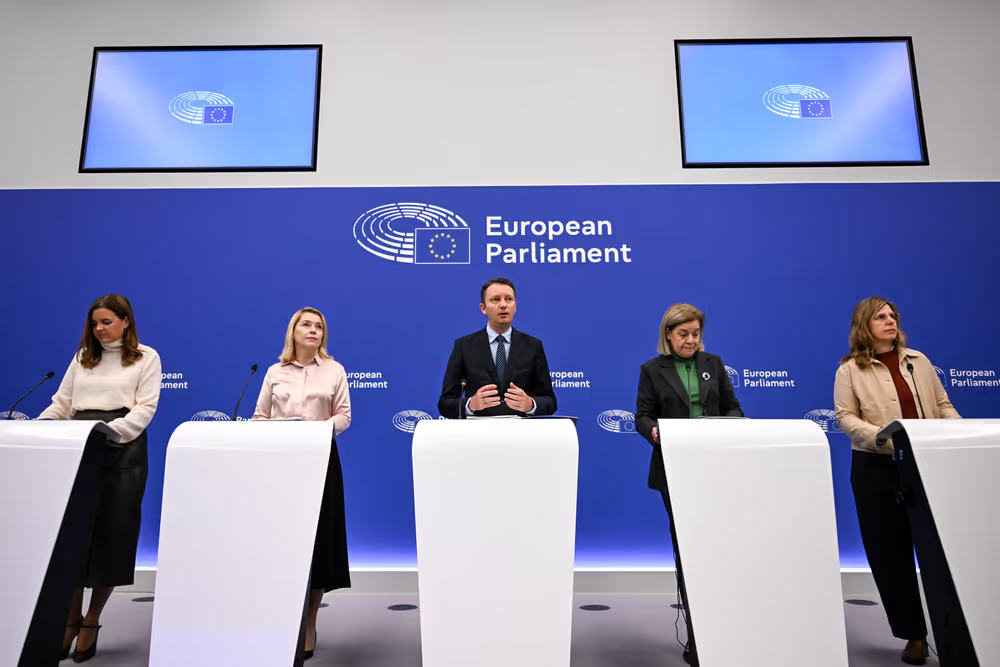
For MEPs, the proposal offered little comfort on spending. “We all agree that we cannot accept more cuts,” said Danuše Nerudová (EPP/CZE). She is one of Parliament’s co-rapporteurs on own resources, the revenue the EU collects directly rather than relying on national contributions.
You might be interested
Siegfried Mureșan (EPP/ROU), one of Parliament’s lead negotiators, also pointed to what he sees as a contradiction in the leaders’ approach. They repeatedly proclaim the need to strengthen competitiveness. Yet the proposal makes further cuts to precisely those areas. “This is not yet a good budget for Europe,” he said.
This is not yet a good budget for Europe. — Siegfried Mureșan (EPP/ROU), one of Parliament’s lead negotiators
Mohammed Chahim (S&D/NLD) is vice-president of the Socialists and Democrats Group responsible for budgetary matters. He called it “incomprehensible” that the so-called frugal countries would reject even a proposal that already falls short of Parliament’s ambitions. This group of net contributors to the EU budget, which includes his own Netherlands, has long pushed for deeper cuts.
A step forward on own resources
One aspect of Mr Costa’s proposal did give MEPs a glimmer of hope. It includes new sources of revenue for the EU.
The proposal puts forward five potential revenue streams. They include a digital services levy and revenues linked to carbon pricing, waste, and tobacco. It also changes how the EU will repay the money it borrowed for NextGenerationEU, its post-pandemic recovery fund. Parliament has called for such new revenue streams for many years.
Carla Tavares (S&D/PRT), Parliament’s other main budget negotiator, welcomed that member states are finally taking the issue seriously. “This is the first time in many years that own resources are genuinely on the table, and we hope this is only the initial step.”
Ms Nerudová was similarly positive about the inclusion of the digital levy, an idea also put forward by Parliament. Many have portrayed the proposal as a concession to Paris, which has long supported taxing large technology companies. But “this is not a victory for France, but a victory for the European Parliament,” she said.
Difficult negotiations ahead
Even as MEPs welcome the proposals on new revenue streams, they are well aware that a difficult road of negotiations lies ahead. New EU own resources require unanimous agreement among member states, followed by ratification in each of them. That gives individual governments considerable leverage over the final package.
The digital levy, for example, remains sensitive for Ireland, where the presence of major technology companies makes the issue politically contentious. Ms Nerudová also has little hope that Czechia and Poland will back revenues from the emissions trading system, the EU’s carbon market.
The Dutch government has also signalled its strong reservations. “We are reluctant about proposals that increase the burden on companies,” Finance Minister Eelco Heinen said.
The volume has still to go down significantly, the proposal of EU Council President Costa is not enough. — Reinhold Lopatka (EPP/AUT), head of the Austrian EPP delegation
Reinhold Lopatka (EPP/AUT), head of the Austrian EPP delegation, sees Vienna and Berlin on the same page. “The German position on the next EU’s long-term budget is very much in line with the Austrian one. The volume has still to go down significantly, the proposal of EU Council President Costa is not enough,” he said.
New revenue streams do not tempt him either. “We also think that new own resources are not the first choice to settle the problem. They never live up to expectations when it comes to revenue figures, and we do not want to impose any new burdens on businesses in Europe that would further undermine our competitiveness.”
A race against time
Mr Costa has expressed his hope for a “timely agreement”. Mr Mureșan, however, pointed out that member states are already running late in agreeing their negotiating position. A swift agreement is far from guaranteed, as the so-called frugal countries have indicated that they would rather secure a solid agreement than rush into one.
Mr Lopatka does not expect a breakthrough this week either. “It would be a positive sign and a relief if the heads of state and government were to reach an agreement on a better and effective EU budget before the end of this year. It seems to be pretty clear that this will not happen at this week’s summit.”
Even once leaders strike a deal, negotiations will not be over. Parliament must give its consent before the budget can take effect. Mr Mureșan made clear that the current proposal marks the beginning, rather than the conclusion, of talks.
“Prime ministers never dictate to national parliaments what they do, and they will not dictate to the European Parliament either,” he said. “Let us be very clear: if prime ministers expect the European Parliament to approve the deal unconditionally, that will not happen.”