A dispute over billions in electricity congestion revenues exposed deep divisions in the European Parliament, as lawmakers clashed over who should pay for expanding Europe’s electricity grids. Swedish MEP warned the European Commission’s proposal could unfairly penalise countries that have invested heavily in cross-border infrastructure.
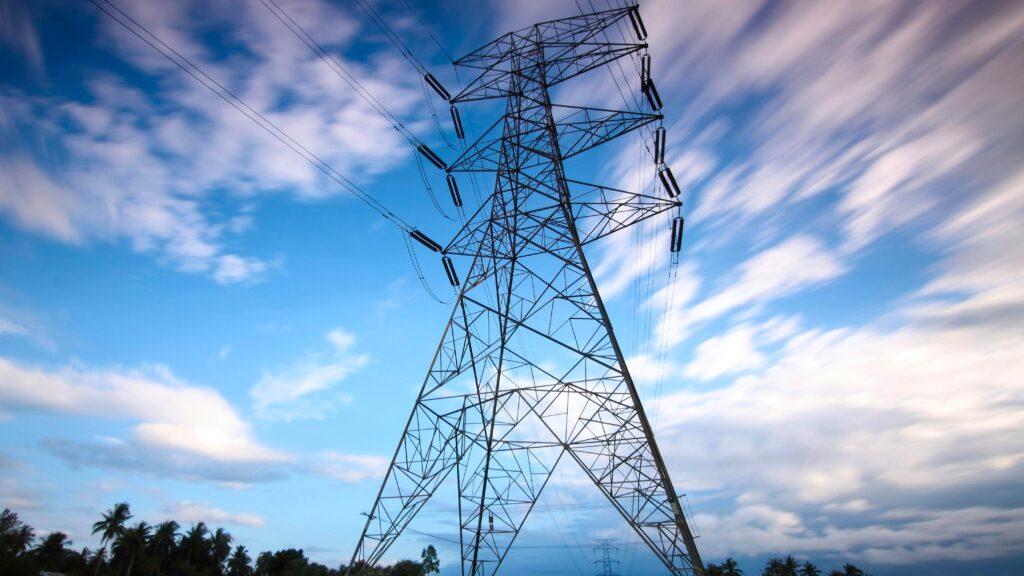
Congestion revenues — money paid by energy traders for the right to use cross-border electricity cables when demand exceeds available capacity — have become a central point of contention in negotiations over the EU’s Trans-European Networks for Energy (TEN-E) policy, an EU instrument for connecting the bloc’s energy networks.
“Fifty six per cent of unused revenues of congestion is Swedish money. We are three per cent of EU inhabitants,” said Sofie Eriksson (S&D/SWE), warning that the Commission’s proposal could disproportionately affect countries like her homeland. Why does Sweden have so many congestion revenues? “Because we are following the rules,” Ms Eriksson said, raising concerns about fairness in the proposed redistribution mechanism.
We have to acknowledge that if internal bottlenecks prevent cross-border flows from being used effectively, this has a pan-European impact. — Tsvetelina Penkova (S&D/BGR)
As part of its European Grids Package, the Commission has put forward plans to set aside 25 per cent of unused congestion revenues. This money could be used for investment in cross-border grid projects aimed at easing bottlenecks in electricity flows between states.
Ms Eriksson’s intervention highlighted a broader Nordic concern that member states with extensive interconnectors and large electricity exports could end up contributing significantly more than others. EU congestion income exceeded €6.5 billion in 2024, according to the Agency for the Cooperation of Energy Regulators (ACER). The Nordic region accounted for 28 per cent of that.
Sensitive political issue
The remarks triggered a direct response from rapporteur Tsvetelina Penkova (S&D/BGR) in her closing statement. She admitted that congestion revenues had become “the most sensitive political issue” in the negotiations. “We have to acknowledge that if internal bottlenecks prevent cross-border flows from being used effectively, this has a pan-European impact.”
Ms Penkova added that her objective in this report is to support faster and better infrastructure development across the EU, to make sure the projects are “truly needed and to ensure that the framework is cost effective, transparent and beneficial for our citizens”. According to Ms Penkova the Commission’s proposal helps to prepare the EU for the next stage of the energy transition.
Political backlash
On congestion revenues specifically, Ms Penkova conceded that the Commission’s plans currently lack clarity. She suggested Parliament may seek substantial revisions. “The specific cases of countries such as Sweden are taken into account,” she said. “We also understand the concern of colleagues that Commission proposals is unclear at the moment.”
Congestion creates income, but if the income is not used effectively to remove the constraints, then the congestion continues, according to Ms Penkova. “We cannot explain this to our citizens,” she said. The MEP therefore argued for a fair mechanism while respecting member states’ concerns.
The proposal will lead to a more integrated European grid and eventually lower energy prices for the consumers. — Sigrid Friis (Renew/DNK)
Ms Penkova’s comments underscored the balancing act facing negotiators: finding a system that promotes cross-border solidarity and investment while avoiding political backlash from member states that fear becoming disproportionate net contributors. During the debate, Commission representative Joachim Balke defended the overall direction of the proposal. He pointed to the importance of the TEN-E framework in accelerating strategic infrastructure projects across the bloc.
Several MEPs however criticised the Commission for moving too quickly. Andrea Wechsler (EPP/DEU) broadly backed the need for stronger infrastructure coordination, while Jana Nagyová (PfE/CZE) warned against what she described as excessive shift of powers to the EU level. “We need to avoid over-centralisation,” Ms Nagyová said. She insisted that member states must retain significant control over their own energy systems.
Ondřej Krutílek (ECR/CZE) agreed. He argued that Europe needs “strong grids”, but any framework must preserve a balance between European coordination and national competences. “We need clear and enforceable rules by the use of existing infrastructures through digital technologies and AI and the right balance between European coordination and national competencies,” Mr Krutílek said.
No room for delay
According to Sigrid Friis (Renew/DNK), an update of the framework was “urgently needed”, especially for transit countries like Austria. “The proposal will lead to a more integrated European grid and eventually lower energy prices for the consumers.”
At the same time, she criticised the lack of precision in the Commission’s draft particularly on congestion revenues. “The Commission proposal remains vague and unclear,” Ms Friis said. Many member states are very skeptical on how new measures should be implemented, she added.
Michael Bloss (Greens-EFA/DEU) argued that the current energy and climate crisis leaves little room for delay. He pushed for faster implementation of grid investments and permitting procedures. In turn, Jens Geier (S&D/DEU) said he was “surprised” and “disappointed” by elements of the Commission proposal. His statement reflected frustration among MEPs over what many see as a lack of technical and legal precision.
The deadline for amendments has been set for Tuesday 19 May at noon. The Parliament is expected to intensify discussions over the coming weeks as political groups attempt to narrow differences on one of the most contentious parts of the package. If the debate made one thing clear, it is that Europe’s energy transition may depend not only on building new grids, but also on deciding who ultimately pays for them.