The EU is well off track for its 2030 renewable energy goals. A new report argues that a faster solar and battery rollout could close the gap, cutting power costs by €55bn a year and fossil fuel import bills by €53bn. The findings land as the Commission pledges to back homegrown clean energy.
That is what a new report by SolarPower Europe published on Tuesday argued. The report titled Solar+: an EU pathway to achieve renewable targets, price affordability, and energy security found that despite recent growth in renewables, the EU remains significantly off track. Renewable energy accounted for around 48 per cent of electricity generation in 2025, well below the roughly 69 per cent needed by 2030 to meet climate targets.
“An electricity system driven by renewables is fundamentally more cost-effective than relying on the volatile pricing and burning of fossil fuels,” Walburga Hemetsberger, CEO of SolarPower Europe, said. “Investment in renewables, storage, and non-fossil flexibility pays off for years to come, while fossil fuel investments cost Europe its stability and independence.”
Acceleration
The report compared two scenarios: a ‘business-as-usual’ trajectory and a more ambitious “Solar+” pathway. Under current trends, renewable energy would reach about 62 per cent of electricity demand by 2030. However, a faster rollout of solar panels and battery storage could push that figure closer to 68 per cent, aligning with EU goals.
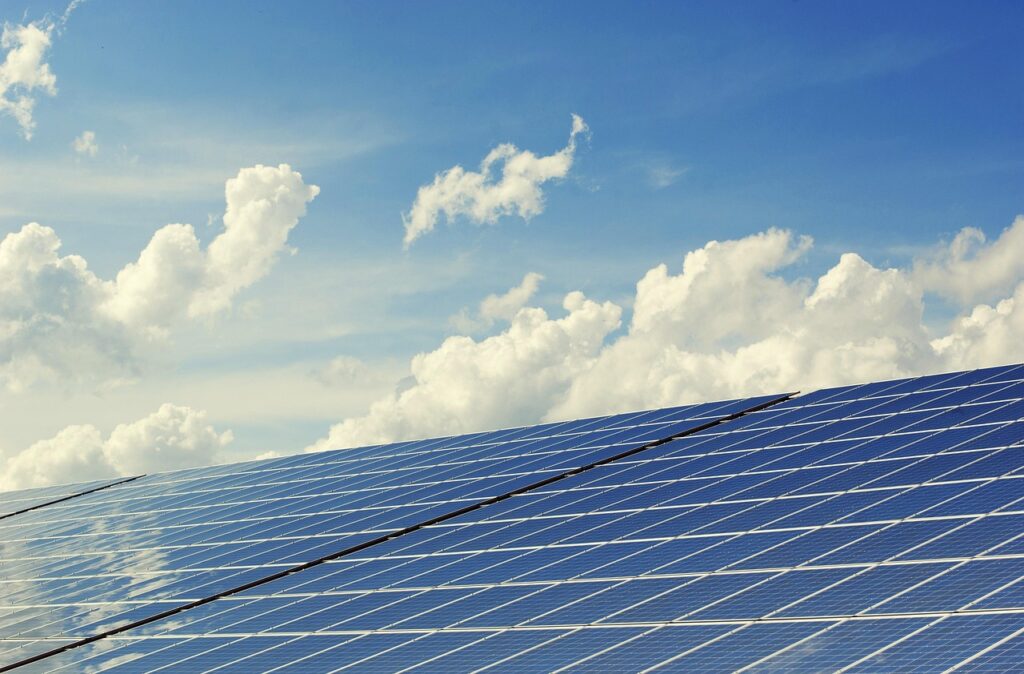
Central to the findings is the role of solar photovoltaic (PV) technology, described as the fastest and most cost-effective energy source to deploy. In the Solar+ scenario, solar alone could supply more than a quarter of the EU’s electricity by the end of the decade, becoming the single largest source of power.
The economic case for acceleration is equally strong. The report estimates that a solar-led transition could halve the EU’s power system operating costs by 2030, saving around €55bn annually compared to 2025 levels. Wholesale electricity prices would also fall significantly, by about 14 per cent on average, providing relief to households and industry.
Energy security
Another major driver to increase solar capacity is energy security. By reducing reliance on imported fossil fuels, particularly natural gas, expanded solar capacity could save the EU up to €53bn per year in import costs by 2030. Between 2026 and 2030, cumulative savings could reach €223bn.
Researchers stressed that the main barriers to progress are no longer technological but regulatory. They call for an EU-wide ‘flexibility strategy’ to integrate battery storage and demand-side solutions into the energy system. Battery capacity, they argue, must expand rapidly to manage the variability of solar and wind power and stabilise electricity prices.
The report therefore urged policymakers to accelerate electrification across transport, industry, and buildings, ensuring that renewable electricity becomes the most competitive option. Increased solar capacity is not only a climate solution, “it is an economic and strategic imperative”, the authors conclude, arguing that decisive action in the next five years will determine whether the EU can secure a cleaner, cheaper and more resilient energy system.
Homegrown
Ursula von der Leyen, president of the European Commission, underlined the need for increased solar capacity during the European Solar+ Summit on Tuesday. “Clean homegrown power and electrification are the path to independence,” Ms Von der Leyen said, stressing that these technologies should be developed and manufactured in Europe.
Europe has the talent, the research base, and the industrial capacity to lead.
— Ursula von der Leyen, President of the European Commission
“The good news is that we see strong innovation across the solar sector from next-generation inverters in Spain that optimise energy flows, to new facilities in Germany developing high-efficiency perovskite cells. Europe has the talent, the research base, and the industrial capacity to lead.”
The European Commission recently presented the Industrial Accelerator Act to help simplify rules and speed up permitting. Ms Von der Leyen said the European Commission is also working on establishing new conditions on foreign investments to make sure these result in jobs for Europeans.