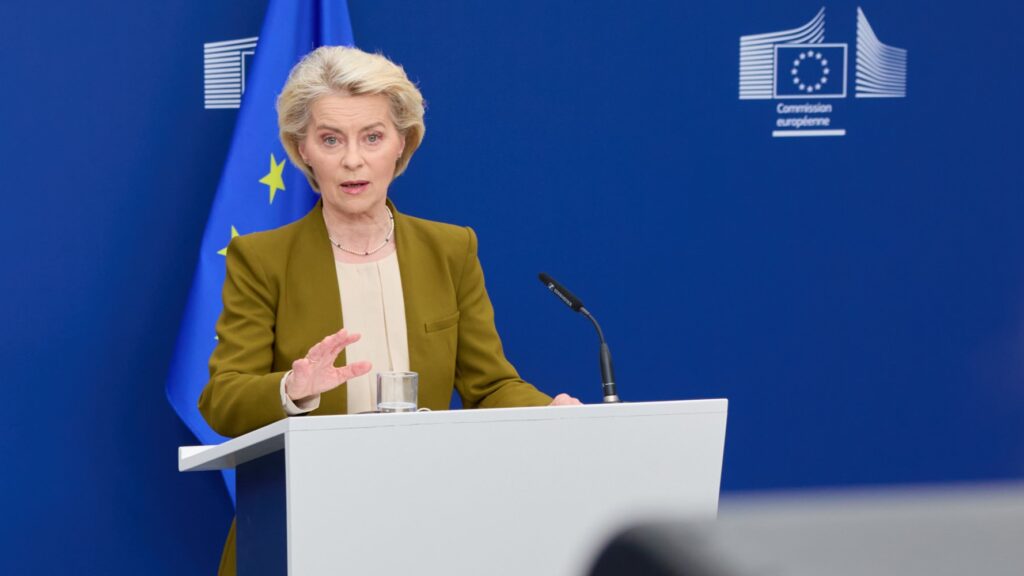
Those who fought on the Russian side in the war in Ukraine could soon be barred from entering the EU under the 21st sanctions package proposed by the European Commission. The measures also target additional vessels in Moscow’s shadow fleet, crypto firms accused of helping Russia evade sanctions, and Russia’s fishing industry, which has so far largely escaped EU restrictions.
Commission President Ursula von der Leyen said Europe was determined to maintain the “full intensity of sanctions”, particularly in light of recent shifts in global energy markets. “The conflict in the Middle East and disruptions to global energy supply chains have eased some pressure on Russia,” she acknowledged.
The headline measure is a long-anticipated travel ban for anyone who has served in the Russian military since February 2022. “Europe stays off limits for anyone who has participated in the invasion of Ukraine, as simple as that,” Von der Leyen said.
Tightening the energy squeeze
A significant part of the package focuses on the energy sector. The Commission is proposing sanctions on 30 additional vessels—on top of the 632 already sanctioned—that form part of Russia’s shadow fleet, which Moscow uses to transport oil outside the Western sanctions regime.
Our sanctions keep biting hard and cutting deep.
— Ursula von der Leyen, European Commission President
The measures would also target vessels providing logistical support to these tankers, including refuelling services. Restrictions could additionally be extended to ports, airports and refineries involved in the trading or processing of Russian oil. Brussels is also proposing a ban on the sale of liquefied natural gas (LNG) tankers to Russia, mirroring the existing prohibition on oil tankers.
At the same time, the EU intends to pause the adjustment mechanism for the Russian oil price cap until at least the beginning of next year, preventing Moscow from benefiting from recent volatility in energy markets.
Financial pressure intensifies
The sanctions package also contains a series of new financial measures. Transaction bans would be extended to a further 31 Russian banks. Another 20 banks, oil traders and cryptocurrency companies based in third countries would also be targeted for allegedly helping Russia evade existing sanctions. For the first time, the EU would gain the ability to impose a full prohibition on such entities.
The Commission is also proposing fresh export restrictions on technologies used by Russia’s defence industry. The measures would cover additional metals and alloys used in aerospace and weapons manufacturing, as well as equipment linked to drone operations, including jamming and launch systems.
On the import side, the EU would ban further Russian goods worth approximately €60 million. Affected products include selected metals, metal ores and automotive components.
The fishing industry is another new focus of the sanctions regime. The Commission proposes sharply curbing imports of certain fish products while imposing outright bans on others, including cod.
Closing the Belarus loophole
The package also seeks to align trade restrictions on Belarus with those already in force against Russia. The aim is to prevent Minsk from serving as a back door for trade in sanctioned Russian goods.
The proposed sanctions package must now be debated and approved by EU member states.
Von der Leyen argued that the EU’s sanctions policy has already proved effective. According to her, the measures have cut Russia off from global capital markets, significantly slowed economic growth and increased pressure on the state budget.
Four years after the start of its full scale invasion, Russia has clearly failed to subjugate Ukraine. The price it pays is heavier by the day and it is paid primarily by the people of Russia.
— Ursula von der Leyen, European Commission President
“They are mourning sons, brothers, husbands, and at the same time they face declining living standards at home. Inflation is close to 6 per cent. Interest rates stand at 14.5 per cent, taxes are rising. (…) On top of this, our sanctions keep biting hard and cutting deep,” she said.
According to Von der Leyen, Russia has lost more than two-thirds of the liquid assets held in its National Wealth Fund, while energy revenues fell by around 40 per cent during the first months of this year.
“Four years after the start of its full scale invasion, Russia has clearly failed to subjugate Ukraine. The price Russia pays is heavier by the day,” the Commission president said. “And it is paid primarily by the people of Russia.”
Support for Ukraine Continues
Von der Leyen stressed that alongside sanctions pressure on Russia, the EU remains committed to providing substantial financial and military support to Ukraine. In recent days alone, Kyiv has received almost €3 billion through the Ukraine Facility programme. A first tranche from the EU’s new €90 billion loan programme is also due to be disbursed later this month.
Clearly Ukraine has delivered, so it’s high time for us also now to deliver.
— Ursula von der Leyen, European Commission
By the end of June, Ukraine is expected to receive €6 billion earmarked for drones, alongside more than €3 billion in additional macro-financial assistance.
The Commission president also praised the pace of Ukraine’s reforms despite the ongoing war. According to von der Leyen, Ukraine continues to meet its reform commitments even as its cities come under attack and the country faces daily air raids. “Clearly Ukraine has delivered, so it’s high time for us also now to deliver,” she said.
She added that the EU will open the first negotiating chapter of the accession process with Ukraine and Moldova in the coming days, formally launching the next stage of membership talks.