Ireland has taken over the EU presidency, and with it Brussels’ toughest live file: a stalled €1.73tn budget. Taoiseach Micheál Martin wants a deal by the end of the year, to allow some time before the current one expires. The divide, in his own words: some capitals think it’s too high, others too low.
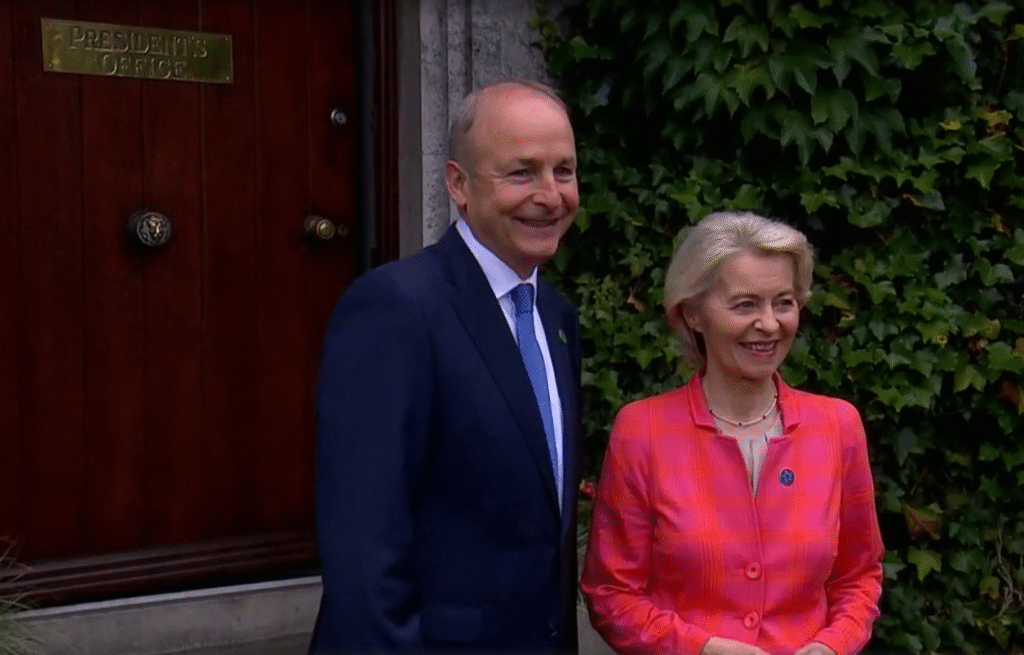
Ireland formally took over the six-month rotating presidency from Cyprus on 1 July, with a ceremony at Dublin Castle attended by European Council President António Costa and Ukrainian President Volodymyr Zelensky. Taoiseach Micheál Martin is now hosting European Commission President Ursula von der Leyen and the full College of Commissioners in Cork this week, calling the Commission “a key partner” as the presidency’s central task takes centre stage.
Speaking to reporters in Brussels ahead of last month’s European Council summit, Martin summed up the fundamental split among the 27. “Some believe the budget is too high,” he said. “Some believe it’s too low.” He added that reaching no deal at all would be the worse outcome. That would leave the EU without a budget once the current one expires.
Budget talks turn thorny
The dispute centres on the Commission’s original proposal. Unveiled last July, it put the budget at €1.76tn, covering 2028 to 2034. On 11 June, the Cyprus presidency circulated a revised negotiating box. It trimmed that figure by two per cent, to €1.73tn. The heaviest cuts fall on the new competitiveness fund and external action. Agriculture and cohesion are largely spared.
The draft has drawn fire from both sides. A group of fiscally conservative states, including Germany, Austria, Sweden and the Netherlands, say the overall budget is still too large. Roughly 15 mostly eastern and southern member states disagree. Italy, Spain and Poland are among those pushing to preserve cohesion and farm spending. A dispute over the rebates long enjoyed by wealthier net contributors also remains unresolved.
Leaders discussed the file at the European Council summit on 18 and 19 June, and their input, together with follow up consultations with capitals, is expected to feed into a new negotiating box that Ireland will present to leaders by October.
Member states are under pressure to close the deal before the end of the year. That would leave enough time for the technical work needed to get new funding schemes running. The current budget expires at the start of 2028.
Race against the clock
At the launch of the presidency in Dublin Castle, Martin was cautious rather than triumphant. He said only that his government would work to advance negotiations on the budget. His aim: to “secure agreement by the end of the year,” if possible.
Costa, who chairs the summits where the final deal is expected to be struck, wants an agreement in December at the latest, to prevent the talks from spilling into 2027, a year with elections looming in France, Italy, Spain and Poland that could complicate any late compromise.
The timeline leaves little room for error. When the current 2021 to 2027 budget was negotiated, an extraordinary summit in July 2020 needed five days, running from Friday 17 July to Tuesday 21 July, before leaders reached a deal.
Partnership, pragmatism and positivity can build consensus and move Europe forward.
— Ursula von der Leyen, President, European Commission
At a dinner hosted by Martin in Cork’s Aula Maxima, von der Leyen praised Ireland’s track record. The country has repeatedly shown that “partnership, pragmatism and positivity can build consensus and move Europe forward,” she said. It’s a quality Brussels is now counting on. The budget talks still need to reach a deal by year’s end.