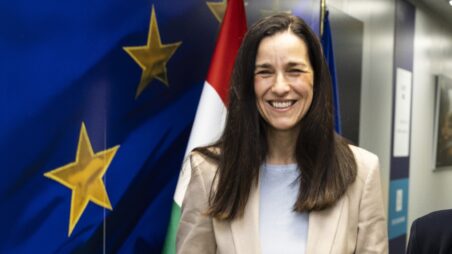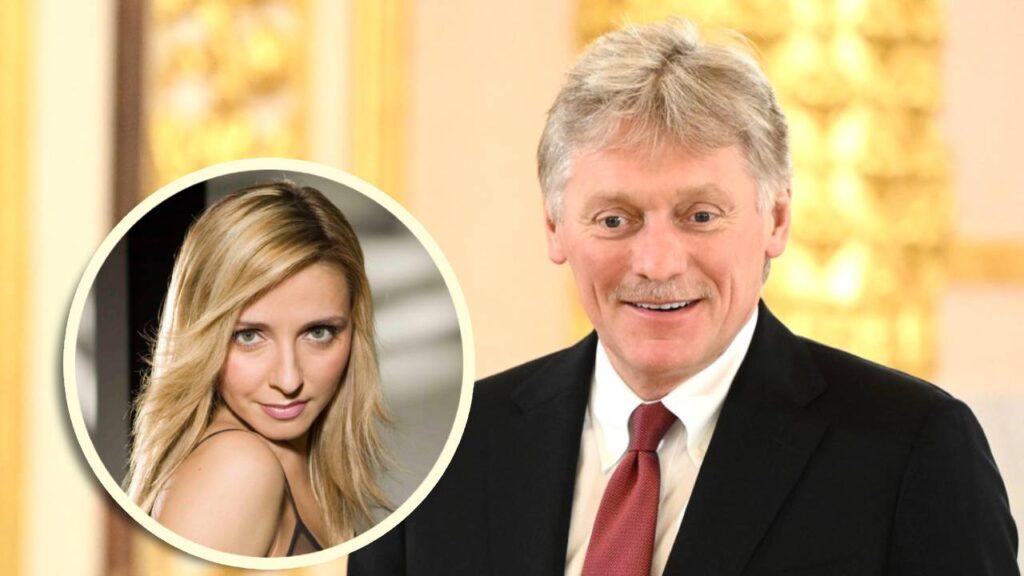
Tatiana Navka, the wife of Kremlin spokesman Dmitry Peskov, has challenged EU sanctions against her at the European courts. She argues she was listed unlawfully and is seeking more than €2 million in damages.
The former Olympic figure skating champion and wife of Dmitry Peskov, the spokesman for Russian President Vladimir Putin, has filed a case before the EU General Court challenging the decision to keep sanctions against her in place.
She was added to the EU sanctions list in June 2022, alongside other members of Mr Peskov’s family. The bloc said the measures targeted individuals responsible for actions threatening Ukraine’s territorial integrity, sovereignty and independence.
Ms Navka is now seeking to overturn that decision. Alongside the removal of sanctions, she is also demanding financial compensation. She is asking the Council of the EU for more than €2 million over alleged material losses, reputational damage and other non-material harm.
Navka: You have no evidence
In her legal challenge, Ms Navka argues that the Council failed to properly explain why it decided to keep her on the sanctions list. She claims EU institutions made errors in both their legal and factual assessment of the case. According to her, they failed to prove a sufficient link between her and the purpose of the sanctions regime.
Ms Navka also argues that the EU wrongly applied the so-called association criterion. It allows sanctions to be imposed on people linked to individuals who have already been designated. Her lawsuit also challenges the evidence used by the Council to justify its decision. She describes one EU working document as “irrelevant, unreliable and partially outdated”.
The Council breached the applicant’s right to human dignity as well as her and her children’s right to respect for their family life given that the Council’s intent was to engage in ‘gesture politics’ and to abuse her as a symbol. — EU General Court filing
The sharpest part of her argument concerns the claim that the sanctions are more political than practical. Ms Navka says the Council’s decision breached her “right to human dignity as well as her and her children’s right to respect for their family life”.
“Council’s intent was to engage in ‘gesture politics’ and to abuse her as a symbol,” the lawsuit states. According to Ms Navka, the measures are disproportionate and use her as an example to send a wider political message.
Brussels: Yes, we have
The European Commission rejects the idea that sanctions against Russian individuals are merely political gestures. So how confident is the institution that those placed on sanctions lists actually belong there? “Short answer: Very,” said Commission spokesperson Anouar El Anouni.
He explained that every sanctions listing must meet specific legal conditions. The EU must choose the right sanctions regime for each case. This can be a geographic regime targeting a particular country or region, a thematic regime, or a horizontal framework covering specific issues. Each sanctions decision also has to backed by clear evidence.
“And last but not least, to obviously reach unanimity by all 27 member states of the European Union,” the spokesperson added.
Mr El Anouni also stressed that EU sanctions are legal decisions that can be challenged before European courts. Every individual or company has the right to contest a listing and seek judicial review.
Business ties in Crimea
The Commission spokesperson explained why 51-year-old Navka, who was born in Soviet Ukraine but holds Russian citizenship, meets the criteria for sanctions. One reason is her ownership of companies and property, including assets in Crimea, the Ukrainian peninsula illegally annexed by Russia.
“She is therefore supporting actions which undermine or threaten the territorial integrity, sovereignty and independence of Ukraine,” the Mr El Anouni said.
Brussels also points to her close relationship with Dmitry Peskov, who has himself been under EU sanctions for years.
Sanctions are not the final word
The right to challenge sanctions in court is built into the EU system. Although sanctions lists are approved by all member states, individuals and companies can ask European courts to review those decisions.
The courts examine issues such as whether the EU had sufficient evidence, whether it applied the legal criteria correctly and whether it exceeded its powers. Those questions will now sit at the centre of the legal battle between Navka and the Council of the EU.
Tatiana Navka is not the only person linked to Russia’s elite seeking to overturn EU sanctions through the courts. According to EU documents, a similar challenge has also been brought by Yekaterina Ignatova, the wife of Sergei Chemezov, head of Russia’s state-owned technology and defence company Rostec.