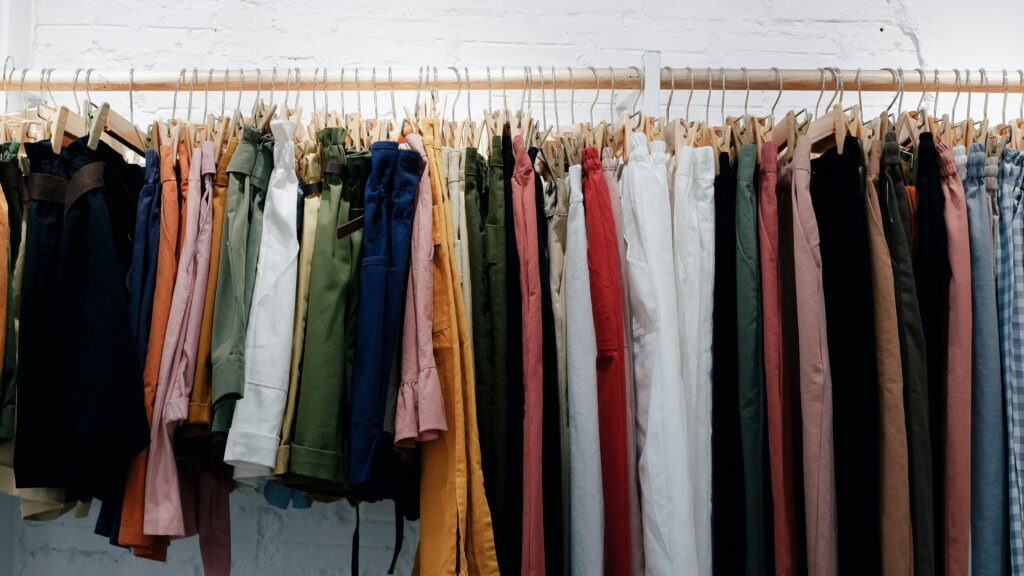
Millions of brand-new garments end up in European incinerators or landfills every year, without ever being worn. That will soon be over. From Sunday, the EU is banning the destruction of unsold clothes, forcing retailers and manufacturers to find more sustainable solutions.
A T-shirt, jacket or pair of shoes can no longer simply be written off and sent for disposal just because customers showed no interest. By new rules under the Ecodesign for Sustainable Products Regulation (ESPR), large fashion companies are no longer allowed to routinely destroy unsold clothing, accessories and footwear.
Instead, they will have to find ways to give surplus stock a second life: by selling it on, perhaps at a discount, donating it, recycling it or exploring other uses. The aim is to cut waste, reduce the industry’s environmental footprint and push companies towards more responsible production planning.
The era of impunity for the large-scale destruction of products is coming to an end. — Yvan Verougstraete (Renew/BEL)
“The European Union is sending a clear signal: the era of impunity for the large-scale destruction of products is coming to an end,” stated MEP Yvan Verougstraete (Renew/BEL) who is responsible for consumer protection issues and serves on the European Parliament’s Committee on the Environment.
Destruction will only be permitted, after alternative solutions such as repair, donation or recycling have been considered. Exceptions will be limited, Mr Verougstraete stresses. “For example, on health or safety grounds, or where products are irreparably damaged or fail to comply with European standards.” In such cases, companies must keep evidence for five year proving destruction was justified and reuse was not possible.
Emissions on the scale of Sweden
The problem is far bigger than it might first appear. According to estimates from the European Commission, around 4–9 per cent of brand new textiles, some 600,000 tonnes, are destroyed in Europe every year.
“These include unsold goods, customer returns that are not put back on the market, and new stock discarded for commercial or logistical reasons. That is unacceptable,” Mr Verougstraete argues. Getting rid of them produces roughly 5.6 million tonnes of carbon dioxide emissions. It is a figure comparable to Sweden’s entire net emissions in 2021.
At the heart of the problem lies the way the fashion industry operates. Rapidly changing collections, pressure to keep prices low and the need to maintain full shelves all contribute to a simple reality: some clothes are made that no customer will ever buy.
For shoppers, the change is unlikely to be immediate. This is not a measure that will suddenly alter prices or transform what appears in shops overnight. Over time, however, consumers may see more clearance sales, outlet stock and other ways of putting clothes back into circulation.
Online returns under the spotlight
The EU is also turning its attention to online shopping returns. The boom in e-commerce has brought greater convenience, but also a mountain of unwanted items coming back to retailers.
Not every returned product makes its way back onto the shelves. For some companies, destroying an item is cheaper than inspecting it again, storing it and offering it to another customer.
According to the Commission, nearly 20 million returned items are thrown away in Germany alone every year. The new rules aim to ensure that destruction becomes a last resort, rather than standard business practice.
New obligations will arrive gradually
The ban on destroying unsold clothing, fashion accessories and footwear initially applies from 19 July 2026 to large companies. It will be extended to medium-sized businesses in 2030.
The EU’s ecodesign rules also require companies to publish information about the amount of unsold goods they discard. The goal is to build a clearer picture of the scale of the problem and encourage businesses to handle surplus stock more responsibly.
The new European rules mark another step towards cutting waste and supporting circular economy. They could also help reshape a business model that underpins much of today’s clothing industry and slow down the so-called fast fashion.