A case involving Albania’s former intelligence chief is putting renewed attention on the country’s institutional safeguards and reform record as it enters a crucial phase of its bid to join the European Union.
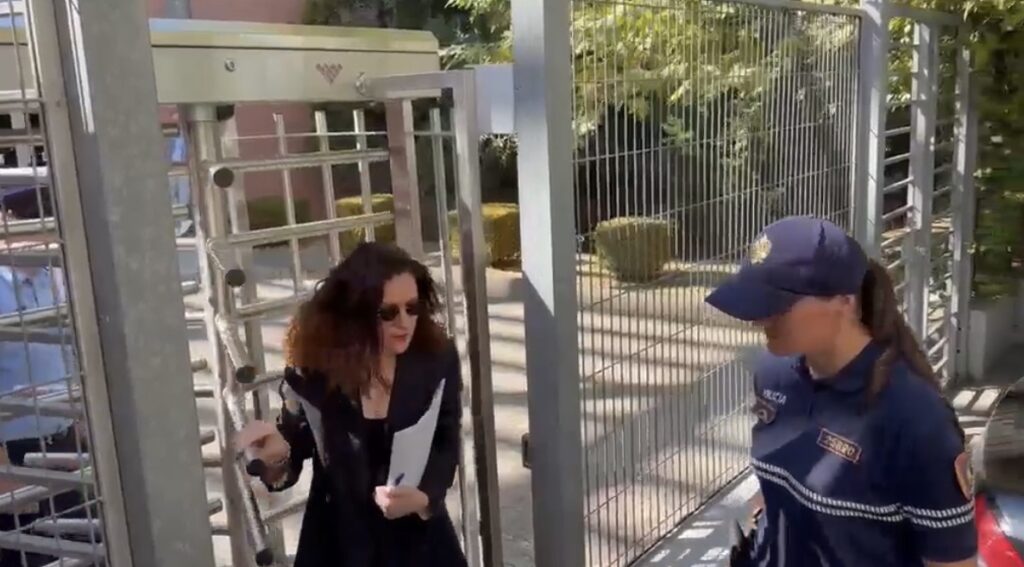
Vlora Hyseni, the former head of Albania’s State Intelligence Service, known as SHISH, has been placed under house arrest and suspended from public office as part of a wider corruption investigation.
Albania’s Special Court against Corruption and Organised Crime (GJKKO) ordered the measures against Hyseni on suspicion of disclosing classified information. The case is linked to a broader investigation into corruption at the National Agency for Information Society (AKSHI).
The allegations have not been proven. But the case puts a sensitive state institution under scrutiny at a particularly important moment for Albania. The country has made significant progress in its EU accession talks, opening all 33 negotiating chapters and beginning to provisionally close the first of them. At the same time, Brussels is increasingly focused on whether reforms to Albania’s justice system and public institutions are producing lasting results in practice.
We have full trust in the ability of the Special Structure against Corruption and Organised Crime, known as SPAK, to detect, investigate and prosecute corruption and organised crime.
— Guillaume Mercier, Spokesperson, European Commission
Against that backdrop, an investigation involving the former head of the country’s intelligence service raises questions about both the protection of classified information and the ability of Albania’s reformed institutions to hold senior officials to account.
Brussels backs Albania’s anti-corruption prosecutors
Asked by EU Perspectives whether the Hyseni investigation had raised concerns in Brussels, including over the handling of sensitive information, the European Commission did not directly address whether the case raised concerns about Albania’s safeguards for classified information. Instead, it stressed its confidence in the country’s specialised anti-corruption institutions.
“We have full trust in the ability of the Special Structure against Corruption and Organised Crime, known as SPAK, to detect, investigate and prosecute corruption and organised crime,” its spokesperson Guillaume Mercier said on 25 September.
When asked directly whether the Commission had assessed the potential impact of the allegations on information shared between Albania and the EU and whether Brussels was confident that EU information had not been compromised, the spokesperson did not provide a clear answer.
The Commission said it maintains regular communication with Albanian authorities and pointed to an assessment that will be conducted in the near future.
Critical time for EU accession
The case comes as Albania moves from meeting the initial conditions for advancing negotiations towards demonstrating that its reforms deliver lasting results.
In May, the EU confirmed that Albania had met the interim benchmarks for Cluster 1, the “Fundamentals” cluster, covering democratic institutions, public administration reform, the rule of law and related areas. The move shifted the accession process into a phase focused on implementation, solid track records and lasting results.
The shift was followed in July by the provisional closure of Albania’s first three negotiating chapters: Science and Research, Education and Culture, and External Relations. Albania has now opened all 33 negotiating chapters and provisionally closed three.
Von der Leyen heads to Tirana
The timing is also significant for another reason. The Hyseni case comes shortly before the European Commission is expected to publish its next assessment of Albania’s progress towards EU membership. Asked whether the intelligence investigation could affect Brussels’ assessment, the Commission spokesperson did not address the case directly, instead pointing to the forthcoming report, expected “in the next few weeks”.
The report will provide a broader assessment of Albania’s progress in areas including the rule of law, corruption and public administration.
At the same time, the issue comes just days before European Commission President Ursula von der Leyen begins a tour of the Western Balkans. Von der Leyen is due to visit Albania, Kosovo, Montenegro and North Macedonia from September 30 to October 2. The Commission said the tour will focus on the next steps towards EU membership and the gradual integration of the Western Balkans into the bloc.
The intelligence case raises two competing questions about Albania’s reform process. One is whether the allegations expose weaknesses in the protection of sensitive information within Albania’s state institutions. The other is whether the investigation itself demonstrates that Albania’s reformed justice institutions are increasingly capable of investigating senior officials and pursuing corruption cases involving powerful state actors.
The case alone does not answer either question. But it comes at a moment when Albania is moving from demonstrating its willingness to reform towards demonstrating that those reforms work in practice.