Global diplomacy ticked a box: the EU asked the council to condemn Russia but Russia did not want to. So the diplomats shrugged and went on to the banquets.
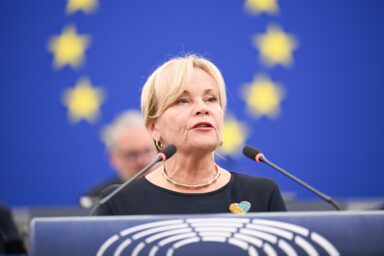
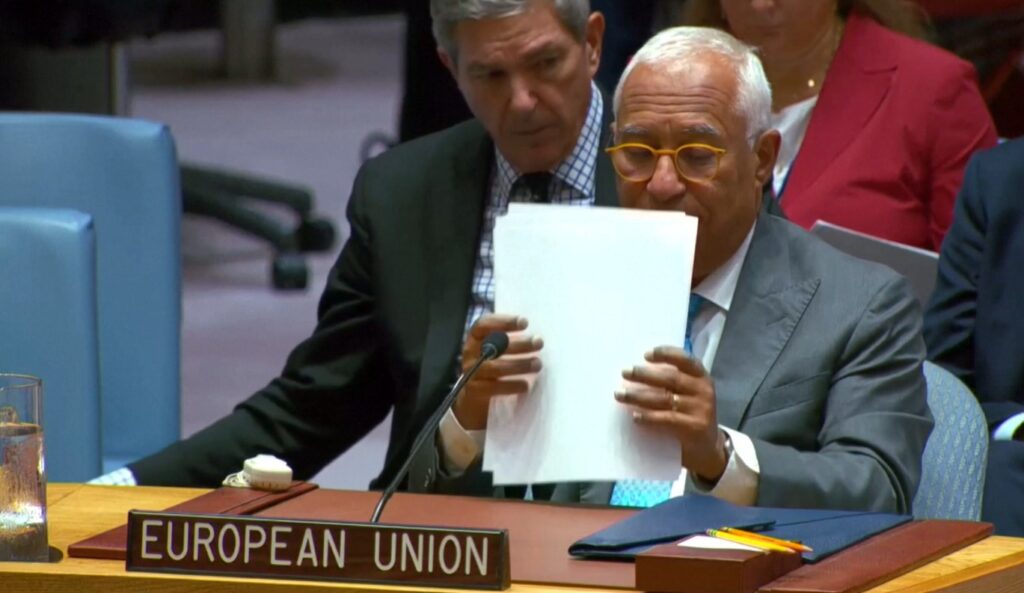
António Costa, president of the European Council, addressed the United Nations Security Council on 23 September 2026, on the margins of the UN General Assembly in New York. He called for an immediate ceasefire in Ukraine. Russia, which has a veto, disagreed. The meeting ended, the war continued.
Mr Costa’s remarks were sombre and direct. “Every month thousands of people are killed,” he told the council. “Homes, schools, hospitals, energy and water infrastructures are deliberately destroyed in Ukraine.” He noted that before the war, Ukraine fed 400 million people a year through food exports. Russia’s strikes on Odesa, Ukraine’s key Black Sea port city, have since created a food-security crisis, fuelling inflation with particularly severe consequences across Africa.
He did not spare Russia’s leadership a pointed observation about its own losses. Russia’s “revisionist imperial projects”, he said, had brought death and suffering to hundreds of thousands of its own people, all for nothing. “Russia has failed to reach any of its stated goals in this war,” Mr Costa said.
Familiar walls, familiar echoes
The session took place upon request of five European nations: Denmark, France, Greece, Latvia, and the United Kingdom. French Foreign Minister Jean-Noël Barrot chaired the proceedings. He and his British and Danish counterparts condemned Russia’s hybrid threats, airspace violations, and deliberate targeting of civilian energy infrastructure ahead of winter. The European front was unified, eloquent, and—given the composition of the council—entirely advisory.
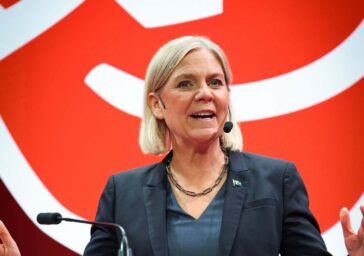
UN Under-Secretary-General for Political and Peacebuilding Affairs Rosemary DiCarlo called for a full, immediate, and unconditional ceasefire based on the UN Charter. She stressed that diplomacy is the only way forward. Ukrainian Foreign Minister Andrii Sybiha said Ukraine stood ready for exactly that, provided Russia complied.
Russia has failed to reach any of its stated goals in this war. — António Costa, European Council president
Russia, as a permanent member of the council, maintained its total opposition, ensuring that no binding resolution could pass. This is, of course, how the Security Council works — a design feature, not a malfunction, though the distinction grows harder to appreciate with each passing month.
Mr Costa closed with a call to action. “I want to make a call to the entire international community to join the European Union in our efforts to bring this war to an end,” he said. He asked all present to use their influence on Russia, so that “by the time of our meeting next year, we have finally achieved a just and lasting peace in Ukraine and in Europe”. It was a reasonable request; as such, it went nowhere.
The annual ritual
The conditions for lasting peace, Mr Costa noted, are obvious: respect for Ukraine’s sovereignty, territorial integrity, and right to choose its own future. In short, the UN Charter. He is correct; they have been well known for over four years.
The European Union, he said, supports all efforts to stop the war. The courage of the Ukrainian people has become a global symbol. Diplomacy is the only way forward. All of this is true, and none of it is new. The council chamber in New York is very good at receiving such truths. It is structurally less good at acting on them.
Mr Costa will, in all likelihood, return next year. He will say some of the same things. The council will listen. Russia will veto. And somewhere in Ukraine, the bombardment will continue; if there is any Ukraine left to bomb, that is.