Britain could one day rejoin the European Union, lawmakers argued on Tuesday. But for now, the focus is on easing food trade, linking carbon markets and letting young people live and work across the Channel.
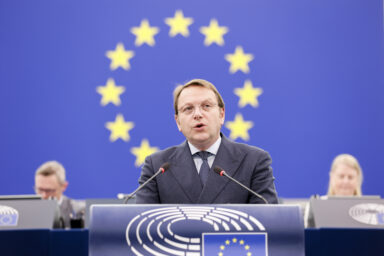
EU Trade Commissioner Maroš Šefčovič told the European Parliament that negotiators aim to complete those three agreements as a package for the EU–UK summit on 20 November.
Talks on Britain’s participation in the EU electricity market and a British financial contribution towards reducing regional disparities in the bloc will continue beyond the summit.
An invitation to return
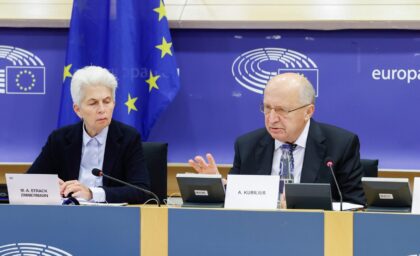
“Every option must be on the table, from a special partnership to full EU membership,” said Sandro Gozi (Renew/FRA) who chairs Parliament’s delegation for relations with the UK. Mr Gozi argued that November’s summit should deliver fewer trade barriers, stronger support for Ukraine and more opportunities for young people.
Brexit was a mistake, and to admit that is not a sign of weakness, but it is a sign of strength. — Terry Reintke (Greens-EFA/DEU)
German Greens/EFA co-chair Terry Reintke offered an explicit invitation. “Of course, you can come back,” she said. Ms Reintke backed closer ties through programmes such as Erasmus and Horizon, as well as a possible customs union. “Brexit was a mistake, and to admit that is not a sign of weakness, but it is a sign of strength.”
Bernd Lange (S&D/DEU), chair of Parliament’s international trade committee, also outlined a path beyond the current negotiations. After the first agreements, Mr Lange wanted deeper political and security cooperation and a customs union, with a longer-term prospect of reunion. These were demands from influential parliamentarians, not an announcement that the Commission and Council had opened membership talks.
That ambition faced opposition from the Europe of Sovereign Nations (ESN) group. Its speaker defended Brexit as a democratic decision and opposed drawing Britain back into membership, while accepting limited cooperation on trade and student exchanges. The disagreement was therefore about the destination of the partnership as well as its immediate benefits.
Fewer barriers, but ‘no cherry-picking’
For businesses and consumers, the November package would address some of Brexit’s everyday costs. A common food-safety area would reduce barriers to agricultural and food trade through aligned rules.
Linking emissions trading systems would connect the two carbon markets and facilitate mutual exemptions from their respective carbon border charges. The proposed youth experience scheme would allow young people to live, work and travel in each other’s territories for up to three years.
MEP Nina Carberry (EPP/IRL) highlighted the importance of food trade and energy cooperation for farmers and households. David McAllister (EPP/DEU), chair of Parliament’s foreign affairs committee, wanted the emerging agreements to be “the floor and not the ceiling of our ambition” for the relationship.
Access to the benefits of the single market must come with corresponding obligations. No cherry-picking. — Jörgen Warborn, (EPP/SWE)
The EPP’s trade coordinator, Swedish lawmaker Jörgen Warborn, nevertheless set a condition. “Access to the benefits of the single market must come with corresponding obligations. No cherry-picking,” he said. Mr Warborn’s support for removing paperwork and improving trade depended on fair competition and respect for existing agreements.
Charlie Weimers (ECR/SWE) pressed for greater flexibility. Mr Weimers questioned why the EU could negotiate tailored arrangements with Canada and Switzerland but struggle to do the same with Britain. “Common sense dictates that we should seek the closest possible relationship with Britain,” he said, criticising financial demands connected to British participation in European defence programmes.
Existing promises remain a test of trust
Mr Šefčovič made clear that the reset rests on implementing the agreements already signed. The Withdrawal Agreement, including the Windsor Framework, and the Trade and Cooperation Agreement remain the foundation of the relationship. He said protecting the rights of EU citizens in Britain and British nationals in the EU remained a priority.
Irish European Affairs Minister Thomas Byrne welcomed improved cooperation on the Windsor Framework, which helps avoid a hard border on the island of Ireland while protecting the EU single market. But Mr Byrne said further progress was needed, particularly on agreed food-safety safeguards. “The progress is welcome, but more progress is required,” he told lawmakers.
Security provides another reason to move faster. Mr Šefčovič said Britain could now participate under the EU’s €90 billion Ukraine Support Loan following a contribution agreement signed in July. Lawmakers also sought closer defence cooperation, intelligence sharing and coordinated responses to hybrid threats. Barry Andrews (Renew/IRL) called on Parliament President Roberta Metsola to invite the British prime minister to address the chamber.
November’s summit will show whether that political support can produce completed agreements. Britain’s return to Erasmus in 2027 is already secured, Mr Šefčovič said. Youth mobility, food trade and carbon-market cooperation are the next negotiating targets.