Who will speak for Europe when the war in Ukraine reaches the negotiating table? Five national leaders, from Rome to Oslo, reportedly sit on a shortlist. Brussels made clear on Friday that it plans to be in the room either way.
Europe is looking for someone Russian President Vladimir Putin will actually talk to. Five leaders are in the running, The Telegraph reported late on Thursday, citing diplomatic sources. The list includes Italian Prime Minister Giorgia Meloni, Finnish President Alexander Stubb, Czech President Petr Pavel, Danish Prime Minister Mette Frederiksen, and Norwegian Prime Minister Jonas Gahr Støre. Diplomats have reportedly already approached some of them.
One source told the paper that a group of leaders is the likelier outcome. It would avoid rivalry between capitals and the risk of vetoes against single names. Each candidate brings something different. Mr Stubb shares a love of golf with US President Donald Trump and attended this week’s talks in Oslo. Mr Pavel, a former chair of the NATO Military Committee, has negotiated with Russian generals. Ms Meloni has long called for a single European envoy.
Seat at the table
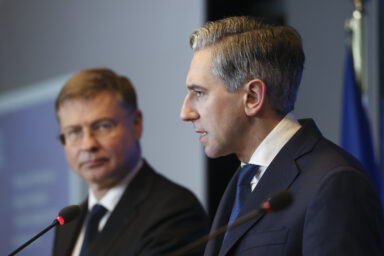
Commission spokesperson Arianna Podestà did not comment on the shortlist at the midday briefing on 23 October. She reminded journalists that the EU took part in the Oslo talks earlier this week. A new round of multilateral talks at senior official level should follow soon, and Brussels wants in. “The EU will be present at these talks,” Ms Podestà said.
The format should mirror the talks in Miami on 9 October. There, US envoys Steve Witkoff and Jared Kushner met Ukrainian negotiators. Security advisers from the UK, France, and Germany joined them, along with NATO and the Commission. Journalists pressed Ms Podestà on whether EU officials would sit at one table with the Russians. “The expectation is that there would be a joint Commission Council representation that would attend the meetings,” was all she offered.
The questions reflect real confusion over what comes next. After Oslo, Mr Witkoff flew to St Petersburg to brief Mr Putin. The Kremlin then said Russia was ready in principle to resume trilateral talks with the US and Ukraine in November, possibly in Abu Dhabi. Ukrainian President Volodymyr Zelensky has backed the idea.
Moscow speaks of three parties, not of a European chair. Kremlin aide Yuri Ushakov also played down the Oslo meeting. He said it offered little of use for ending the war. For Brussels, that makes a seat in the wider talks all the more important.
Search for a single voice
Europe has struggled to pick a negotiator for months. European Council President António Costa turned down the role at a recent EU summit, according to The Telegraph. A solo bid by German Foreign Minister Johann Wadephul drew sharp criticism. In June, Mr Stubb ruled himself out and said France, Germany, and the UK should lead. Ms Meloni, by contrast, has pushed for one envoy for Europe since the summer.
President Putin disregards the European Union as an authority.
— Petr Pavel, Czech President
Mr Pavel offers a different recipe. Europe, he argues, needs a person or a group with a clear mandate from fellow leaders, not necessarily from the EU or NATO. “President Putin disregards the European Union as an authority,” he told the Axel Springer Global Reporters Network. He would tempt Moscow with renewed trade. Sanctions relief, however, would come only once Russia agrees to a ceasefire and peace talks.
The urgency grows as trust in Washington fades. Mr Trump recently waived sanctions on Russian fossil fuel exports and agreed to import Russian diesel. Both moves unsettled Kyiv and European capitals. Ms Podestà kept her line cautious. “We have always, of course, worked to have Ukraine in a position of strength, and we have always worked for a just and lasting peace for Ukraine,” she said.