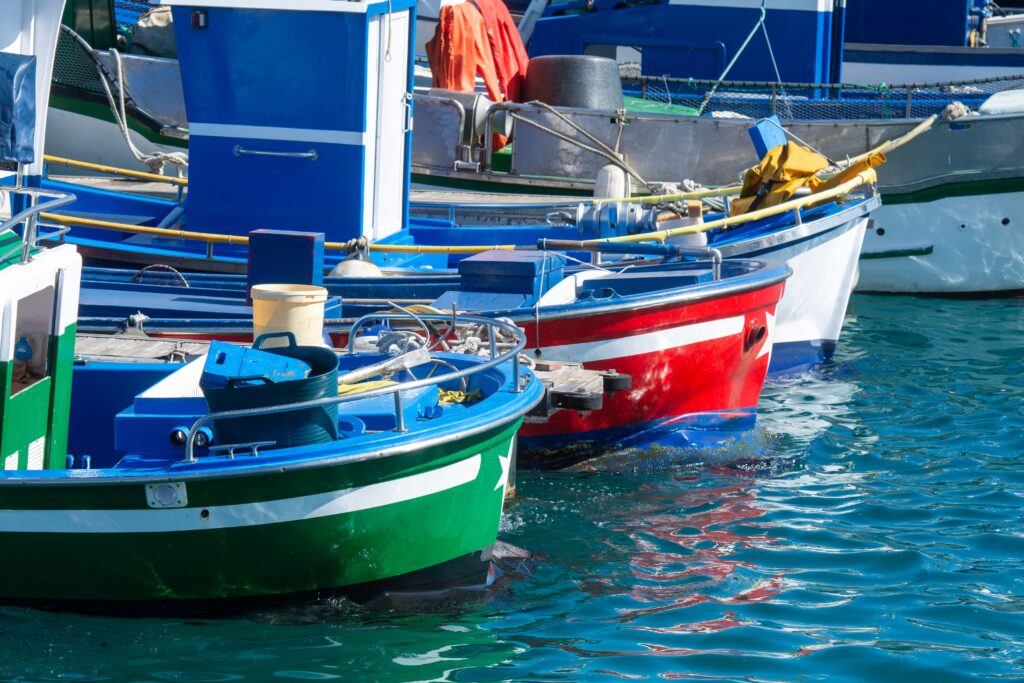
Fuel is expensive, boats are getting old, and young people are not queuing up to go to sea. Brussels now has a plan to keep Europe’s fishing and fish-farming sector afloat until 2040. It promises cleaner vessels and more home-grown seafood, but leaves open who will pay for them.
The answer came on 20 October. The European Commission presented its Vision 2040 for fisheries and aquaculture, which charts the sector’s course for the next 15 years. Executive Vice-President Raffaele Fitto and Costas Kadis, Commissioner for Fisheries and Oceans, unveiled it together. The plan aims to modernise the commercial fishing fleet, support coastal communities, and increase the production and availability of sustainably sourced seafood in Europe.
The plan covers a sector that employs more than 200k people across the EU: nearly 124.5k in fisheries and almost 76k in aquaculture. Many more work in seafood processing, wholesale, distribution, and retail.
Ageing fleets and rising costs
European fishers face a combination of high fuel costs, declining fish stocks, older vessels, and difficulties attracting younger workers. These pressures hit smaller fishing businesses hardest, as well as communities where the industry is a key source of jobs.
For Mr Fitto, the stakes reach well beyond the harbour. “Europe’s fisheries and aquaculture sector is vital to the prosperity and identity of our coastal communities,” he said. “With our Vision 2040, we are setting a clear course towards a sector that is competitive, sustainable and fit for the future.”
The Commission wants to back investment in safer and more efficient vessels, as well as in innovation. It also wants fishers to earn money beyond their catch, for example through pescatourism, which takes paying visitors out to sea on working boats. The Vision does not say how many boats could get an upgrade, or how much support a single operator might receive.
Fishing rules under review
One of the most significant parts of the plan concerns the rules governing Europe’s fishing fleets. The Commission wants to rethink how the EU measures vessel capacity. The idea is that equipment and space for safety, better working conditions, and cleaner technology would not count as extra fishing power. Current rules aim to keep fleet capacity in balance with available fish stocks. The challenge is to let fishers improve their boats without adding pressure on marine resources.
Brussels will also update its 2014 guidelines on checking whether fleet capacity matches fishing opportunities, the catch limits each member state receives. Another issue is the EU landing obligation. It requires fishers to bring all catches of regulated species back to port rather than discard them at sea.
The Commission admits that the obligation has not delivered the expected results in monitoring unwanted catches, especially in practice. It will examine whether better technology and fuller records of fishing activity could help. Such data would show fishers, scientists, and authorities where unwanted catches occur and how to avoid them. The Commission plans to discuss this with the sector later this year.
For now, the existing rules remain in place. The Commission has not announced plans to scrap the landing obligation or raise permitted fishing capacity. Speaking to journalists, however, Mr Kadis did not rule out future legislative proposals to reform the Common Fisheries Policy.
The price of cleaner boats
The Commission wants to wean the sector off fossil fuels in two stages. Until 2030, the focus is on energy and resource efficiency, new technologies and skills, and the use of clean fuels where available. From 2030, the aim shifts to rolling out low- and zero-emission technology on a large scale, backed by financing, infrastructure, and fleet modernisation.
Part of the money could come from the EU’s next long-term budget, covering 2028–2034. The Commission’s proposal reserves at least €2bn for core fisheries policy activities, channelled through national and regional plans. The money would cover several priorities, including sustainable fishing, aquaculture, and marine ecosystem restoration. It is not a dedicated €2bn fund for replacing fishing boats. Member states and the European Parliament have yet to agree on the budget.
Brussels also wants to draw on the planned European Competitiveness Fund and attract private investors. It acknowledges that public money alone will not meet the sector’s needs. How much individual fishers actually receive will depend on future budget decisions and funding arrangements.
More seafood produced in Europe
The plan extends beyond fishing boats to aquaculture, the farming of fish and shellfish. The Commission will prepare new legislation and work with member states on clearer, more consistent rules. The aim is to give fish farmers more certainty and encourage investment. Brussels also wants more consumers to choose seafood produced in the EU.
By 2029, Brussels wants digital traceability for all seafood products across the supply chain. Shoppers and authorities could then follow each product from the boat or farm to the shop shelf. Greater transparency should help consumers see where their seafood comes from. That, in turn, could reward producers who follow EU rules.
Beyond EU waters, the Vision includes a strategy for fisheries external action. Brussels wants to step up the fight against illegal, unreported, and unregulated fishing, and to strengthen international fisheries rules. It promises to shield European fishers from unfair global competition. The Commission will also negotiate a new generation of sustainable fisheries partnership agreements with non-EU countries. These deals give EU vessels access to foreign waters in return for payment and support for local fishing sectors.
Who will fish in 2040?
Finding younger workers is another challenge. The workforce is ageing, and the Commission says unstable incomes and tough working conditions put many young people off a career at sea.
A fair income for fishers and aquaculture producers and a healthy marine environment depend on each other. — Costas Kadis, Commissioner for Fisheries and Oceans
Brussels plans to launch a Blue Generational Renewal Strategy in 2027. It aims to draw younger people into fisheries and other maritime sectors, and to keep them there. The Commission also wants harmonised training and certification standards across the EU. Mr Kadis links the sector’s future to the state of the sea. “A fair income for fishers and aquaculture producers and a healthy marine environment depend on each other,” he said.
The Vision is a direct product of the European Ocean Pact, which the EU presented in June 2025. The Commission now asks member states and regional authorities to turn it into measures that fit local realities. For fishers themselves, the questions are practical. Can they afford to improve or replace their vessels? Will they earn a steady income? And can they hand their business on to the next generation?