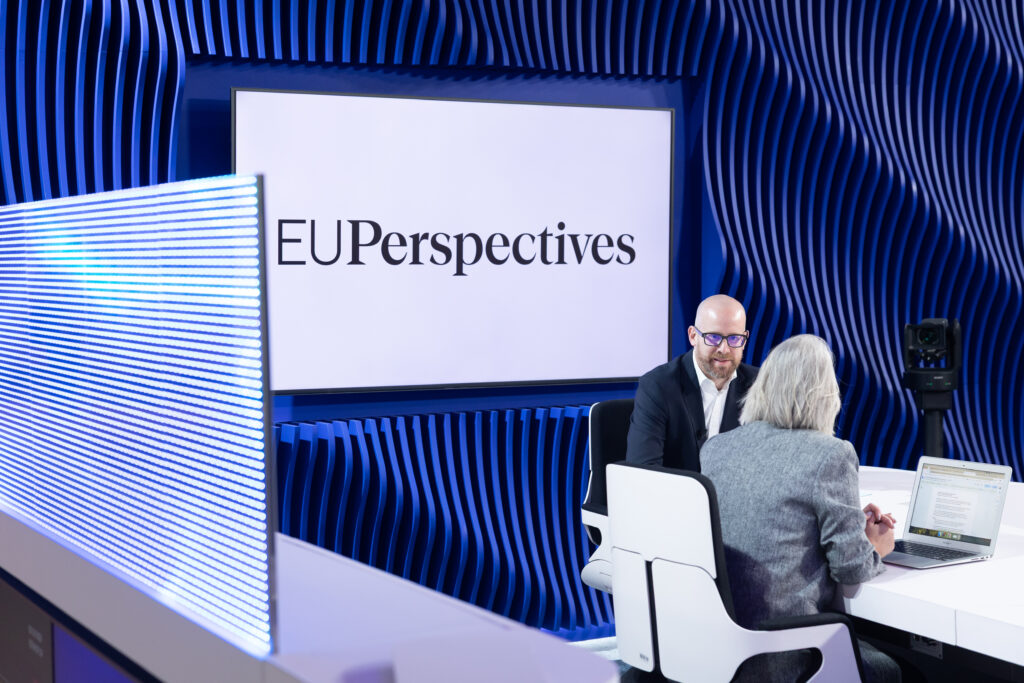
The EU’s five projects of common interests, due to mature by 2033, must first win over doubters in the continent’s west and south, Czech centre-right parliamentarian Ondřej Kolář tells EU Perspectives.
An oft-cited worry needs dispelling, according to MEP Ondřej Kolář (EPP/CZE). “Some people ask why the EU is moving into defence, a field long left to national governments,” he told Jennifer Baker, host of the EU Perspectives podcast. But the EU is not doubling the existing defence architecture. “I think it’s important to say that the EU is not creating a parallel structure to NATO,” Mr Kolář said.
He sees the EU boosting its capability so that it can equip the alliance. Some EU members do not belong to NATO. The war in Ukraine triggered the push. So did US President Donald Trump, who, as Mr Kolář noted, pressed European partners to spend more.
“We are ready to play a bigger part, and we have a plan how to do it,” he claimed. Ms Baker said the Council approved five projects of common interest on 28 September. The Commission proposed them in July under the European Defence Industry Programme (EDIP), having chosen from a nine-proposal menu.
Five flagships, one plan
The Commission has earmarked an initial €325m of EDIP grants for 2026 and 2027. Later tranches should come from the European Competitiveness Fund and national budgets. The projects are eligible for EU co-funding and faster permitting now that the Council has adopted the decision.

Mr Kolář framed the whole effort quite predictably as security. Europe, he said, has realised it is vulnerable. It has relied on imports of technology, defence included. He sees fragmentation as the core problem. “You have a number of systems which actually do not comply with each other, which is a huge problem,” he said. He wants a European industry that can produce on a larger scale.
We are ready to play a bigger part, and we have a plan how to do it.
— MEP Ondřej Kolář (EPP/CZE)
Can Europe build everything it needs? “Of course we cannot produce everything,” he said. Semiconductors and technologies that rely on rare earths remain weak spots. “We are trying to be as self-sufficient as possible,” he said.
Drones and the cost of defence
He cited the recent visit of the Canadian Prime Minister to Strasbourg as part of the effort. In his words, the EU is securing partners that have the raw materials.
The first project, DECODER, covers drones and counter-drone systems. It also includes a European network of drone-technology hubs. The Commission puts the investment at €3.5bn to €5bn by 2033. Design work is due in 2026, pilot deployments in 2028, and the full layered system between 2030 and 2033.
Mr Kolář described the gap. “We have incursions of hostile drones on the eastern flank,” he said. Europe responds by scrambling fighter jets or firing missiles. “So it’s very expensive,” he said.
Ukraine is a partner in the project. “We have a lot to learn from them,” he said. He also wants European firms that now work separately to cooperate, so that armies can take equipment and use it without learning it anew.
Cables, neutrals and the sea
The second project, Integrated Maritime and Seabed Defence, covers surveillance and protection of undersea infrastructure. The Commission puts the cost at €43bn to €72bn by 2045. Initial operating capability is due in 2030 in the Baltic and Mediterranean basins.
If (Ukrainians) lost their optimism, then they would lose the war. They are still standing.
— MEP Ondřej Kolář (EPP/CZE)
Ms Baker noted Parliament did not propose this project in March. It joined the list later. According to Mr Kolář, recent incidents helped. He said Russian vessels have circled the Irish coast and mapped undersea cables.
“And again we have a saying in the Czech Republic, everything bad is good for something,” he said. Neutral states such as Ireland and Austria, he argued, now take security more seriously. That makes them easier to bring into the programmes.
Space, air and the eastern border
The space project aims to share awareness of the domain, secure satellite links, and provide early warning. The Commission puts the cost at up to €24bn by 2034, with first launches in 2029. Mr Kolář said European production is scattered. He wants incentives for small firms to reach beyond home markets.
The air and missile project, EU-FIAMD, would cost €55bn to €80bn by 2040. Initial capability on the eastern flank is due in 2030. Eastern Flank Watch is expected to cost €60bn to €100bn by 2036. Poland, the Baltic states, Finland, and Romania lead it. “I think it’s now clear to everyone that we have an enemy on our doorstep,” said Mr Kolář.
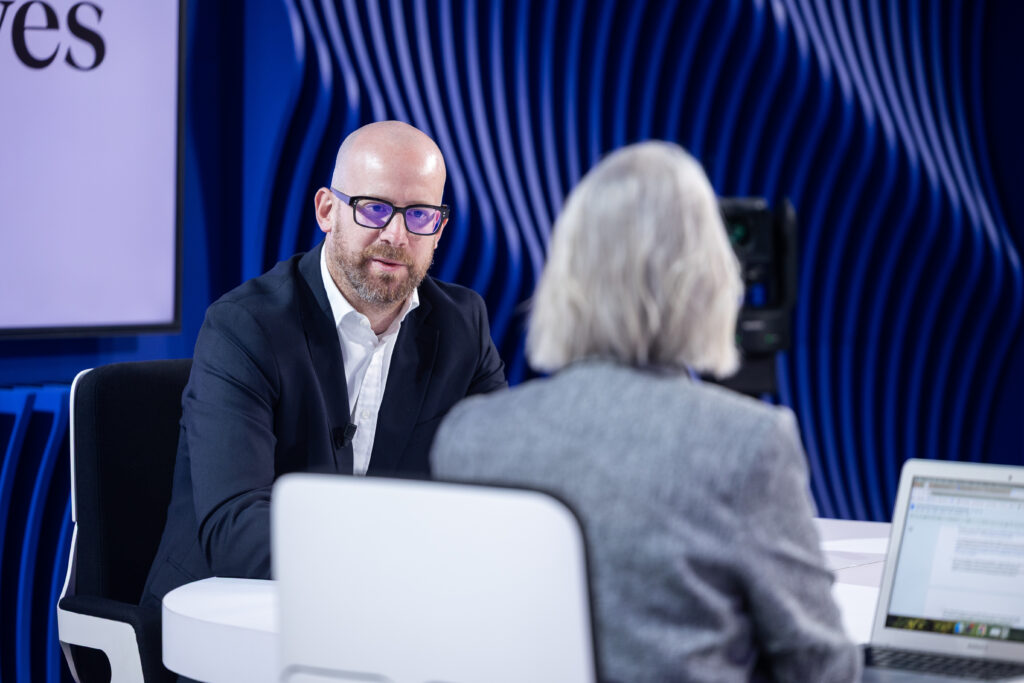
He wants the Watch to help build resilient societies, not just defences. Doubts persist in the west and south. Belgium, Portugal, and Spain, he said, have asked about the cost of a drone wall.
He defined hybrid threats broadly. “It’s a mixture of tactics and pressures that the enemy uses to undermine, to weaken you,” he said. He listed instrumentalised migration, drone and aircraft incursions in Estonia, Latvia, and Lithuania, and sabotage in Germany.
A society that understands the threat
Persuading doubters, he said, means showing opportunity. Europe cannot expect heavy industry to return as the engine of the whole economy. He wants the EU to finance new technologies — and not dwell on old ones.
The Commission’s timetable carries caveats. Council adoption, national budgets, and industry uptake all matter. Steering boards and capability coalitions should form in early 2027. Drone work—the fastest to prototype—will move first. Space, air, and seabed programmes take longer.
Several strands have dual uses. Drone swarms, seabed sensors, and resilient satellite links could serve civil security too.
Mr Kolář put the target at 2033. “You know, if we weren’t optimistic, if we were pessimistic, then everything would be lost,” he said. He pointed to Ukraine: “If they lost their optimism, then they would lose the war. They are still standing,” he said.