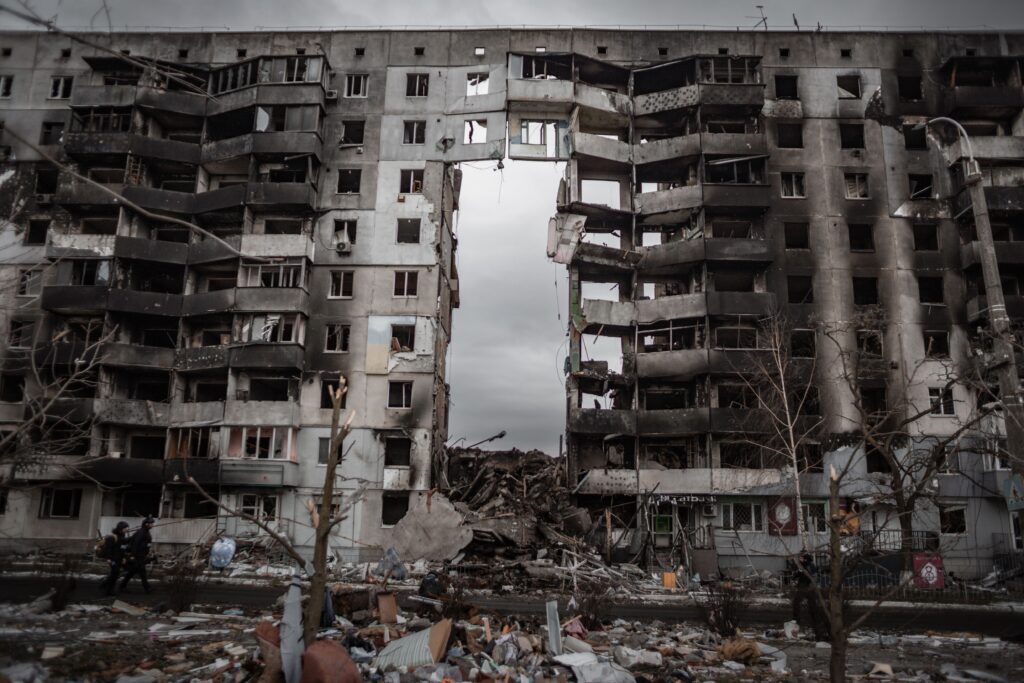
Kyiv and Brussels now face an American ally of Russia in a war aimed at destroying Ukraine as a country and a people. Europe is the latter’s only significant source of support. What then is the Union to do?
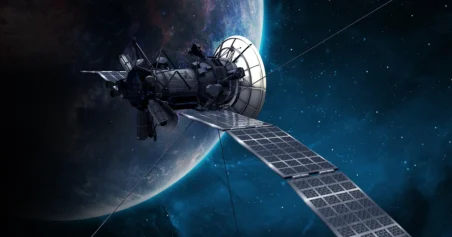
Last week, America has changed from an informal helper of Russia to a formal ally. The evidence starts with the well-described diesel deal and with Starlink, the US-based satellite internet provider. Ukrainian access to Starlink and Starshield remains limited to systems moving at under 160kph. The Ukrainian embassy in Washington confirmed this.
The speed cap hurts two efforts. Ukraine’s air defence relies on fast-moving systems to bring down weapons such as Russia’s jet-powered Gerans. Ukraine’s mid-range strikes on Russian logistics—to be credited with Russia’s failures at the front this summer—also suffer. Russia, on the other hand, sent over 1,200 drones and missiles westward, killing about 200 people (and further damaging Ukraine’s power supply) in the first four nights.
Then, on 17 October, the White House formally exempted Russia from the Graham-Blumenthal sanctions, by executive order. Ukraine’s reaction and Europe’s now matter most. European states “seem to be a little all over the place”, writes Phillips O’Brien, US-British strategist at St Andrews University. Ukraine, by virtue of necessity, is likely to respond faster and more effectively.
Kyiv gets it
This has some precedent: Ukraine has developed its weapons independently of the US or Starlink. America can do little to blunt them, beyond bullying Kyiv. Ukraine’s President Volodymyr Zelenskyy tried to flatter Mr Trump for almost two years. That approach, it has now become obvious, failed; and the Ukrainians, Mr O’Brien argues, understand that.
Mr Zelenskyy now speaks bluntly. In an interview with British TV presenter Piers Morgan, he said he felt betrayed. Mr Morgan then asked about Starlink and what Mr Zelenskyy’s message to Mr Musk would be. Ukraine’s president replied: “It’s a big mistake.” Mr Morgan asked whether people were dying because of Mr Musk’s decision. “Of course, people will die,” the reply was.
This plus the diesel deal will make some people concerned about where the president’s head is in this space. — Adam M. Smith, ex-US Treasury
The tariffs the Graham-Blumenthal law was about to produce were the tool Europe lacks. Secondary penalties against big Asian buyers is the only measure that could meaningfully squeeze Moscow’s revenue. Mr Trump has thus shelved the one instrument that only Washington could wield.
The pressure on Europe thus grows while Moscow cheers. “The suspension of some of the provisions of the Graham Act marks an important and truly historic moment,” said Kirill Dmitriev, Russian President Vladimir Putin’s special envoy for investment and economic cooperation.
Sanctions, unity, and a backstop
From Europe, three themes emerge. Brussels will keep its own sanctions intact. Capitals doubt that US concessions will moderate Moscow. And the episode strengthens calls for European autonomy in energy and security. US Secretary of State Marco Rubio calls the waiver a 60-day pause. The EU should use that window to turn words into law.
The aim should be simple. Europe must secure Ukraine’s capacity to resist, even as Washington curtails its support. It must also show Moscow and Washington that coercion will meet a coherent, resource-backed European response. The measures below would serve that aim.
The EU’s sanctions—already in force—come first. EU leaders renewed on 16 October their position that all Russia sanctions stay until Ukraine’s sovereignty is restored. “One thing is absolutely clear: we will not lift any sanctions unless Russia stops the war,” European Commission President Ursula von der Leyen then said on 17 October in response to the sanctions waiver. In a separate briefing, she said the EU must increase pressure on Russia.
The language signals that the EU’s sanctions regime will stay intact and could tighten. The EU should write that pledge into Council conclusions. It can keep rolling out large packages, such as the record listings of 12 October against Russia’s military-industrial base.
A standing fund for Ukraine
Unity comes second. When one government vetoes, willing states still have room to act. Constructive abstention under Article 31(1) and enhanced cooperation under Article 20 of the EU treaty allow that. Brussels already took this path for the €90bn Ukraine Support Loan in January 2026.
Third, Europe should insure Ukraine against an American aid freeze. Mr Trump has signalled willingness to pause or condition military aid to Kyiv. EU leaders can promise publicly to match any US shortfall euro for euro, from a reinforced EU instrument.
One thing is absolutely clear: we will not lift any sanctions unless Russia stops the war. — Ursula von der Leyen, European Commission president
That instrument should be a standing European Ukraine Defence Facility. Its legal base would be Article 122 of the TFEU, which covers exceptional crises, plus enhanced cooperation if needed. It should hold at least €50bn a year from 2027 to 2030.
The sum roughly matches the gap Kyiv has identified for military outlays. The EU has a base to build on. It has channelled €231bn to Ukraine since 2022. In October alone, it disbursed €2.86bn for urgent battlefield needs.
The legal clutter
Joint borrowing should fund the facility, on the model of the €90bn loan for 2026 and 2027. Immobilised Russian sovereign assets should supply the second source. The EU should take all windfall profits and at least 30 per cent of the principal.
The principal needs a legal path first. Interest can flow at once, under a Commission proposal from September 2026. To reassure lenders, the EU should shield clearing houses such as Euroclear from Russian or extraterritorial US lawsuits. The EU budget headroom would cover the costs.
Industry should follow. The EU could raise the Act in Support of Ammunition Production (ASAP) from €500m to €5bn and extend it to 2030. It would build on the 31 projects chosen in the first call. Analysts say Europe needs 2m to 2.5m shells a year to outproduce Russia.
A ‘Ukraine first’ clause should oblige recipients to serve Ukrainian orders first. That priority would last until Kyiv holds a 24-month reserve of key munitions. European production would then become a guarantee for Kyiv, not a promise.
Quotas and rules
A quota should bind every member state. Each would spend at least 0.25 per cent of GDP a year on joint defence procurement for Ukraine. A state that declines would pay an equivalent sum into the facility. A regulation with a qualified-majority legal base would impose it.
Voting rules should change too. Article 31(3) of the EU treaty can move sanctions, human-rights clauses, and arms-export financing to qualified-majority voting. Legal scholars and several governments advocate this. It would strip any single capital of its veto, and Hungary-style gambits would lose their hostage value.
Of course, people will die. — Volodymyr Zelenskyy, Ukraine’s president
The timetable can be tight. A political declaration on the funding floor could come in the fourth quarter of 2026, by unanimity of the European Council. A regulation creating the facility should follow in the first quarter of 2027, backed by 24 or more states.
The message
The ammunition act should be revised in the second quarter of 2027, by ordinary legislative procedure. The voting switch should follow in the third quarter. The first draw-down of Russian asset proceeds should come in the fourth, through a Commission implementing act.
Politics must back the law. The EU should tie every new funding tranche for Ukraine to a clear message: Europe’s security does not depend on one third country’s domestic politics. It should also intensify joint EU-and-NATO exercises on the Polish-Baltic front.
Together, these steps would turn a coalition of convenience into an institutionalised security commitment. That commitment would outlast any single American presidency. It would also tell Moscow that prolonging the war only raises its bill.
Why it probably will not happen
This all is sure to face strong headwinds. Unity is the first obstacle. Member states differ in their reliance on Russian energy and in their stance on military support for Ukraine. That makes consensus on sanctions and aid hard. Coalitions of the willing can also fragment the response if large states object.
Votes are the second. Activating the voting switch needs a qualified majority, which key states could block. The timetable also begins with a decision that needs unanimity. One reluctant government could delay everything that follows.
The suspension of some of the provisions of the Graham Act marks an important and truly historic moment. — Kirill Dmitriev, Russian presidential envoy for investment and economic cooperation
Money is the third. The quota and the facility need every state to agree on contributions. Countries with tight budgets may resist higher defence spending. A €50bn annual facility will face scrutiny from governments worried about inflation and energy costs.
The assets are the fourth. Using them poses significant legal challenges and would need complex negotiations. The shield for clearing houses needs its own legislation. Without it, the EU would carry the legal risk alone.
Voters, Moscow, and Washington
Domestic politics is the fifth. Public opinion can sway leaders, especially in countries with significant economic ties to Russia. A new government in a major capital (think Paris, Rome, and even Warsaw) could change priorities and complicate long-term commitments to Ukraine.
Moscow will respond. Russia may retaliate against greater EU support, including with cyber attacks. That could strain the unity the EU needs to keep its commitments. Washington adds its own pull. It wants Europe to resume buying Russian gas. “This plus the diesel deal will make some people concerned about where the president’s head is in this space,” said Adam M. Smith, a former adviser to the US Treasury’s Office of Foreign Assets Control.
Ms von der Leyen has found the words. The Western sanctions regime now has one remaining custodian — Europe. The question is whether it has the tools, the money, and the consistency to carry it alone.